Skip to main content
Anatomy & Physiology
My Course
Learn
Exam Prep
AI Tutor
Study Guides
Textbook Solutions
Flashcards
Explore
Try the app
My Course
Learn
Exam Prep
AI Tutor
Study Guides
Textbook Solutions
Flashcards
Explore
Try the app
Back
Anatomy & Physiology: Skeletal, Muscular, Nervous, and Special Senses Systems
You can tap to flip the card.
What are the two main divisions of the human skeleton?
You can tap to flip the card.
👆
What are the two main divisions of the human skeleton?
Axial skeleton
and
appendicular skeleton
.
Track progress
Control buttons has been changed to "navigation" mode.
1/20
Recommended videos
Guided course
3:56
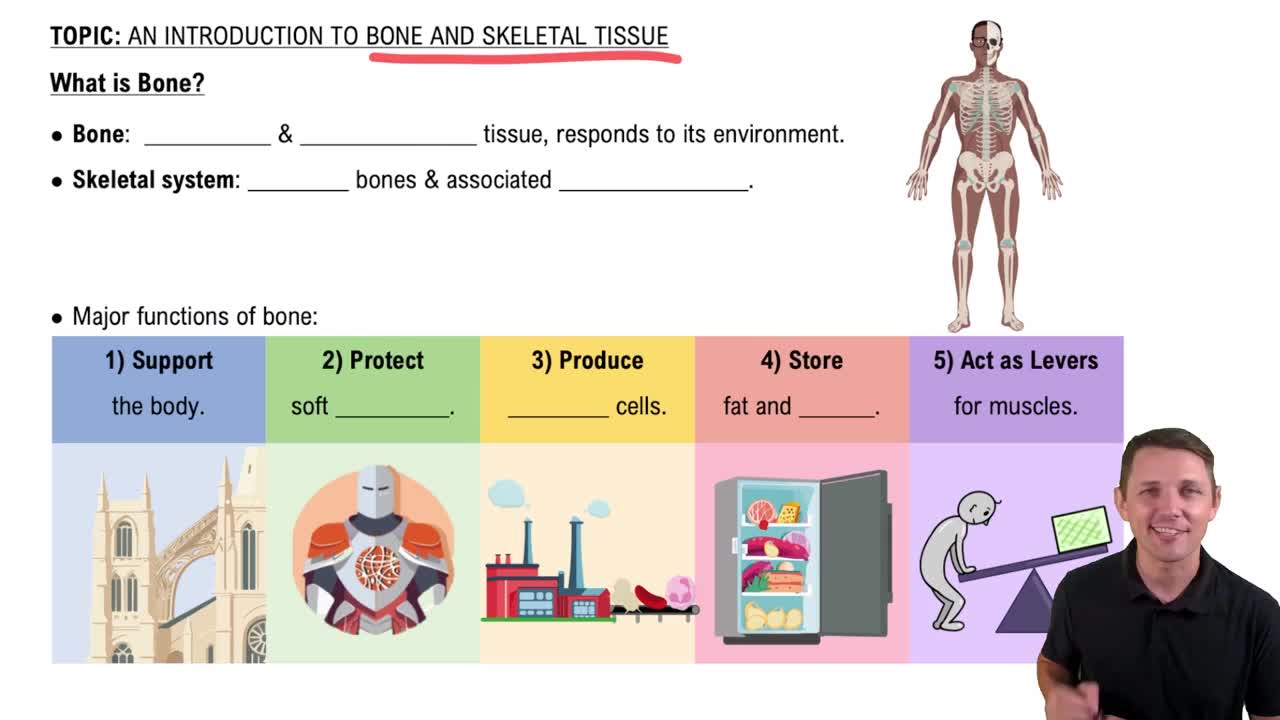
What is Bone?
29702
views
936
rank
3
comments
Guided course
3:00
An Introduction to Bone and Skeletal Tissue Example 2
16628
views
357
rank
1
comments
Guided course
4:14
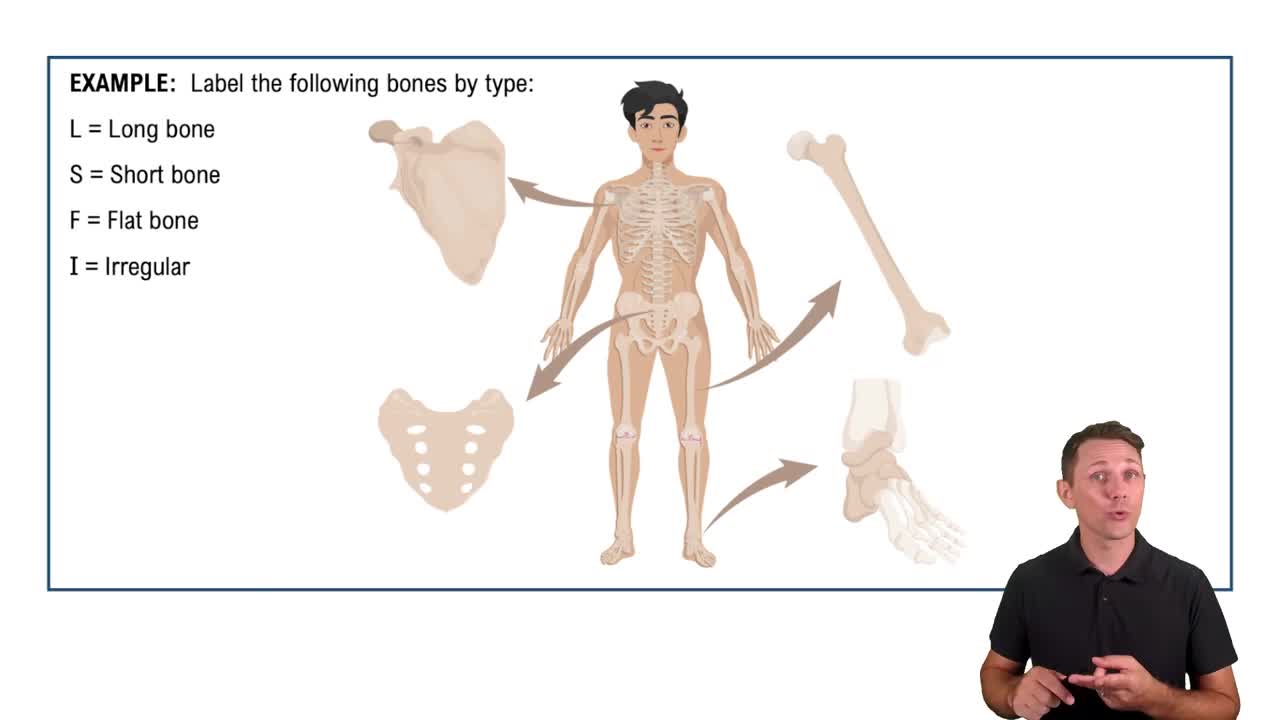
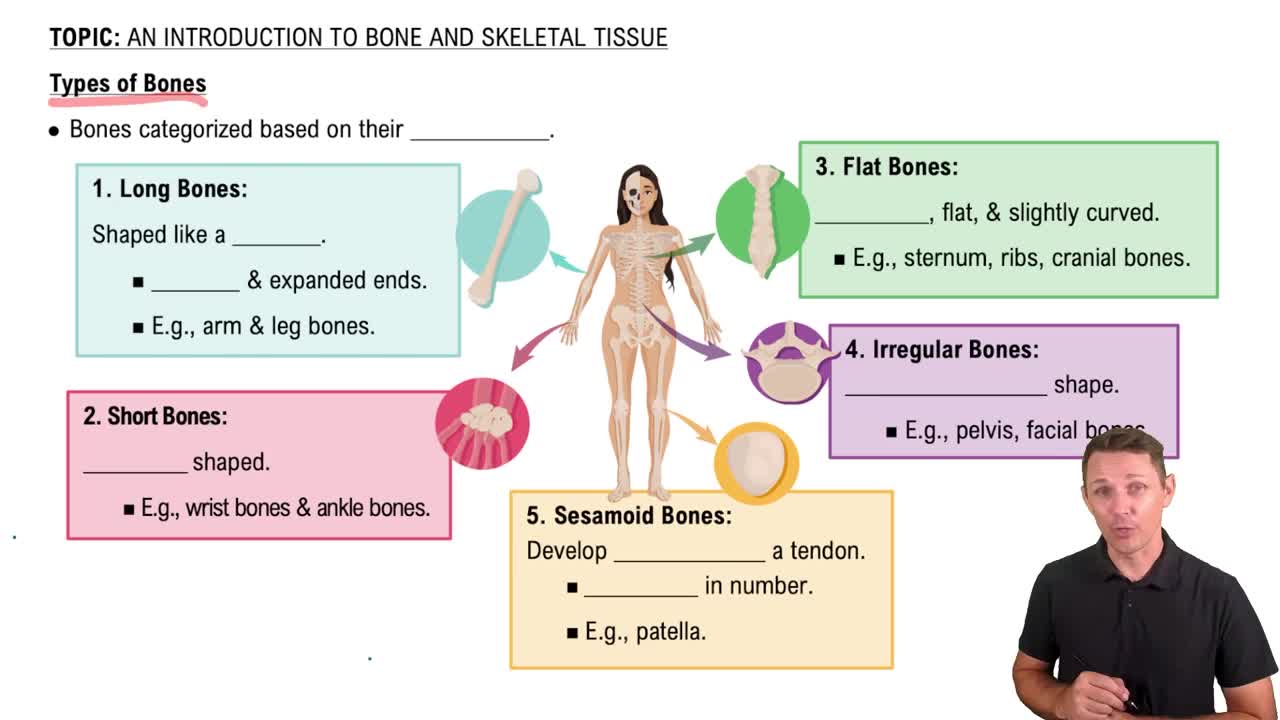
Types of Bones
19750
views
503
rank
1
comments
Terms in this set (20)
Hide definitions
What are the two main divisions of the human skeleton?
Axial skeleton
and
appendicular skeleton
.
What bones make up the axial skeleton?
The
skull
,
vertebral column
, and
rib cage
.
What is the primary function of the skeletal system?
To provide
support
,
protection
,
movement
,
mineral storage
, and
blood cell production
.
What are the three types of muscle tissue?
Skeletal
,
cardiac
, and
smooth muscle
.
What distinguishes skeletal muscle from other muscle types?
It is
voluntary
,
striated
, and attached to bones for movement.
What is the role of the muscular system?
To produce
movement
, maintain
posture
, and generate
heat
.
What are joints and their function?
Joints are
connections between bones
that allow for
movement
and
flexibility
.
Name the three types of joints based on movement.
Fibrous
(immovable),
cartilaginous
(slightly movable), and
synovial
(freely movable).
What is the central nervous system (CNS) composed of?
The
brain
and
spinal cord
.
What is the peripheral nervous system (PNS)?
All
nerves
outside the CNS that connect it to limbs and organs.
What are the main functions of the nervous system?
Sensory input
,
integration
, and
motor output
.
What are cranial nerves?
Twelve pairs of nerves that emerge directly from the
brain
to control head and neck functions.
What is the function of the spinal cord?
To transmit
nerve signals
between the brain and the rest of the body and coordinate
reflexes
.
What are the special senses?
Vision
,
hearing
,
taste
,
smell
, and
balance
.
Which organ is responsible for vision?
The
eye
.
What structure in the ear is responsible for balance?
The
vestibular apparatus
in the inner ear.
What is the role of sensory receptors in special senses?
To detect specific stimuli like light, sound, chemicals, or movement and send signals to the brain.
What is the difference between axial and appendicular skeleton?
Axial skeleton supports the
central axis
; appendicular skeleton includes
limbs and girdles
.
What is the significance of lab exercises on axial and appendicular skeleton?
They help identify and understand the
structure and function
of different bones.
Why are muscular system lab exercises important?
They provide practical knowledge of
muscle anatomy
and
movement mechanics
.
 BackBack
 3:56