 Back
Anatomy & Physiology: Skeletal System
 3:56

Terms in this set (20)
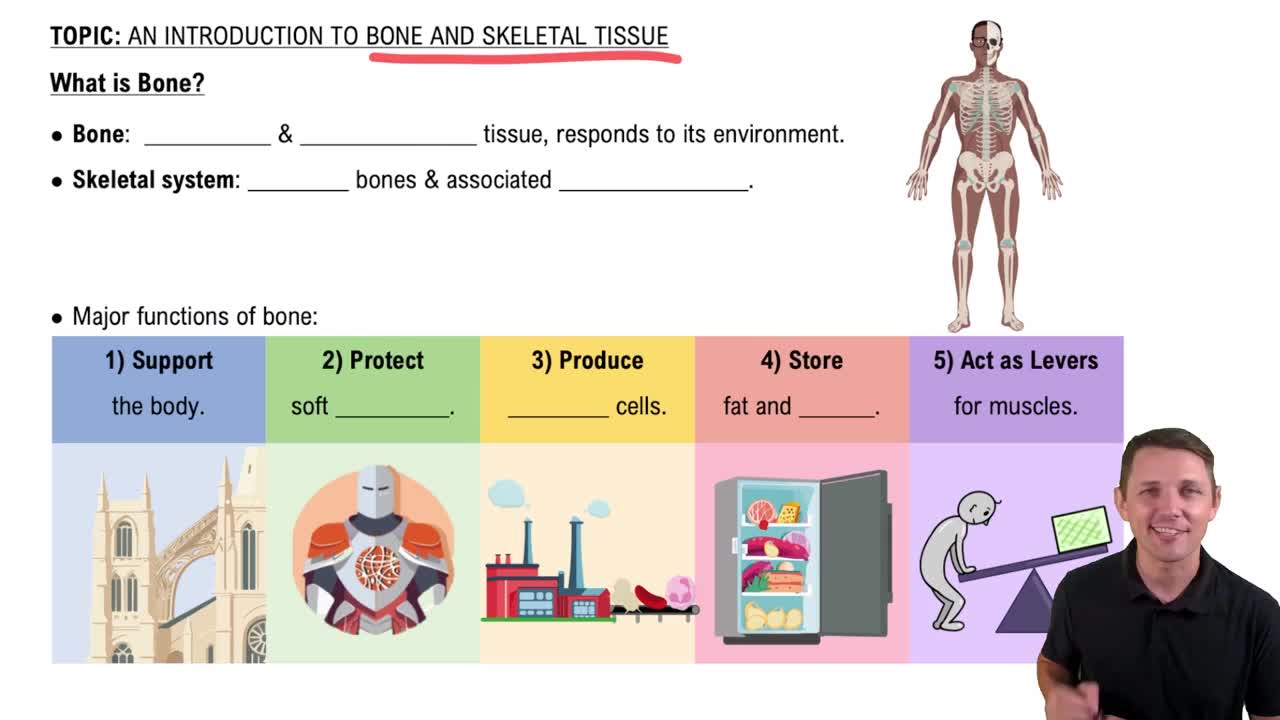
Supports the body, protects soft body parts, produces blood cells, stores minerals and fat, and allows movement by attaching muscles.
Compact bone is dense and made of osteons; spongy bone is lighter, made of trabeculae, and contains red marrow.
Osteoblasts form bone, osteocytes maintain bone, and osteoclasts absorb bone.
Diaphysis is the shaft with compact bone; epiphysis are ends with spongy bone; medullary cavity contains yellow marrow; articular cartilage covers ends.
Axial skeleton includes skull, vertebrae, ribs; appendicular skeleton includes limbs and girdles.
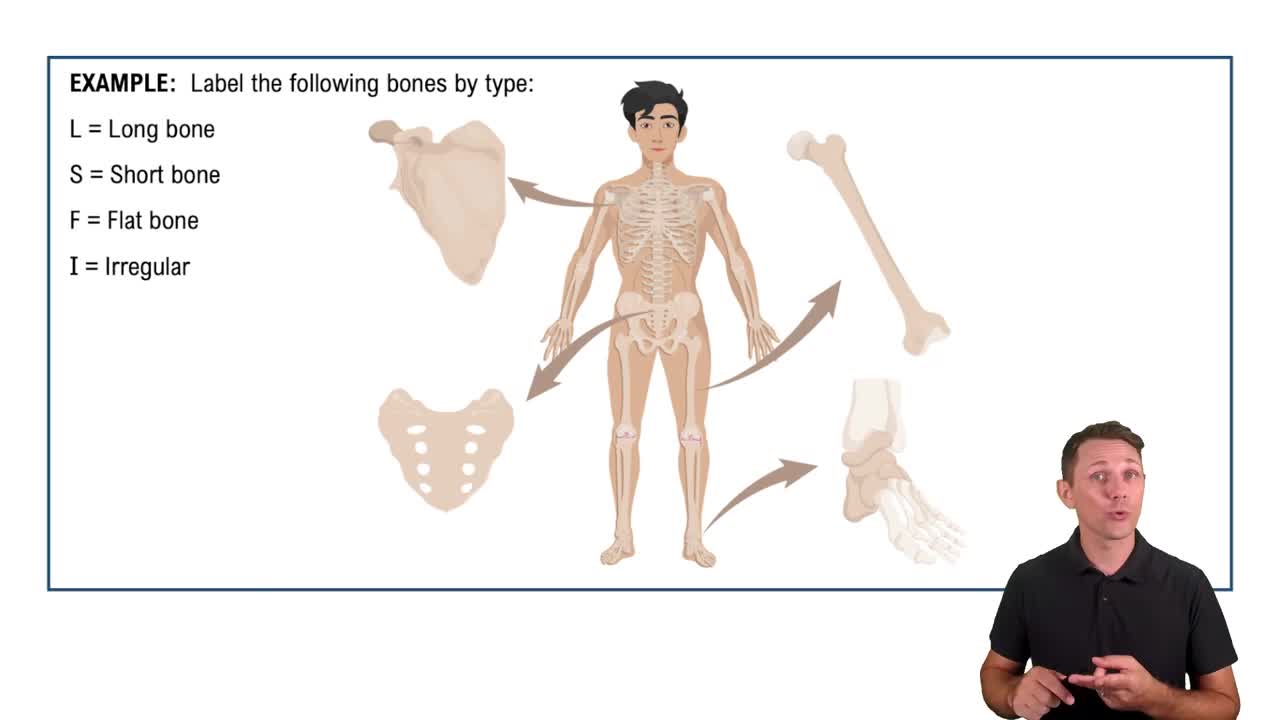
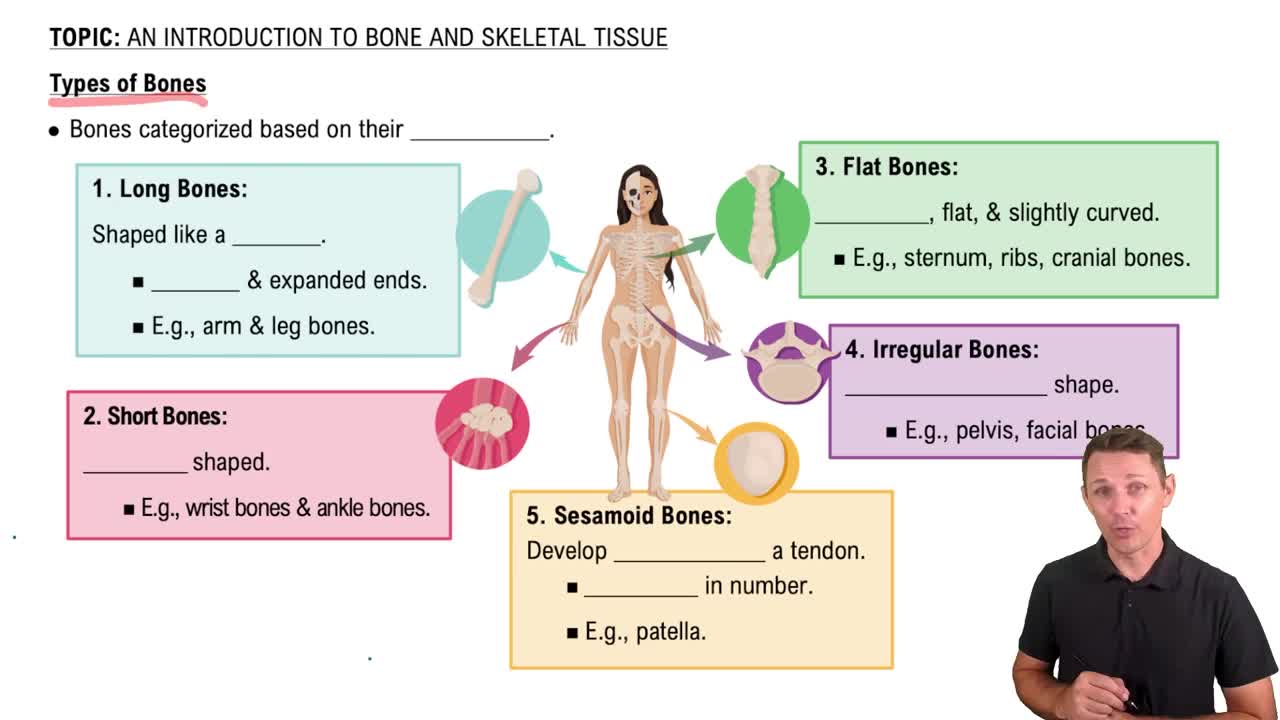
Long, short, flat, irregular, and sesamoid bones.
Released when blood calcium is low; stimulates osteoclasts to release calcium and kidneys to reabsorb calcium.
Released when blood calcium is high; stimulates osteoblasts and inhibits osteoclasts to lower calcium levels.
Stimulates bone and cartilage growth by promoting IGF production.
Freely movable joints with a synovial cavity filled with fluid, articular cartilage, ligaments, tendons, and bursae.
Plane, hinge, pivot, condyloid, saddle, and ball-and-socket joints.
Allow flexion and extension, e.g., elbow and knee joints.
Fibrocartilage between vertebrae that absorbs shock and protects vertebrae.
Normal curvatures include cervical, thoracic, lumbar, and sacral; abnormal curvatures are scoliosis, kyphosis, and lordosis.
Sternum, ribs, costal cartilages, and thoracic vertebrae protect thoracic organs.
Clavicle and scapula connect upper limbs to axial skeleton.
Consists of ilium, ischium, and pubis fused together; supports lower limbs.
Syndesmosis (immovable), amphiarthroses (slightly movable), diarthroses (freely movable).
Ligaments connect bone to bone; tendons connect muscle to bone.
Small sacs filled with synovial fluid that cushion and reduce friction in joints.