 Back
Anatomy & Physiology: Skeletal System and Bone Biology
You can tap to flip the card.
Control buttons has been changed to "navigation" mode.
1/23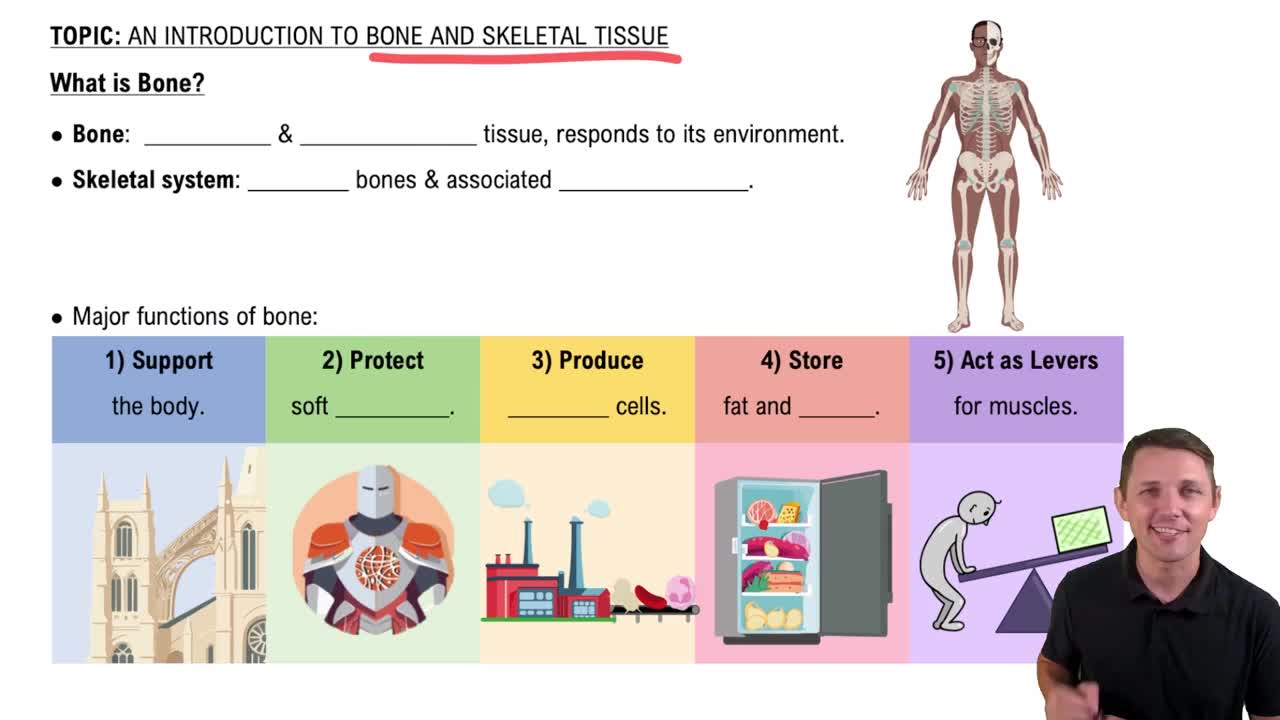
 3:56

Terms in this set (23)
- Support for body and soft organs
- Protection for brain, spinal cord, and vital organs
- Storage of minerals and growth factors
- Blood cell formation (hematopoiesis) in marrow cavities
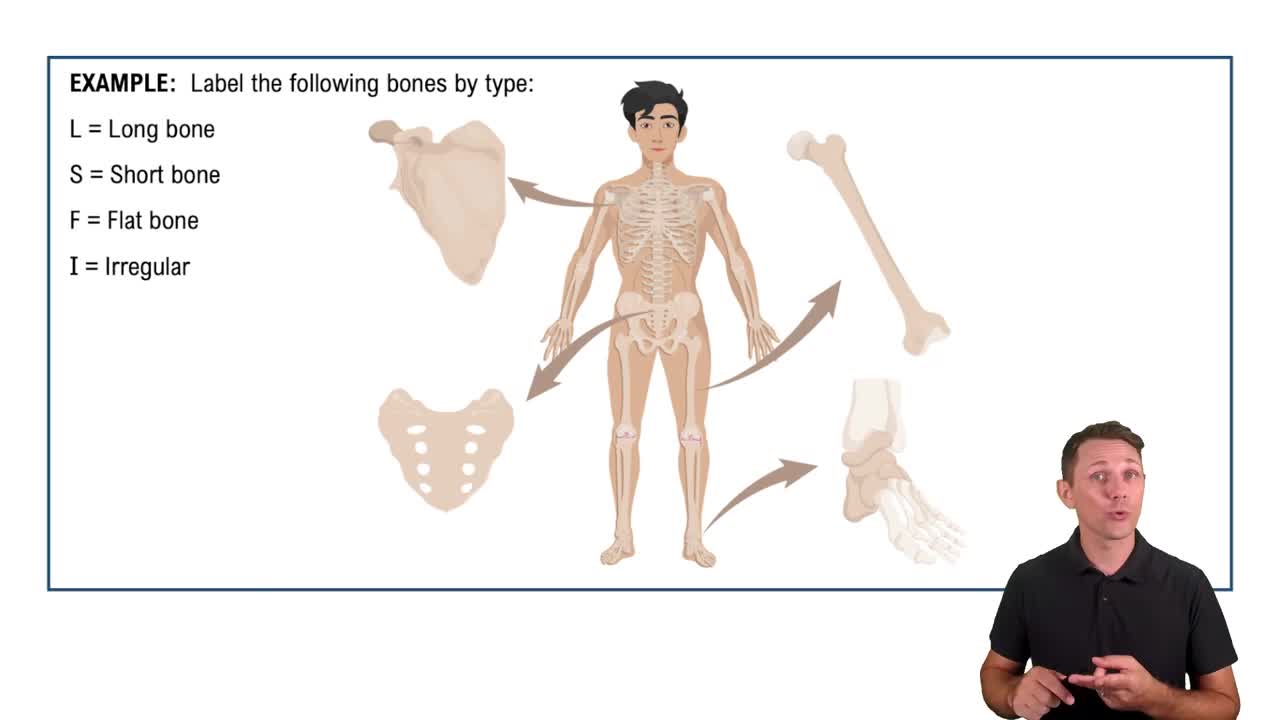
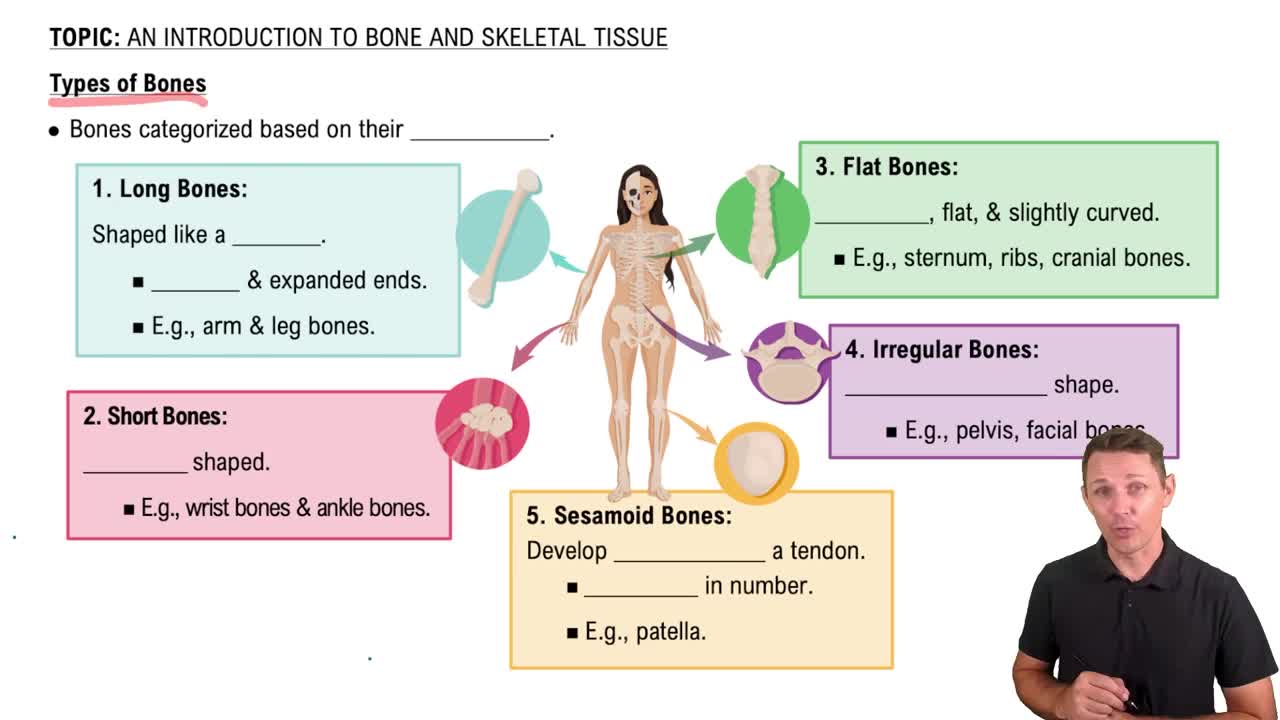
- Long bones: longer than wide
- Short bones: cube-shaped (e.g., wrist, ankle)
- Flat bones: thin, flat, slightly curved
- Irregular bones: complicated shapes
- Process: any bony prominence
- Ramus: armlike bar of bone
- Trochanter: large, blunt irregular surface
- Tuberosity: rounded projection
- Tubercle: small rounded projection
- Facet: smooth, nearly flat articular surface
- Fossa: shallow depression
- Foramen: round or oval opening through bone
- Fissure: slit-like groove or cleft
Spongy bone: porous, made of trabeculae, reduces weight, found in epiphyses with red marrow.
- Lamellae: concentric bone matrix layers
- Central canal: blood vessels and nerves
- Lacunae: cavities with osteocytes
- Canaliculi: channels connecting lacunae
- Osteocytes: mature bone cells
- Perforating canals: connect central canals
Infants: found in medullary cavities and spongy bone.
Adults: mainly in trabecular spaces of femur, humerus heads, and flat bones.
- Osteoblast: bone-forming cell
- Osteogenesis: bone formation process
- Osteoid: unmineralized organic matrix
- Osteoclast: bone-resorbing cell
- Osteolysis: breakdown of bone tissue
- Mechanical stress
- Osteoblasts (build bone)
- Osteoclasts (resorb bone)
- Hormones (PTH, growth hormone, thyroid hormone)
- Nutrition (protein, vitamins A, C, D, minerals)
- Age (bone mass decreases with age)
- Resting zone: anchors plate
- Proliferation zone: cartilage cells divide
- Hypertrophic zone: cartilage cells enlarge
- Calcification zone: matrix calcifies, cells die
- Ossification zone: osteoblasts deposit bone matrix
Vitamin C: necessary for collagen synthesis, supporting bone matrix formation.
Thyroid hormone: modulates growth hormone and supports normal bone development.
- Osteomalacia: adult bone softening from poor mineralization
- Rickets: childhood bone deformities from vitamin D/calcium deficiency
- Osteoporosis: decreased bone mass, fragile bones
- Achondroplasia: genetic short limb disorder
- Dwarfism: unusually short stature from various causes
Thyroid hormone: regulates metabolism and supports bone growth; calcitonin lowers blood calcium by inhibiting osteoclasts.
- Hyaline cartilage: joints, ribs, nose, respiratory tract
- Fibrocartilage: intervertebral discs, pubic symphysis, knee menisci
- Elastic cartilage: external ear, epiglottis