 Back
Anatomy & Physiology: Skeletal System and Joints
 3:56

Terms in this set (28)
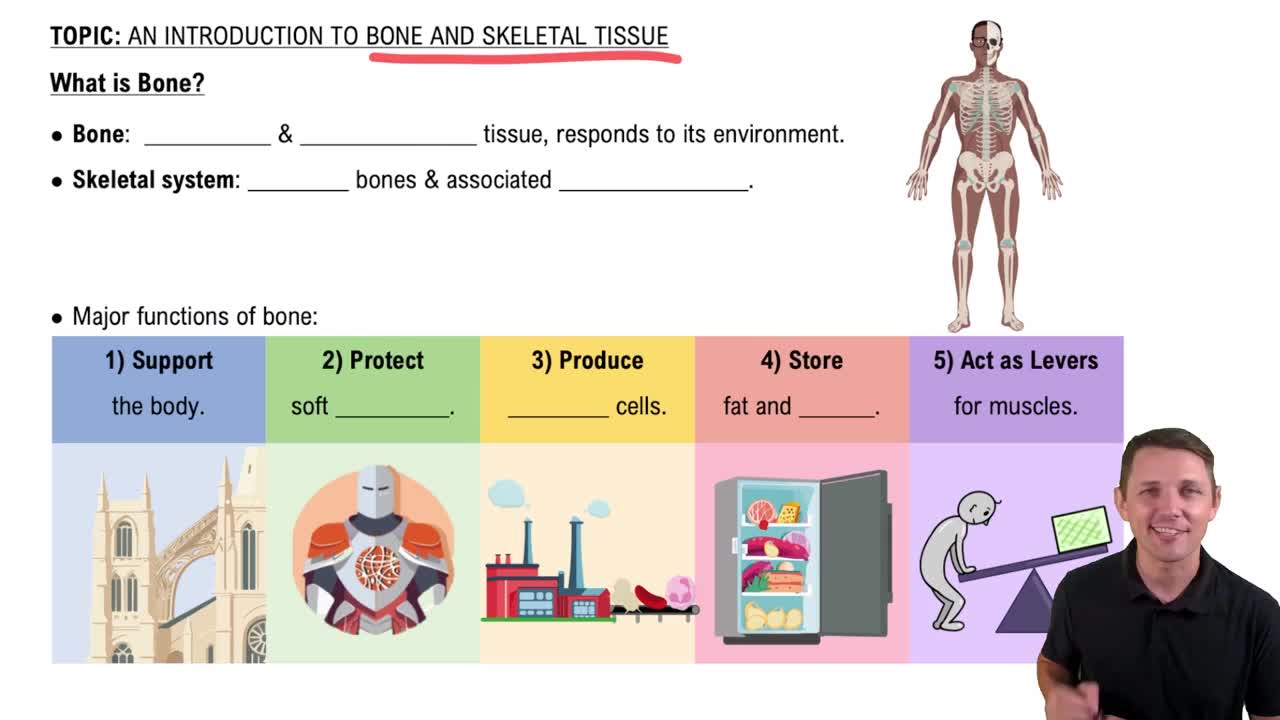
The skeletal system provides support, protection, movement, mineral storage, blood cell production, and fat storage.
Compact bone is dense and forms the outer layer; spongy bone is porous, found inside bones, and contains marrow.
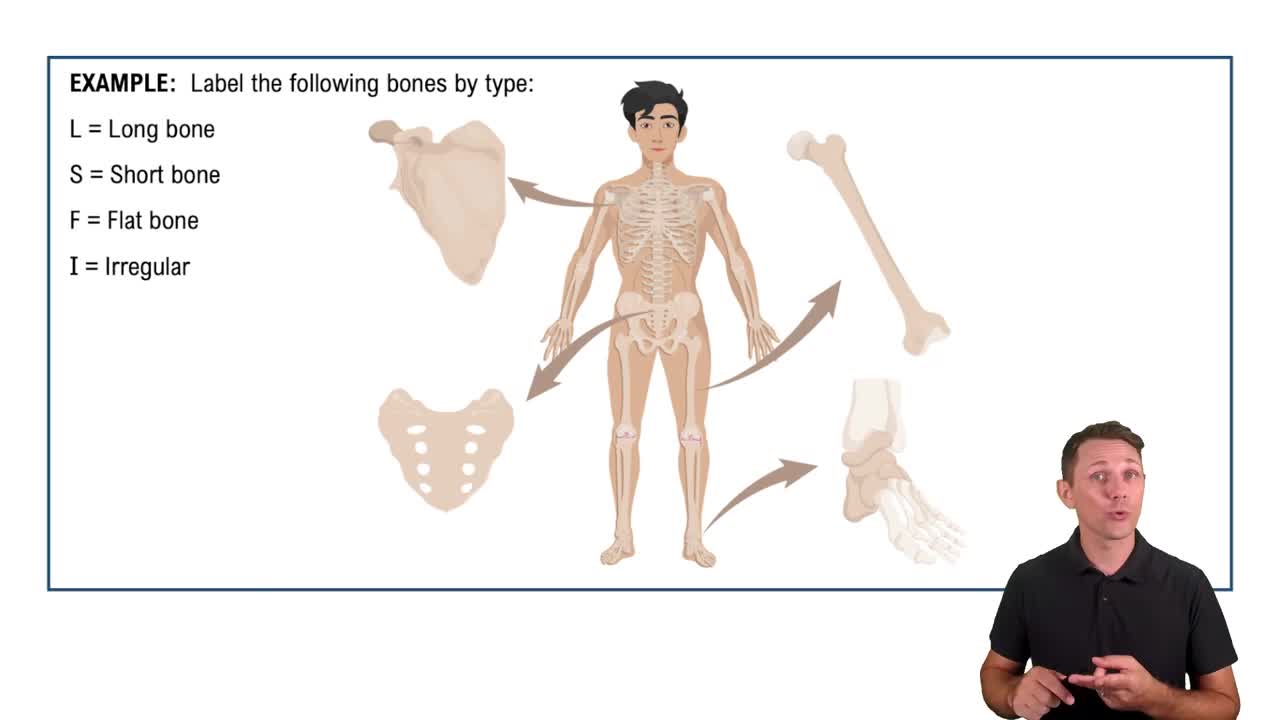
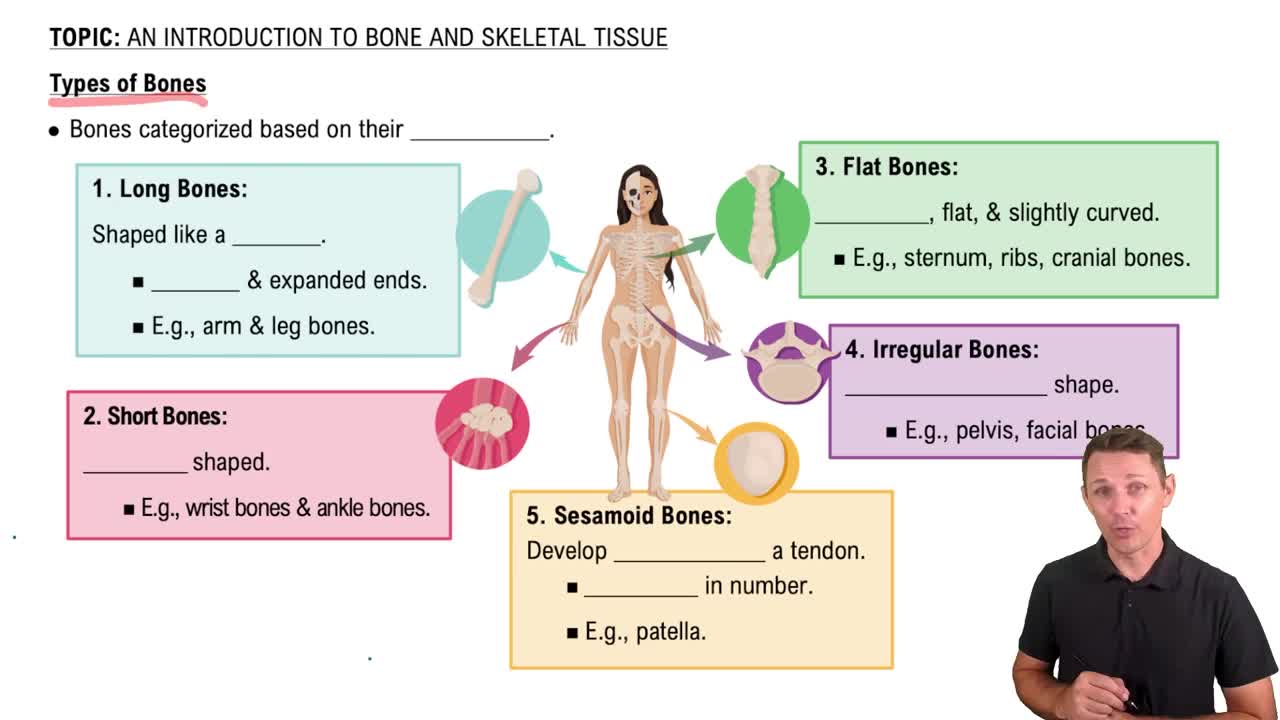
Bones are classified as long, short, flat, irregular, and sesamoid based on their shape.
Key parts include diaphysis, epiphysis, epiphyseal plate, articular cartilage, compact bone, spongy bone, periosteum, endosteum, and medullary cavity.
The epiphyseal plate is the growth plate where longitudinal bone growth occurs during development.
Bone matrix has organic components (collagen for flexibility) and inorganic components (hydroxyapatite for hardness).
Compact bone is organized into osteons with a central canal, concentric lamellae, lacunae, canaliculi, and interstitial lamellae.
The central canal contains blood vessels and nerves supplying the osteon.
Red marrow produces blood cells; yellow marrow stores fat. Red marrow is more abundant in children.
Intramembranous ossification is the process where bone forms directly from mesenchymal tissue, producing flat bones like the skull.
Endochondral ossification forms bone by replacing hyaline cartilage, producing most long bones.
Longitudinal growth occurs at the epiphyseal plate by cartilage proliferation and ossification.
Appositional growth increases bone diameter by adding new bone beneath the periosteum.
Bone remodeling maintains bone strength and mineral homeostasis by balancing bone formation and resorption.
Parathyroid hormone increases blood calcium by stimulating bone resorption.
Calcitonin lowers blood calcium by inhibiting osteoclast activity and promoting bone formation.
The skeleton is divided into the axial skeleton (skull, vertebrae, ribs) and the appendicular skeleton (limbs and girdles).
The skeleton contains hyaline cartilage, fibrocartilage, and elastic cartilage.
The vertebral column supports the body, protects the spinal cord, and provides attachment points for muscles.
A joint is a connection between bones that allows varying degrees of movement.
Joints are classified as fibrous, cartilaginous, or synovial based on their tissue composition.
Synovial fluid lubricates joints, nourishes cartilage, and absorbs shock.
Synovial joints allow flexion, extension, abduction, adduction, rotation, and other complex movements.
Stability is provided by the acetabular labrum, articular capsule, and ligaments: iliofemoral, ischiofemoral, and pubofemoral.
The rotator cuff muscles that stabilize the shoulder are supraspinatus, infraspinatus, teres minor, and subscapularis.
Its shallow socket and wide range of motion make the glenohumeral joint susceptible to dislocations.
The knee joint includes the patellar ligament, lateral and medial menisci, and the anterior and posterior cruciate ligaments.
Menisci absorb shock, improve joint fit, and stabilize the knee.