 Back
Anatomy & Physiology: Skeletal System Basics
 3:56

Terms in this set (33)
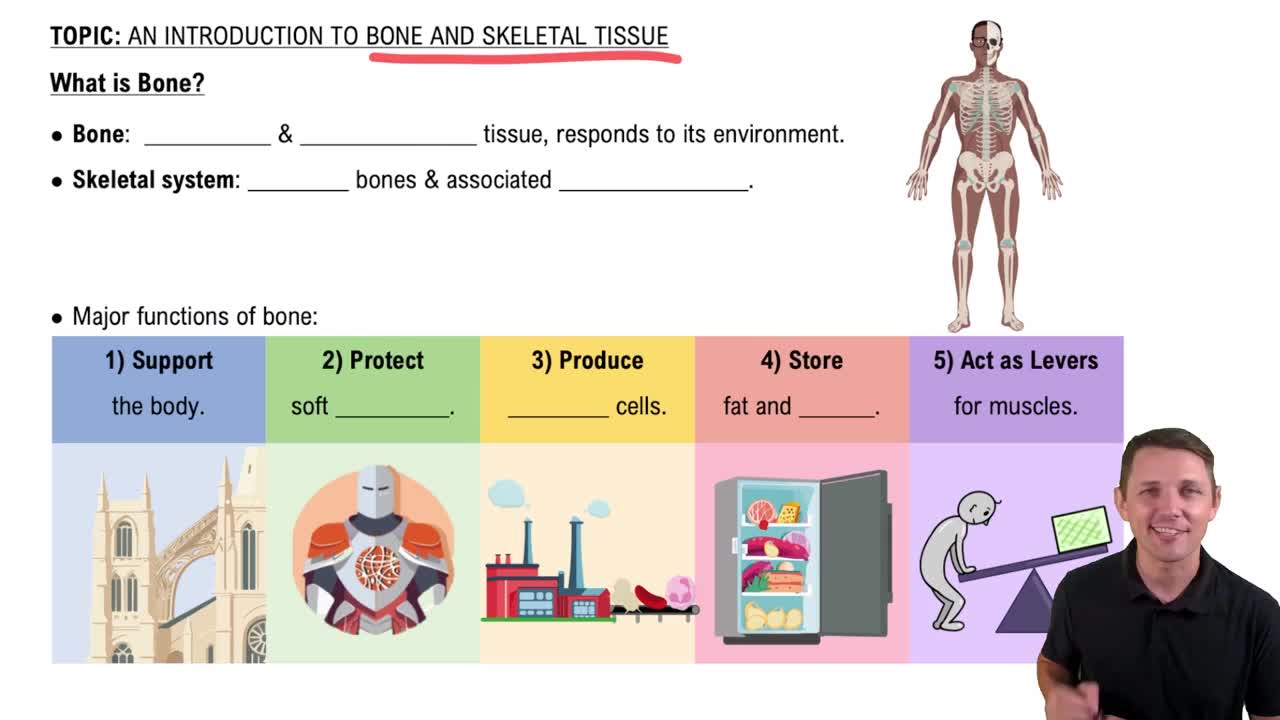
Support, protection, movement, mineral storage, blood cell production, and energy storage.
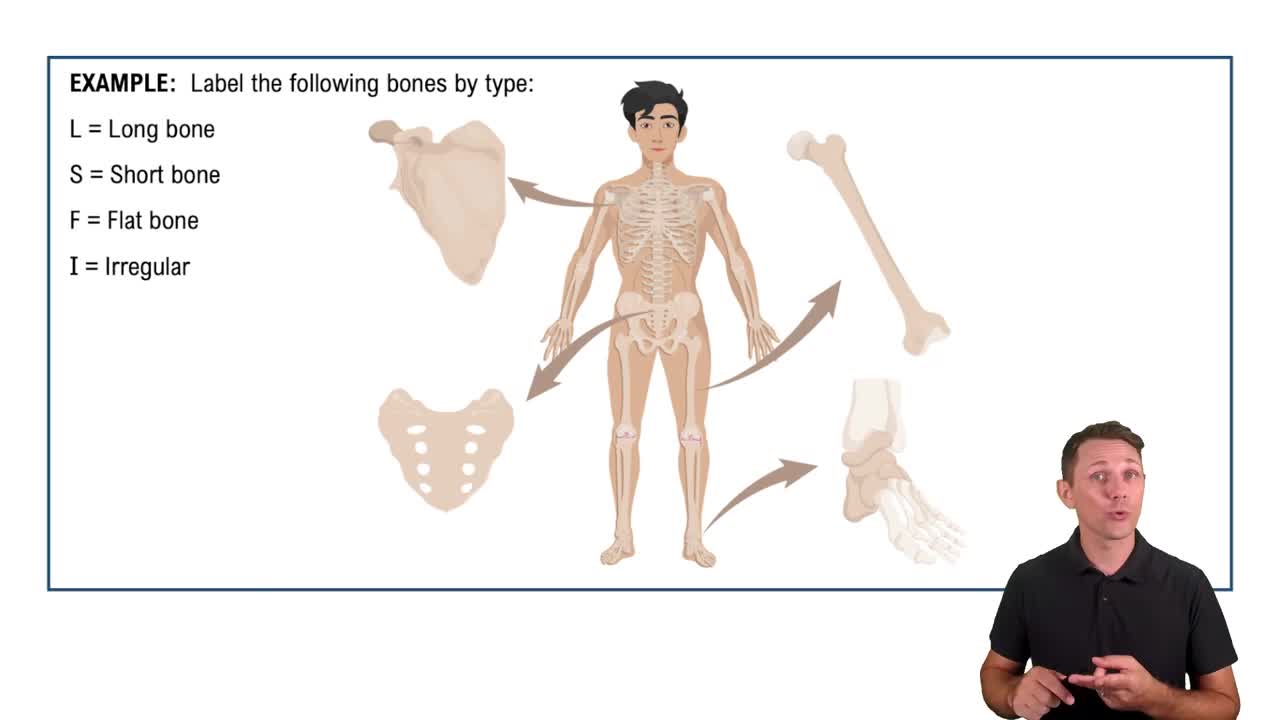
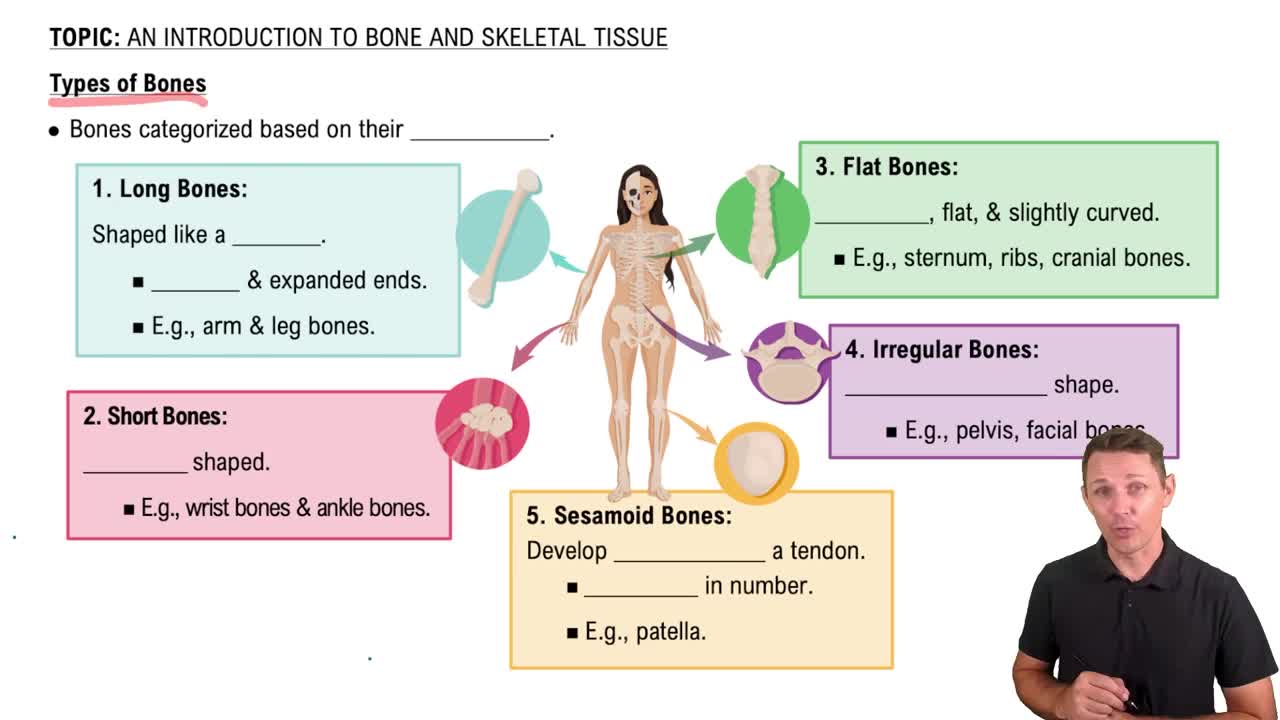
Long, short, flat, irregular, and sesamoid bones.
The rounded end of a long bone, usually covered with articular cartilage.
The shaft or central part of a long bone.
Light, porous bone found mainly in the epiphysis; contains trabeculae and bone marrow.
Dense bone forming the outer layer of bones, composed of osteons.
Hyaline cartilage covering the epiphysis to reduce friction in joints.
A dense connective tissue membrane covering the outer surface of bones except at joints.
Collagen fibers that connect the periosteum to the bone matrix.
The hollow central cavity inside the diaphysis containing bone marrow.
A thin membrane lining the medullary cavity and inner surfaces of bone.
Soft tissue inside bones; red marrow produces blood cells, yellow marrow stores fat.
Structural units of compact bone, consisting of concentric lamellae around a central canal.
Concentric rings of mineralized matrix in osteons.
Channel in the center of an osteon containing blood vessels and nerves.
Remnants of old osteons found between new osteons in compact bone.
Layers of bone matrix that run around the entire circumference of the bone.
Channels that connect central canals of osteons to each other and to the periosteum.
Thin columns of spongy bone that provide structural support and house marrow.
Composed of organic components like collagen and inorganic minerals like hydroxyapatite for strength.
Bone-forming cells that secrete matrix and initiate mineralization.
Mature bone cells embedded in the matrix that maintain bone tissue.
Large cells that resorb or break down bone matrix during remodeling.
The process of adding new bone matrix by osteoblasts.
Small channels connecting osteocytes, allowing nutrient and waste exchange.
A condition characterized by decreased bone density and increased fracture risk.
Bone formation directly from mesenchymal tissue, mainly forming flat bones.
Bone formation by replacing hyaline cartilage, typical in long bones.
Stem cells that differentiate into osteoblasts during bone formation.
Soft spots on an infant's skull where intramembranous ossification is incomplete.
Dense connective tissue surrounding cartilage, involved in appositional growth.
Cartilage plate in long bones where lengthwise growth occurs during childhood.
Growth in bone thickness by adding new layers on the surface.