 Back
Anatomy & Physiology: Skeletal System Flashcards
 3:56

Terms in this set (28)
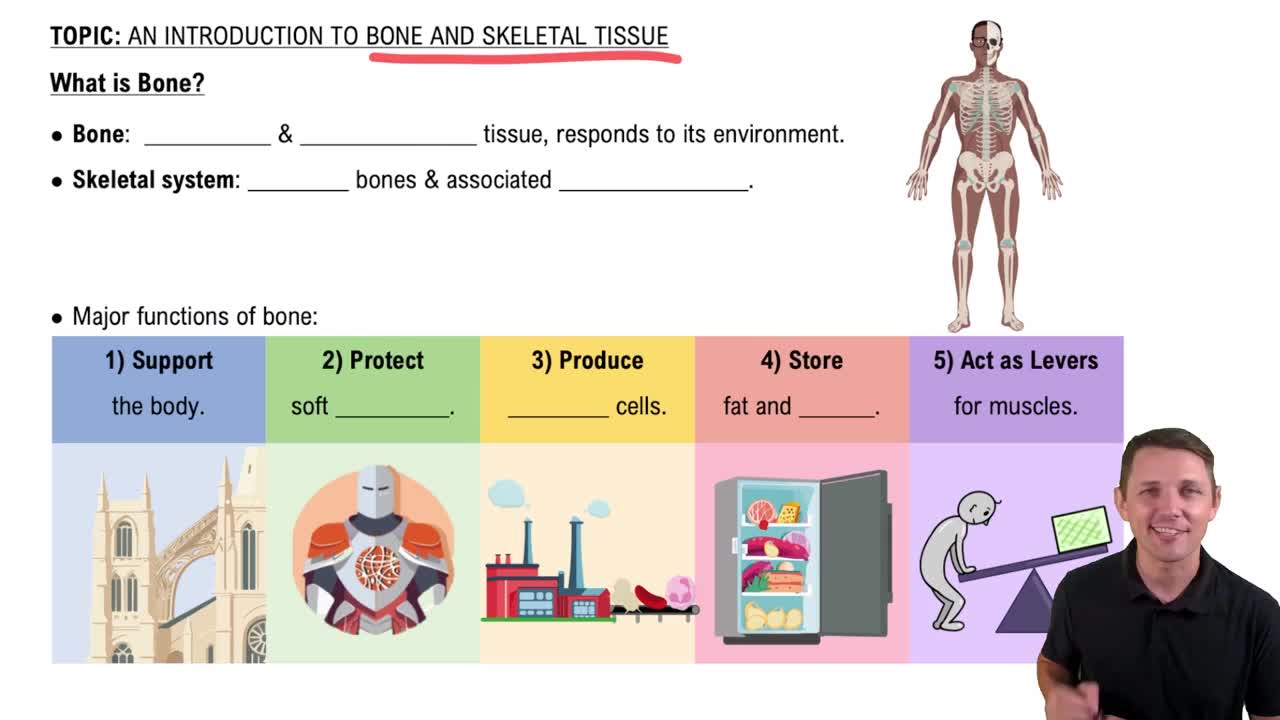
The axial skeleton includes the skull, vertebral column, and thoracic cage. The appendicular skeleton includes the limbs and girdles (pectoral and pelvic).
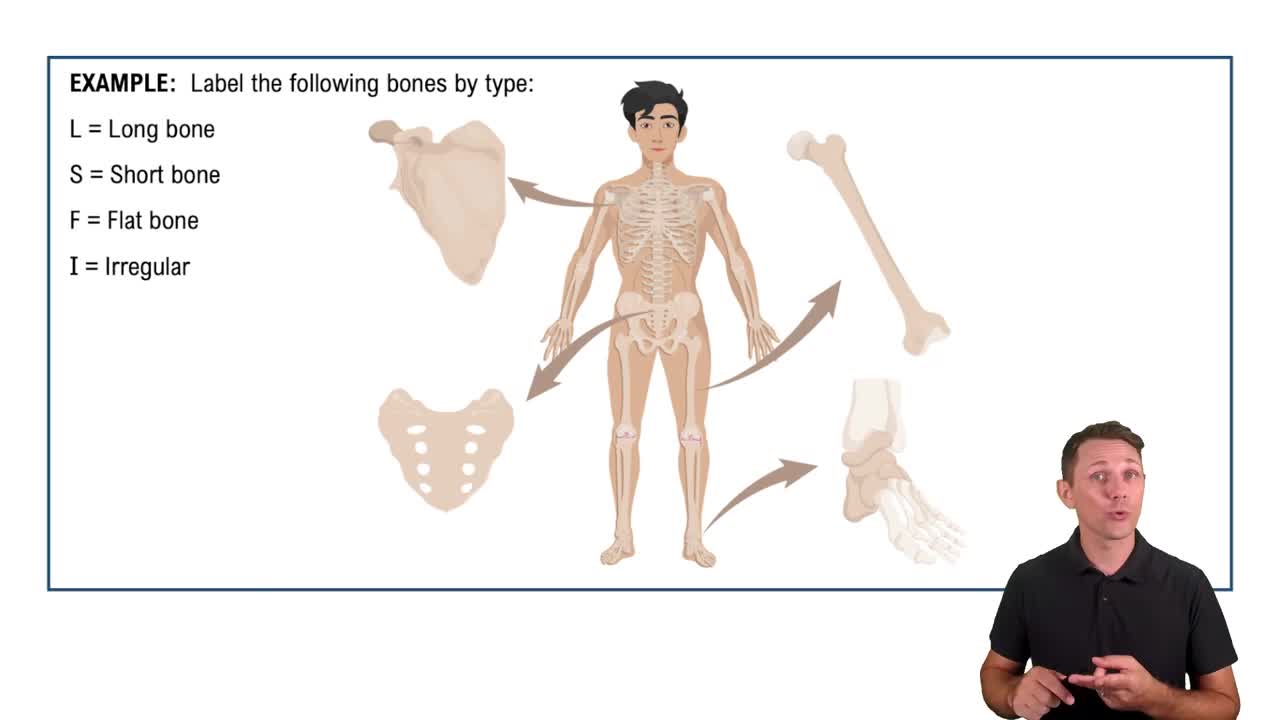
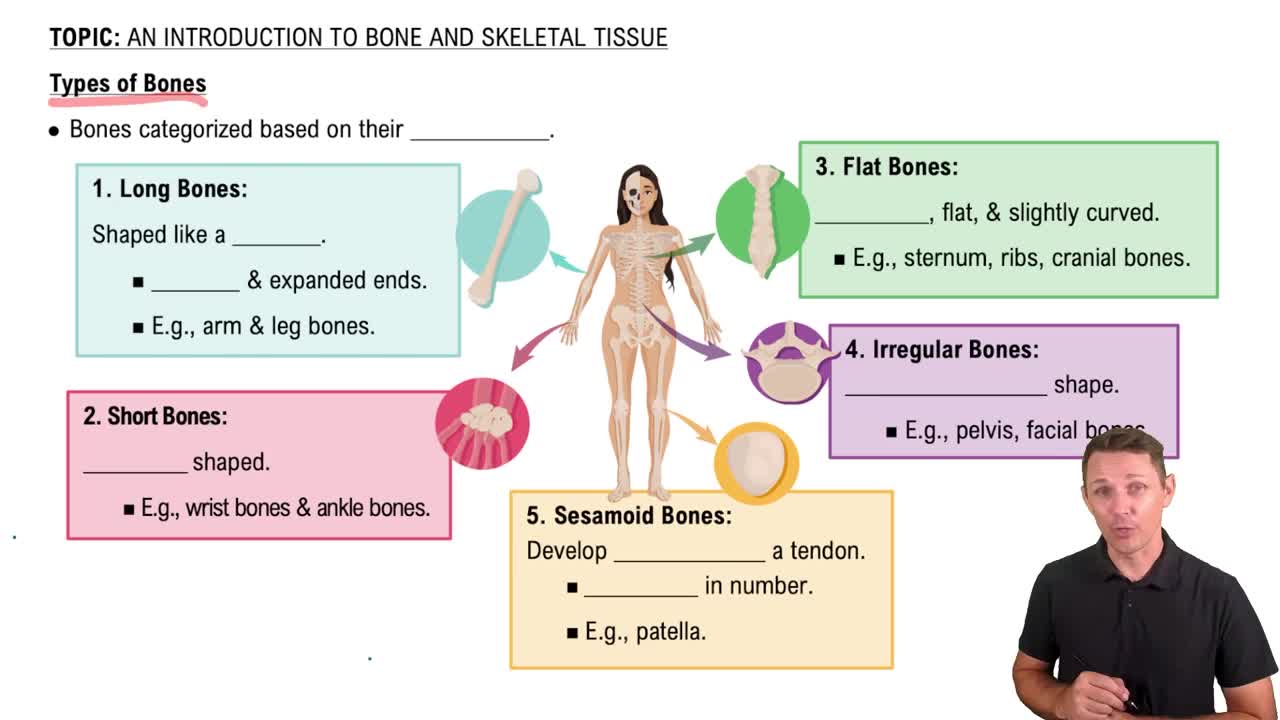
Long bones are longer than wide (e.g., femur). Short bones are cube-shaped (e.g., carpals). Flat bones are thin and flat (e.g., sternum). Irregular bones have complex shapes (e.g., vertebrae).
Epiphysis: ends of the bone; diaphysis: shaft; spongy bone: porous inside; compact bone: dense outer layer; medullary cavity: central cavity containing marrow.
An osteon is the basic structural unit of compact bone, consisting of concentric lamellae surrounding a central canal.
The central canal runs through the center of an osteon and contains blood vessels and nerves.
Lacunae are small spaces housing osteocytes, the mature bone cells that maintain bone tissue.
Canaliculi are tiny channels connecting lacunae, allowing osteocytes to communicate and exchange nutrients.
Collagen provides flexibility and tensile strength; mineral salts (mainly calcium phosphate) provide hardness and rigidity.
Key skull bones include frontal, parietal, temporal, occipital, sphenoid, and ethmoid.
Supraorbital margins form the upper eye socket edges; supraorbital foramen or notch allows passage of nerves and vessels.
Includes mastoid process, zygomatic process, external auditory meatus, mandibular fossa, styloid process, and jugular foramina.
Most vertebrae have a body, vertebral foramen, vertebral arch, pedicle, lamina, transverse process, spinous process, and articular processes.
Cervical vertebrae have transverse foramina for vertebral arteries; the atlas supports the skull; the axis has the dens for head rotation.
Thoracic vertebrae have facets for rib articulation and long, downward-pointing spinous processes.
Lumbar vertebrae are large and robust with thick bodies and short, blunt spinous processes for weight bearing.
The sternum consists of the manubrium (with suprasternal notch), body, and xiphoid process.
Ribs have a head, neck, tubercle, shaft, and costal cartilage.
True ribs (7 pairs) attach directly to the sternum; false ribs (3 pairs) attach indirectly; floating ribs (2 pairs) do not attach anteriorly.
The pectoral girdle includes the clavicle (sternal and acromial ends) and scapula (spine, acromion, glenoid cavity, coracoid process).
Includes the head, anatomical neck, surgical neck, greater and lesser tubercles, deltoid tuberosity, trochlea, and capitulum.
The os coxa consists of the ilium (iliac crest, ASIS, PSIS), ischium (ischial tuberosity), and pubis (pubic symphysis).
Includes the head, neck, greater and lesser trochanters, linea aspera, and medial/lateral condyles and epicondyles.
Wormian bones are small, irregular bones found within sutures of the skull.
Sesamoid bones develop within tendons, such as the patella, to protect tendons and improve mechanical advantage.
No, the number can vary due to extra sesamoid or wormian bones in some individuals.
The radius is lateral to the ulna in the forearm.
The talus is inferior to the patella in the lower limb.
The nasal bone is anterior to the occipital bone in the skull.