 Back
Anatomy & Physiology: Skeletal System Flashcards
 3:56

Terms in this set (20)
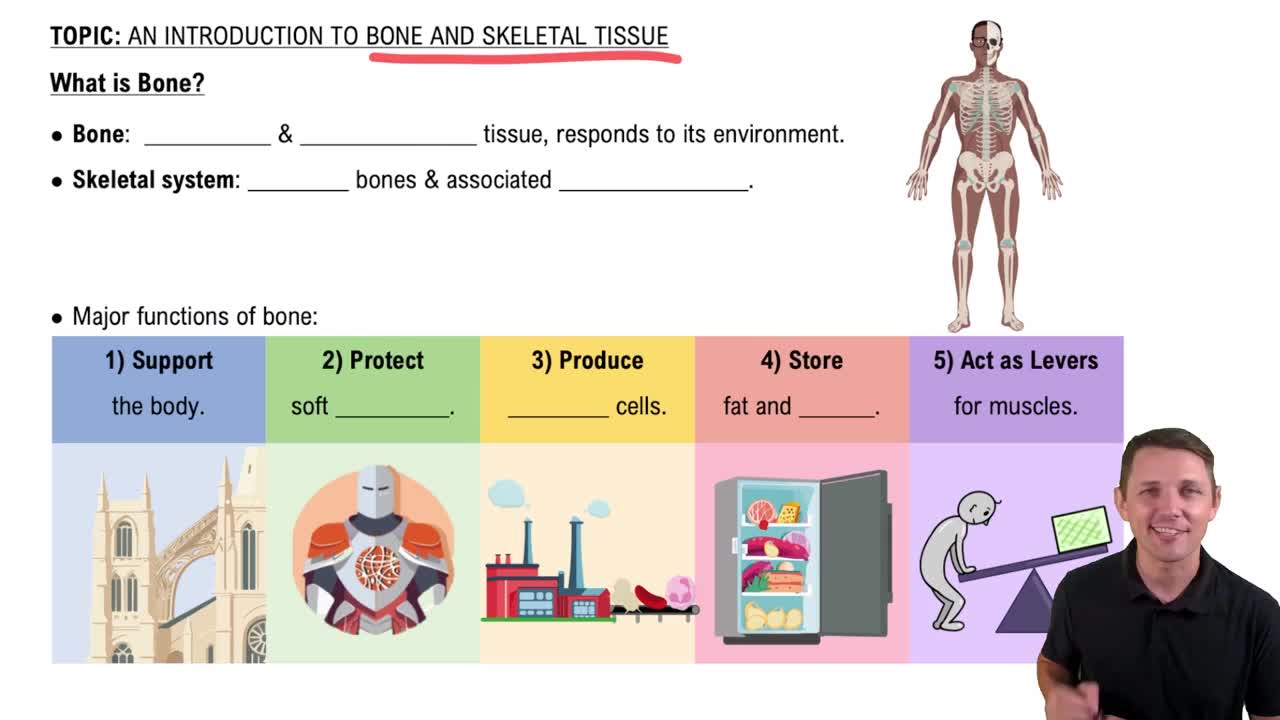
Support, protection, anchorage, mineral storage, blood formation, fat storage, and hormone production.
Hyaline cartilage, elastic cartilage, and fibrocartilage.
Appendicular and axial skeleton.
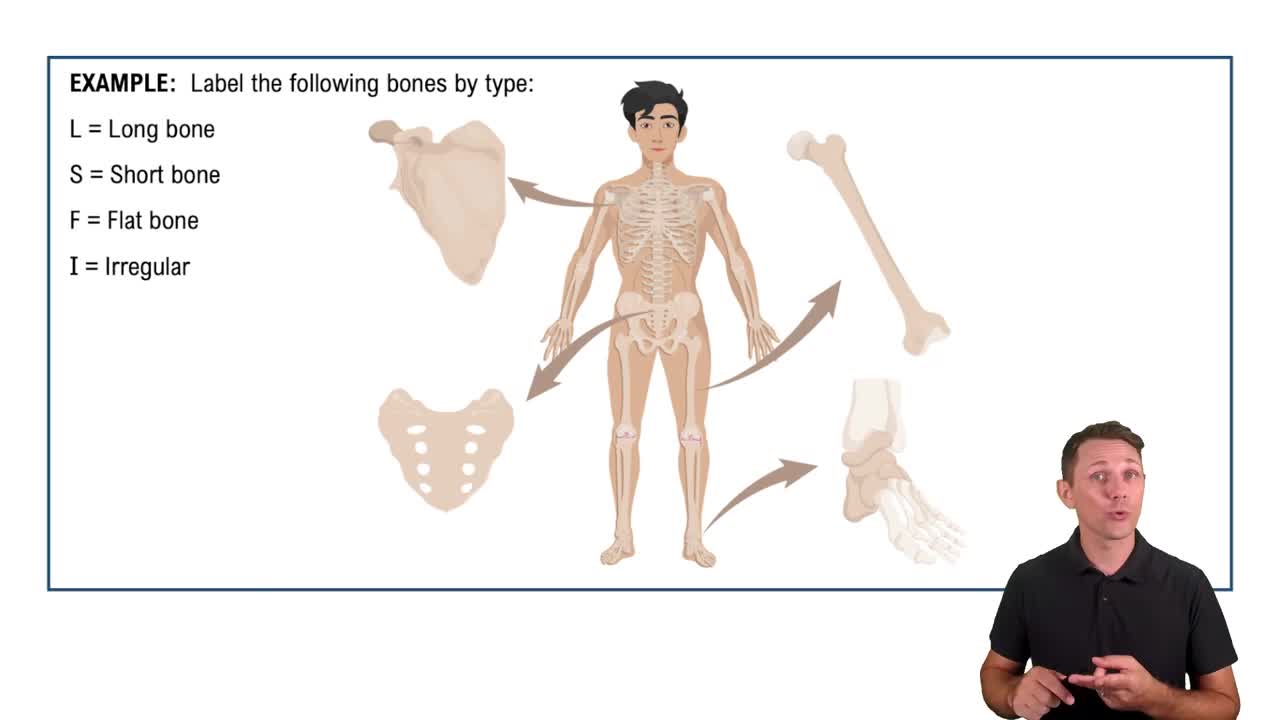
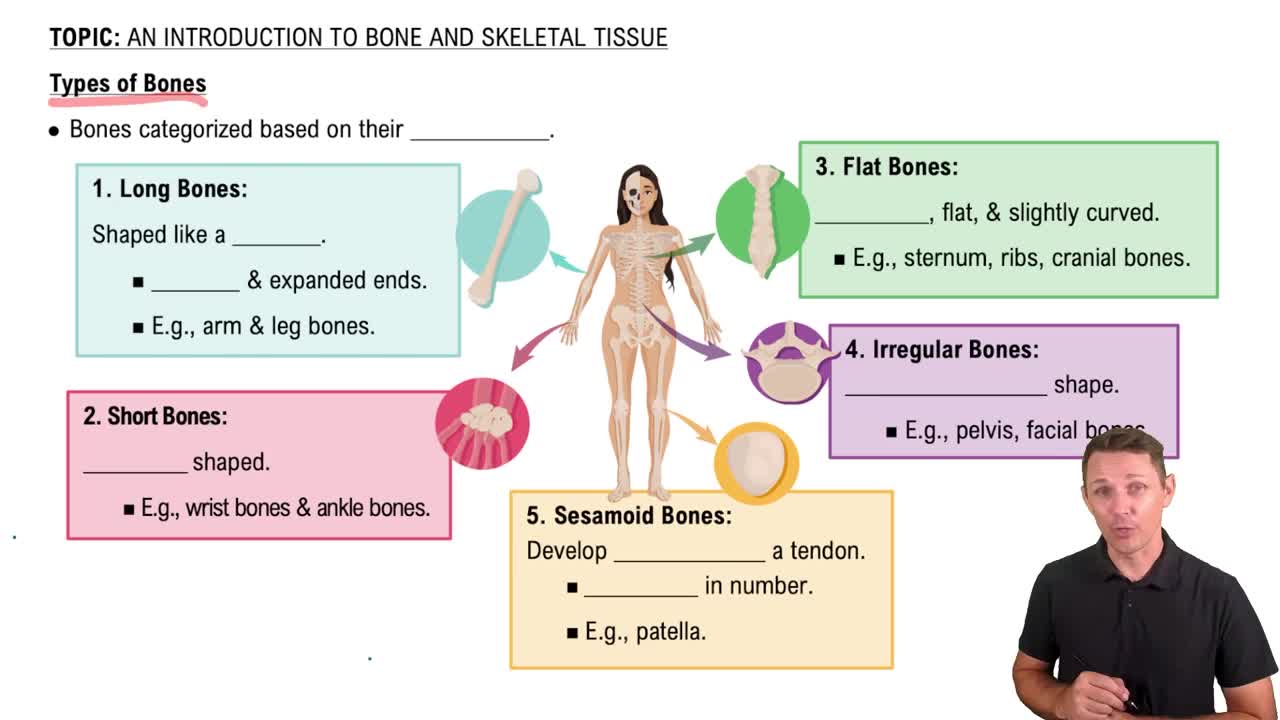
Long, short, sesamoid, flat, and irregular bones.
Compact (dense) bone with solid matrix and spongy bone with porous spaces.
Osteogenic cells, osteoblasts, osteocytes, bone-lining cells, and osteoclasts.
Mitotically active stem cells that differentiate into osteoblasts or bone-lining cells.
Bone-forming cells that synthesize organic bone matrix and promote mineralization.
Mature bone cells that maintain bone matrix and act as stress or strain sensors.
Flat cells on bone surfaces that help maintain the matrix; called periosteal on external surfaces and endosteal on internal surfaces.
Bone-resorbing cells derived from white blood cell lineage with a ruffled border facing bone.
Composed of osteons (Haversian systems), central canals, canaliculi, interstitial and circumferential lamellae.
Hairlike canals that connect lacunae to each other and to the central canal for nutrient and waste exchange.
Porous bone organized along lines of stress with trabeculae; lacks osteons and contains capillaries in endosteum.
1/3 organic matter (mainly collagen) and 2/3 inorganic matter (mainly calcium phosphate and minerals).
Endochondral ossification (from hyaline cartilage models) and intramembranous ossification (from embryonic connective tissue).
Hyaline cartilage model forms, cartilage calcifies and deteriorates, periosteal bud invades, primary ossification center forms, and bone replaces cartilage.
Mesenchymal cells cluster and differentiate into osteoblasts, secrete osteoid, which calcifies to form flat bones like the skull.
Bones grow in length and width, remodel in response to stress, with osteoblasts depositing bone and osteoclasts resorbing bone.
Bone stores and exchanges calcium and phosphate with extracellular fluid, maintaining balance via mineral deposition and resorption.