Back

Anatomy & Physiology: Skeletal System High-Yield Flashcards
Control buttons has been changed to "navigation" mode.
1/48
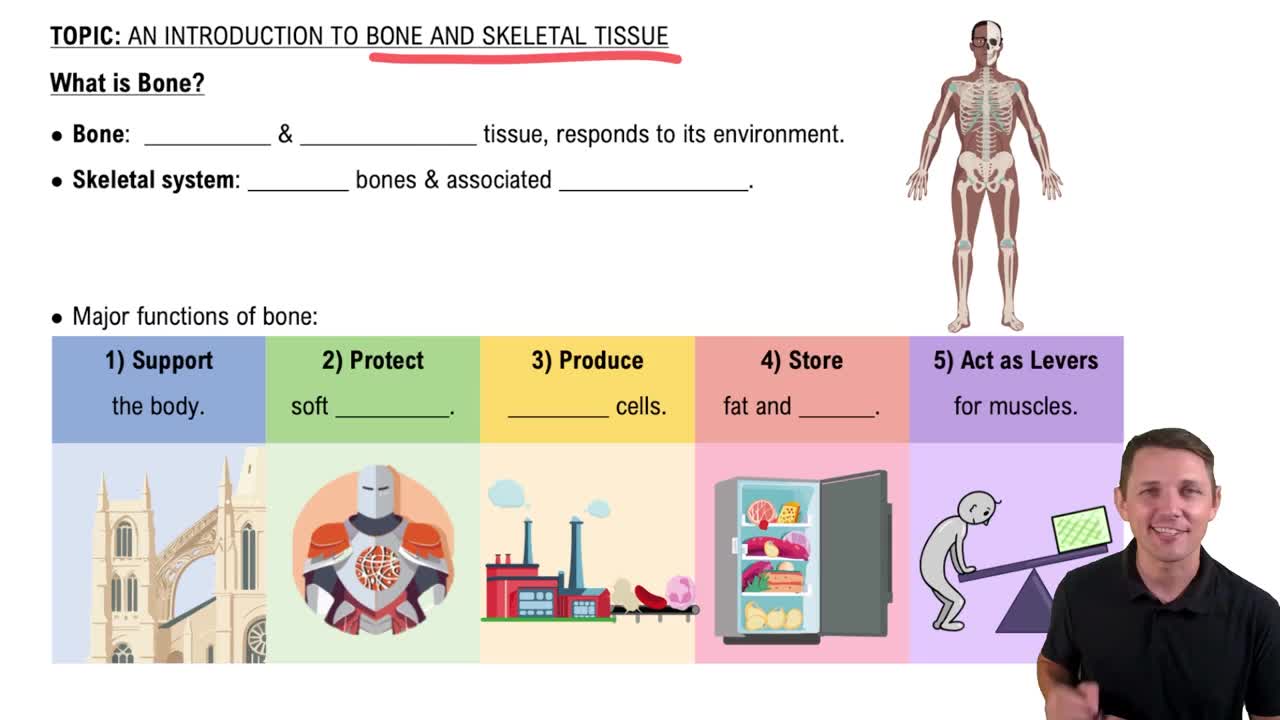
  • What does the skeletal system include?

    Bones, cartilage, ligaments, connective tissue

  • 5 functions of the skeletal system?

    Support, Protection, Movement (leverage), Storage (calcium + lipids), Blood cell production

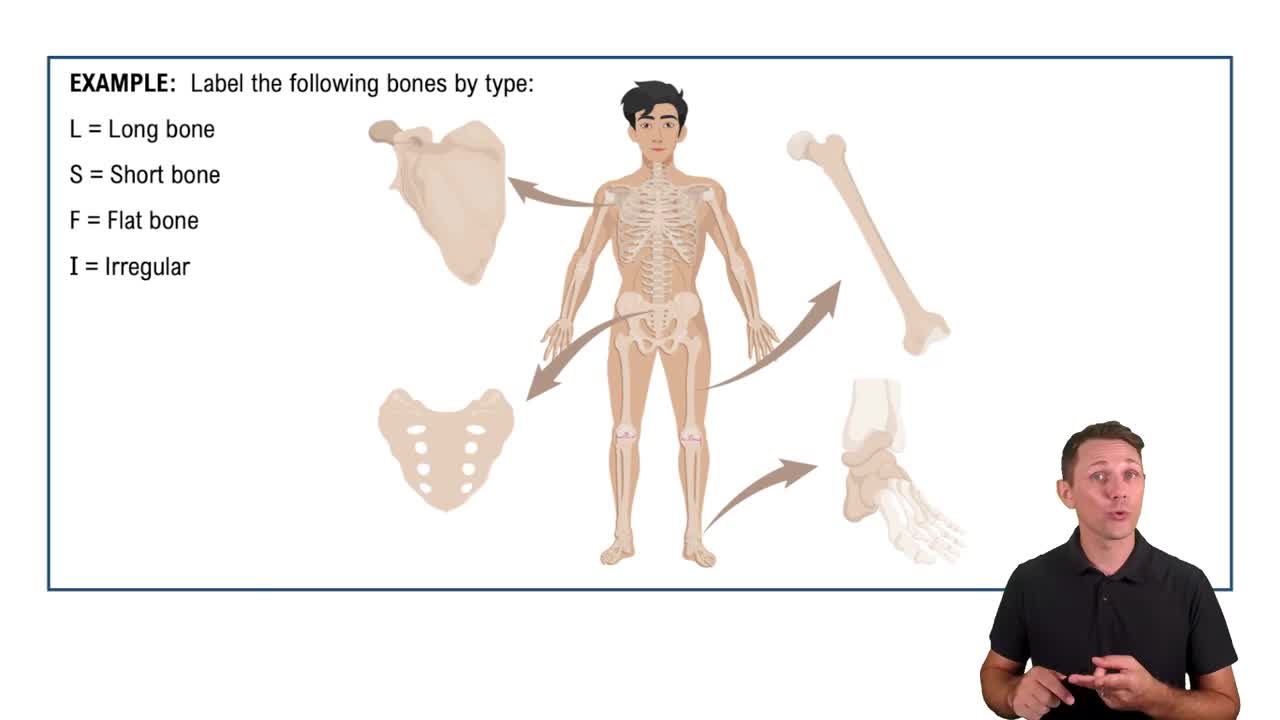
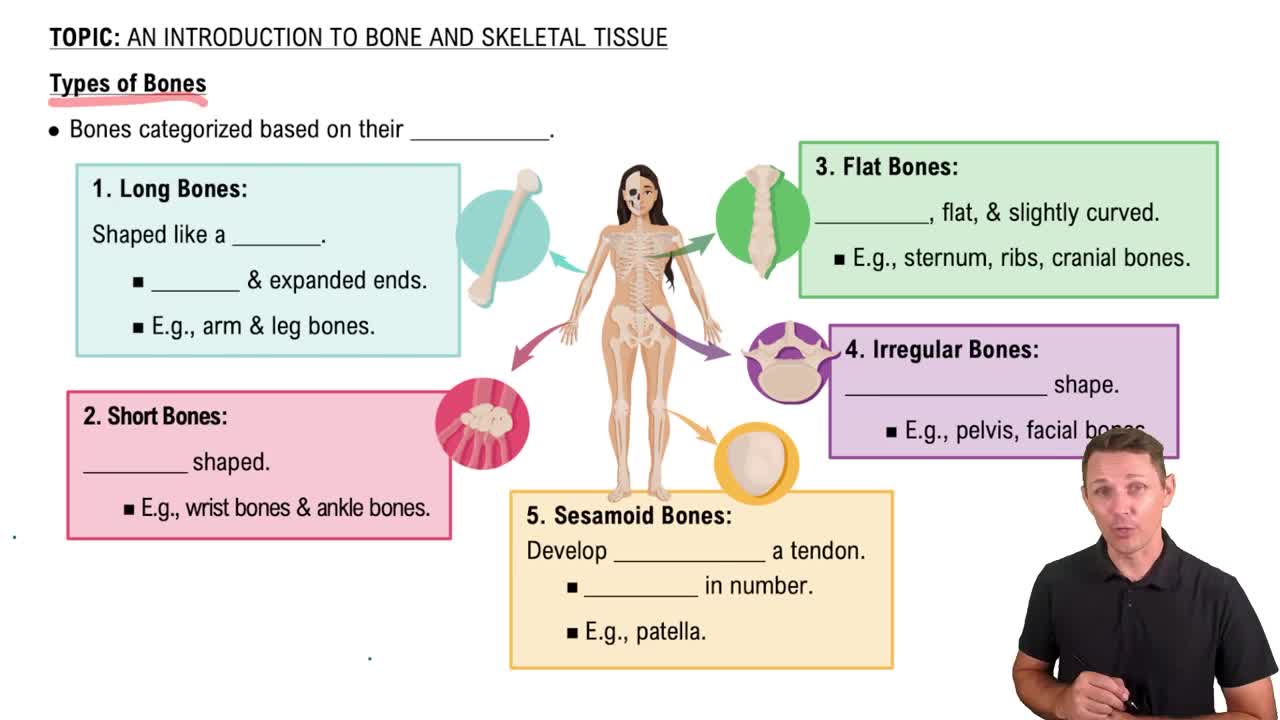
  • Long bones

    Longer than wide (arms, legs)

  • Short bones

    Cube-shaped (wrists, ankles)

  • Flat bones

    Thin (skull, ribs)

  • Irregular bones

    Complex shape (vertebrae)

  • Sesamoid bones

    In tendons (patella)

  • Sutural bones

    Between skull bones

  • Diaphysis

    Shaft of a long bone

  • Epiphysis

    Ends of a long bone

  • Metaphysis

    Region between shaft and ends of a long bone

  • Medullary cavity

    Contains bone marrow

  • Composition of bone matrix: 2/3

    Calcium salts (hydroxyapatite)

  • Composition of bone matrix: 1/3

    Collagen

  • Osteoprogenitor cells function

    Stem cells that produce osteoblasts

  • Osteoblasts function

    Build bone

  • Osteoid

    Unmineralized bone matrix produced by osteoblasts

  • Osteocytes function

    Maintain bone tissue

  • Osteocytes location

    Located in lacunae

  • Osteoclasts function

    Break down bone (resorption)

  • Functional unit of compact bone

    Osteon

  • Central canal in osteon contains

    Blood vessels

  • Lamellae

    Rings of bone matrix in osteon

  • Canaliculi

    Small channels connecting osteocytes

  • Structure of spongy bone

    Trabeculae

  • Red marrow function

    Makes blood cells

  • Yellow marrow function

    Stores fat

  • Periosteum

    Outer covering of bone

  • Endosteum

    Inner lining of bone

  • Ossification

    Bone formation

  • Calcification

    Calcium salt deposition in bone

  • Endochondral ossification

    Bone replaces cartilage

  • Intramembranous ossification

    Bone forms from connective tissue

  • Where does lengthwise bone growth occur?

    Epiphyseal plate

  • What does the epiphyseal plate become after puberty?

    Epiphyseal line

  • Appositional growth

    Bone gets thicker

  • Bone remodeling involves

    Deposition (build) and resorption (break)

  • Effect if bone breakdown exceeds build

    Weak bones

  • Parathyroid hormone (PTH) effect

    Raises blood calcium levels

  • Calcitonin effect

    Lowers blood calcium levels

  • What strengthens bones?

    Exercise

  • Nutrients needed for bone health

    Calcium and vitamin D

  • Open fracture

    Bone breaks through the skin

  • Closed fracture

    Bone breaks but skin remains intact

  • 4 steps of bone fracture healing

    Hematoma, callus formation, spongy bone formation, remodeling

  • Osteoporosis

    Weak, brittle bones

  • Osteomalacia

    Soft bones due to vitamin D deficiency

  • Rickets

    Childhood form of osteomalacia