 Back
BackAnatomy & Physiology: Skin Structure and Burn Classification
 06:54
06:54
Terms in this set (20)
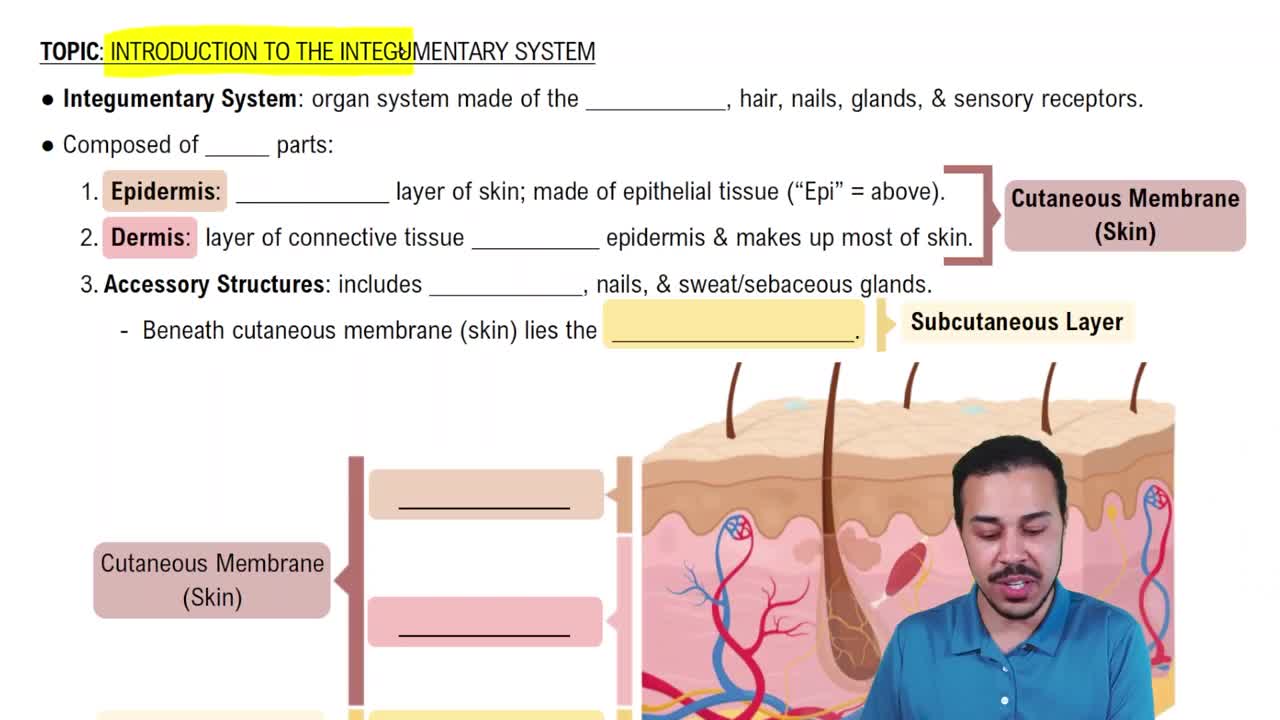
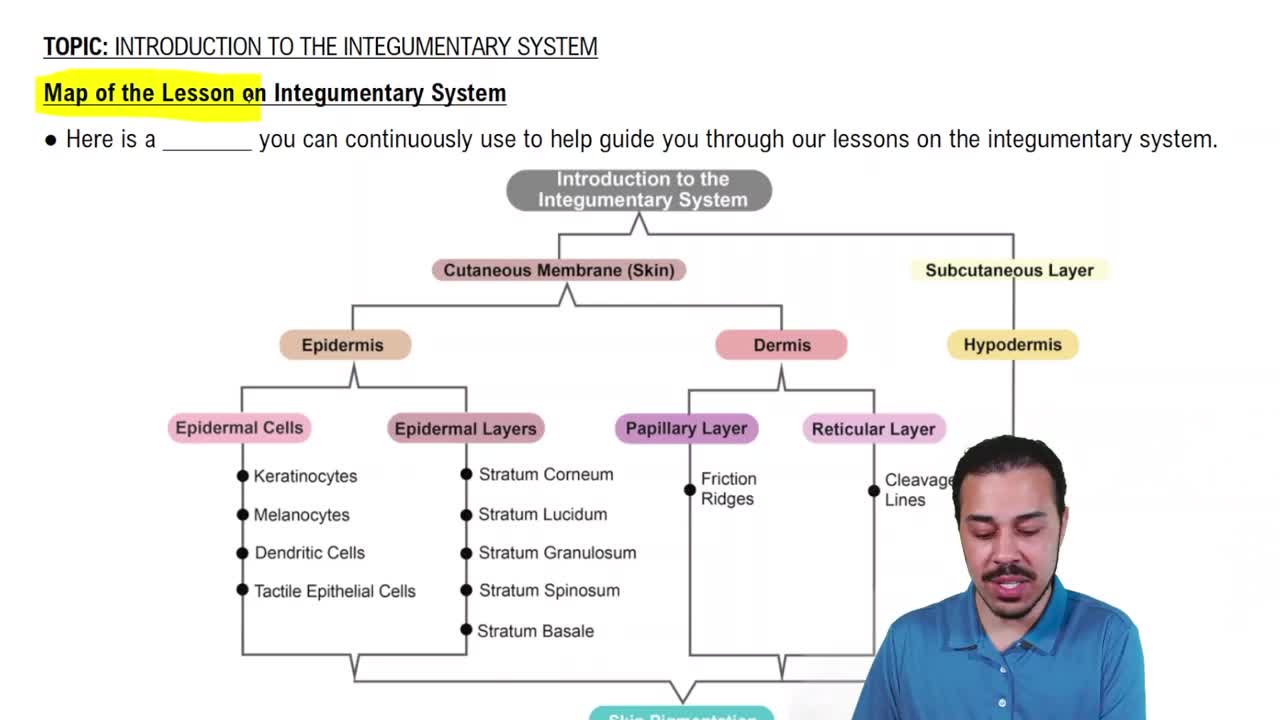
The epidermis, dermis, and hypodermis (subcutaneous layer).
Stratum corneum, stratum lucidum (only in thick skin), stratum granulosum, stratum spinosum, and stratum germinativum (stratum basale).
Consists of heavily keratinized, squamous-shaped cells that are resistant to abrasion.
The stratum lucidum, found only in thick skin like the palms and soles.
Contains cells undergoing mitosis, producing new epidermal cells.
They receive oxygen and nutrients by diffusion from blood vessels in the underlying dermis.
Because they move further from the blood supply and become keratinized, losing nutrients and organelles.
The papillary layer is superficial and contains loose connective tissue; the reticular layer is deeper and denser, providing strength and elasticity.
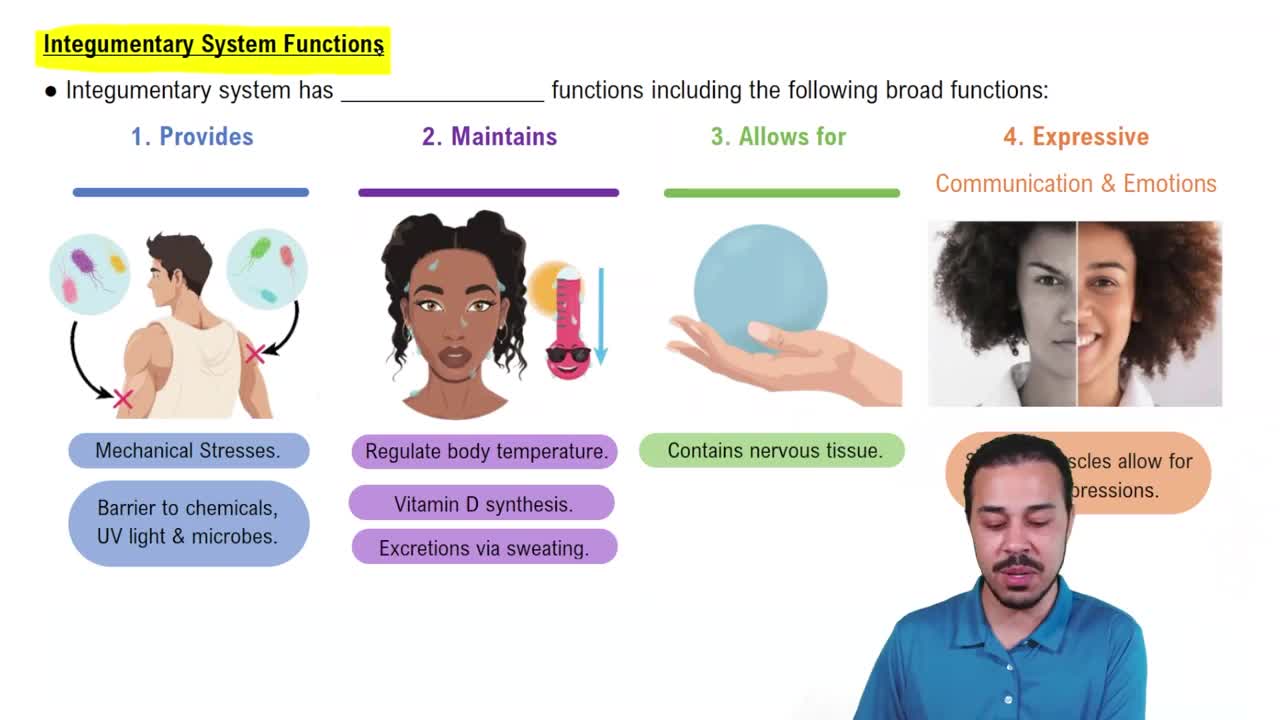
The hypodermis is made of loose connective tissue and fat; it cushions, insulates, and anchors the skin to underlying tissues. It is not technically part of the skin.
Damage to only the epidermis, causing redness and pain without blisters.
Damage to the epidermis and part of the dermis, causing blisters, swelling, and pain.
Damage through the epidermis and dermis, possibly affecting deeper tissues; the area may be painless due to nerve damage.
Blisters form due to fluid accumulation between the epidermis and dermis where partial dermal damage occurs.
Because the stem cells in hair follicles and basal layers are destroyed, preventing regeneration.
A method to estimate the total body surface area affected by burns by dividing the body into sections of 9% or multiples thereof.
To reduce swelling and fluid accumulation by promoting venous return.
A surgical procedure to cut through burned skin (eschar) to relieve pressure and restore circulation.
An autograft uses the patient's own skin, reducing rejection risk; an allograft uses donor skin, which may be temporary and risk rejection.
To prevent or treat infections due to the loss of the skin's protective barrier.
Approximately 1% of total body surface area.