 Back
Anatomy & Physiology: Skin Structure and Layers
 06:54

Terms in this set (12)
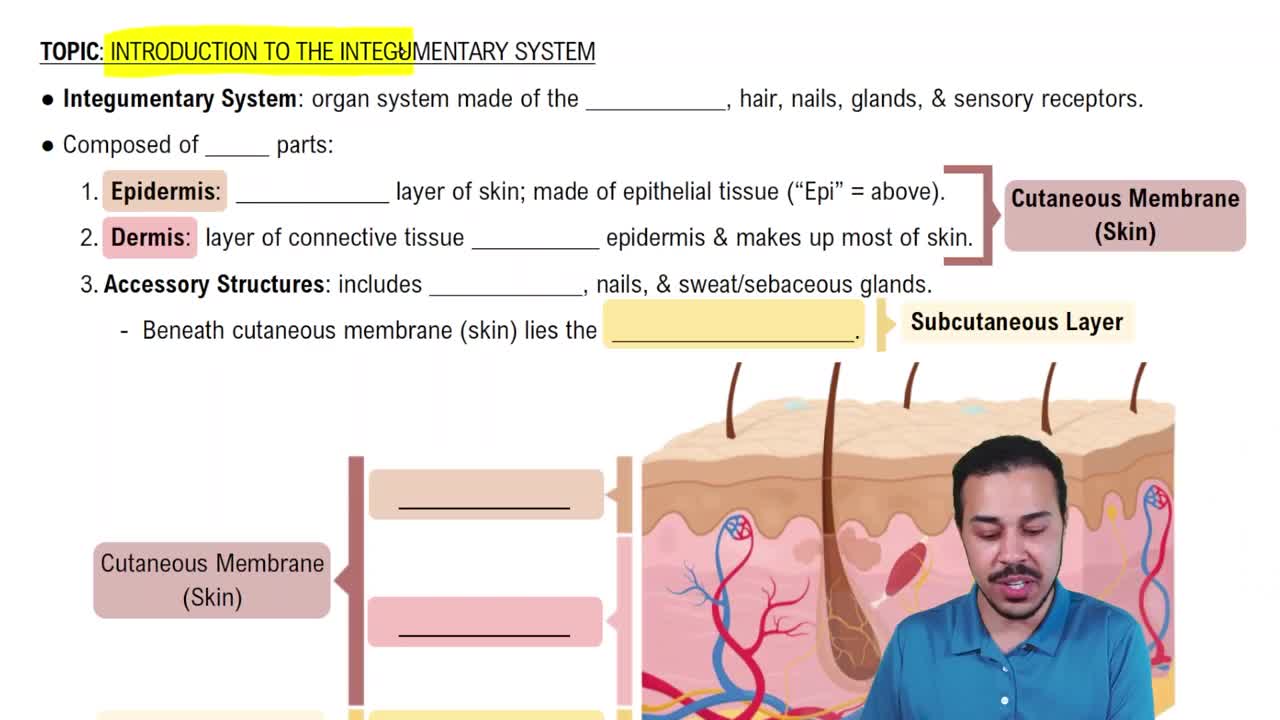
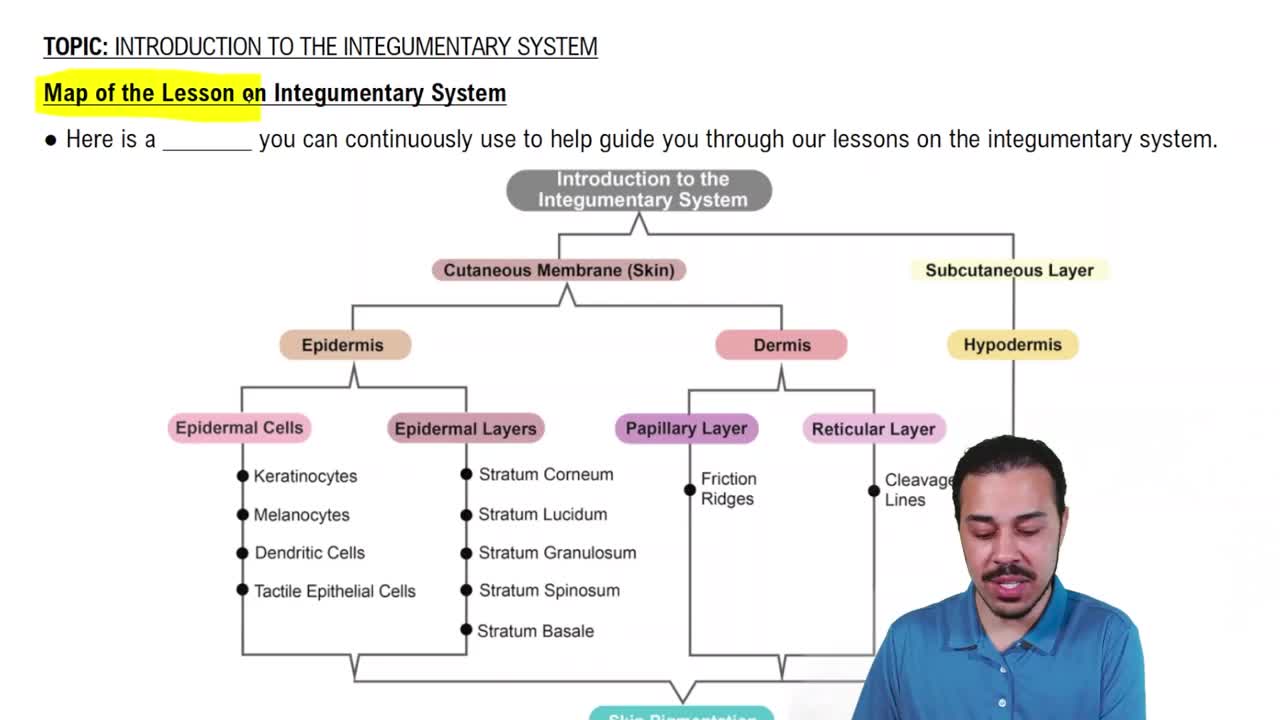
The outermost layer of skin composed mainly of keratinocytes. It provides a protective barrier.
The deepest layer of the epidermis where new keratinocytes are generated by cell division.
The outermost layer of the epidermis made of dead, flattened keratinized cells that provide a tough protective layer.
A layer of the epidermis above the stratum basale where keratinocytes begin producing keratin and develop spiny connections.
A thin, clear layer of dead skin cells found only in thick skin areas like palms and soles.
A layer of the epidermis where keratinocytes accumulate granules of keratohyalin, beginning the process of keratinization.
The primary cell type in the epidermis responsible for producing keratin, a protective protein.
A fibrous protein produced by keratinocytes that strengthens skin, hair, and nails.
Cells in the epidermis that produce melanin, the pigment responsible for skin color and UV protection.
The thick layer of skin beneath the epidermis containing blood vessels, nerves, and connective tissue.
The deeper, thicker layer of the dermis composed of dense irregular connective tissue providing strength and elasticity.
The upper layer of the dermis made of loose connective tissue that forms dermal papillae to support the epidermis.