 Back
BackAnatomy & Physiology: Skin, Tissue, and Cell Structure
 06:54
06:54
Terms in this set (20)
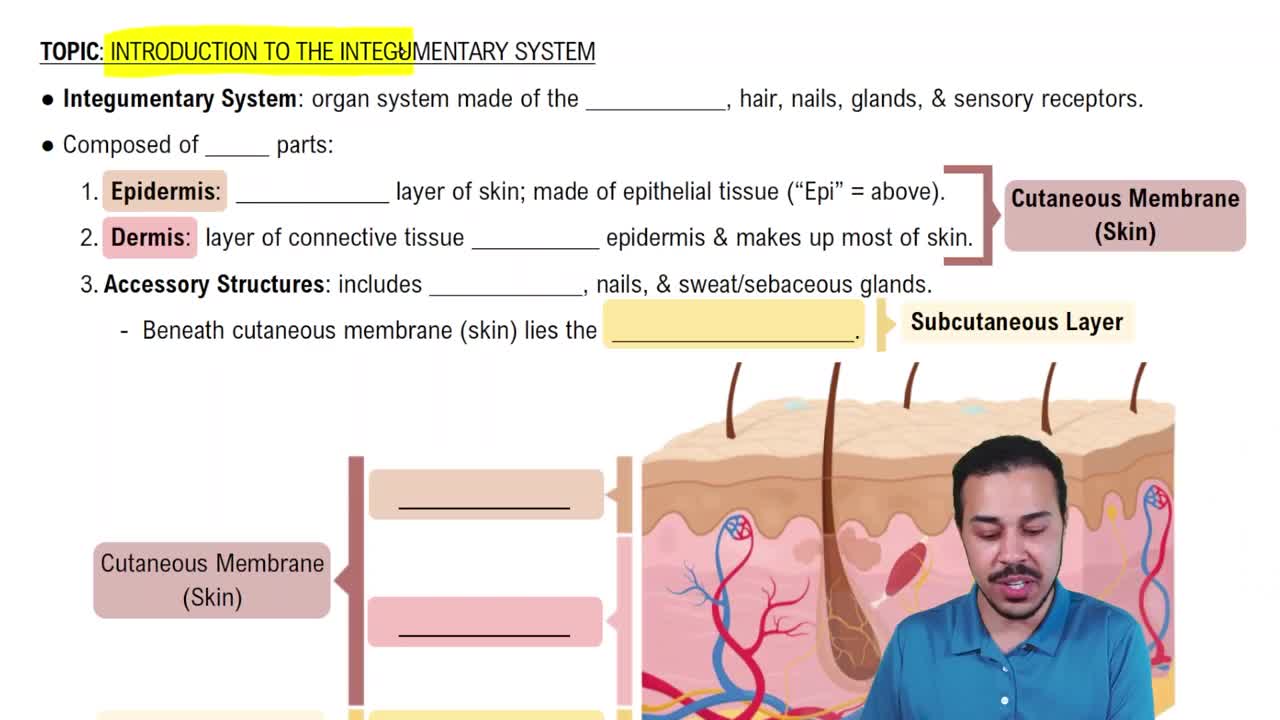
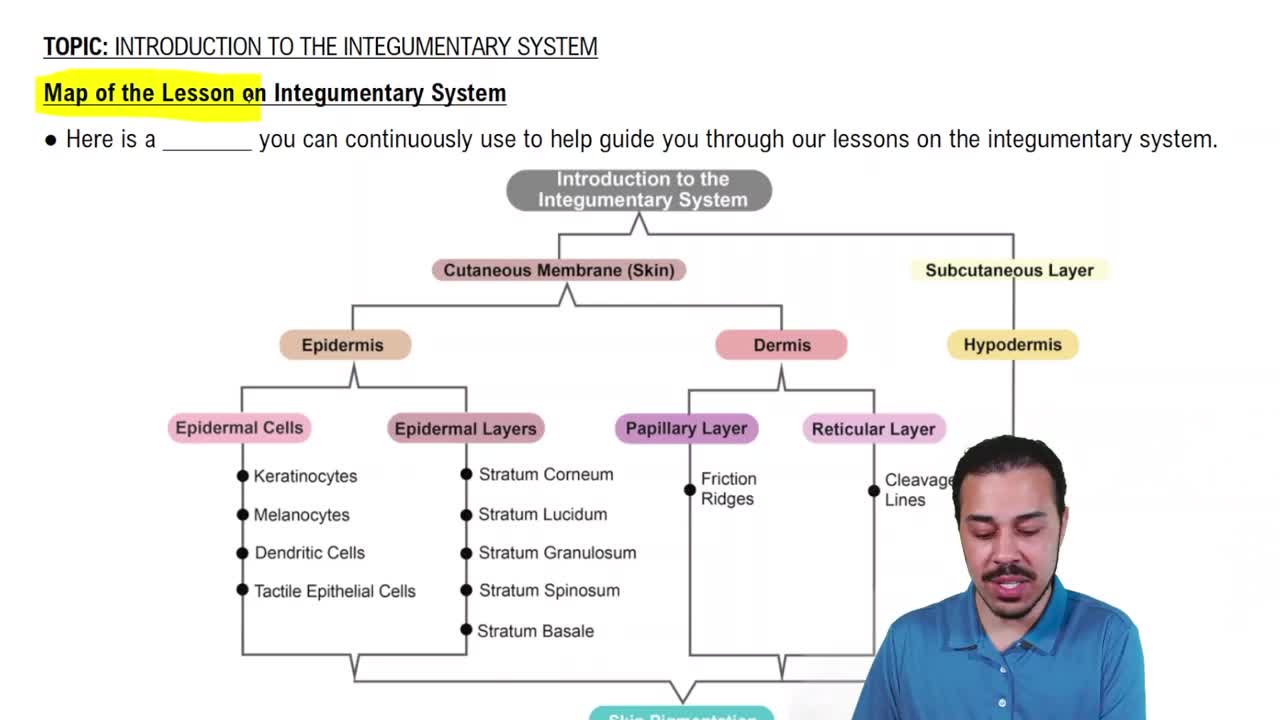
The epidermis, dermis, and hypodermis (subcutaneous layer).
Stratified squamous epithelium, mainly keratinized to protect against abrasion.
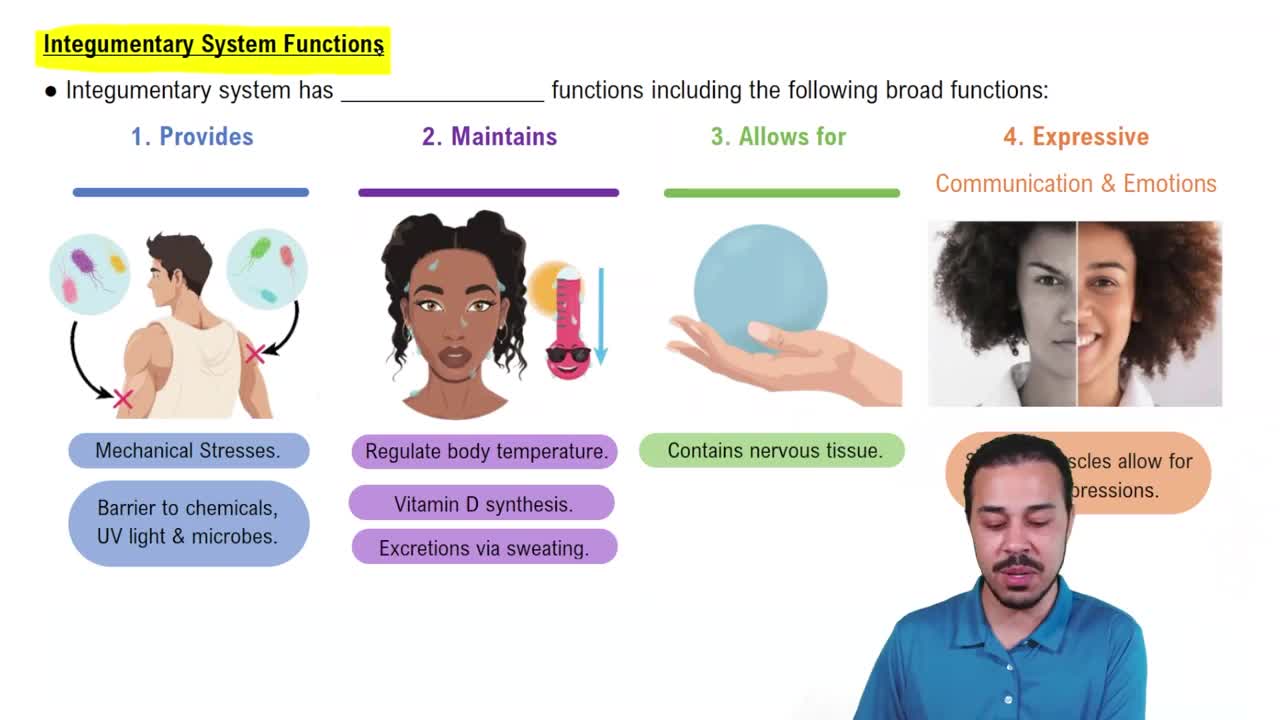
They produce melanin, which protects against UV radiation and gives skin its color.
Keratin, which provides strength and waterproofing.
Collagen and elastin fibers, blood vessels, nerves, hair follicles, and glands.
Loose connective tissue and adipose tissue for insulation and cushioning.
They act as immune cells that detect and present antigens to the immune system.
A tubular invagination of the epidermis into the dermis that produces hair shafts.
Eccrine glands for thermoregulation and apocrine glands associated with hair follicles.
They secrete sebum, an oily substance that lubricates and waterproofs the skin and hair.
Squamous cell carcinoma arises from keratinocytes in the epidermis, basal cell carcinoma from basal cells in the epidermis.
To cover surfaces and form protective barriers.
Epithelial, connective, muscle, and nervous tissue.
Connective tissue has extracellular matrix and supports other tissues; epithelial tissue covers surfaces and has little matrix.
They provide strength and structural support.
Cardiac muscle, which is striated and involuntary.
To transmit electrical signals for communication within the body.
Cells (red and white blood cells) and plasma (fluid matrix).
To store energy, provide insulation, and cushion organs.
It anchors the epithelium to underlying connective tissue and acts as a selective barrier.