 Back
BackAnatomy & Physiology Study Questions
 02:13
02:13
Terms in this set (28)
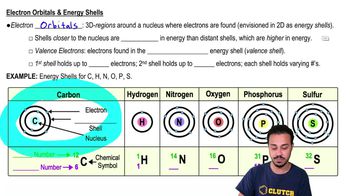
The atomic number indicates the number of protons in the nucleus of an atom.
Hydrogen: 1, Carbon: 6, Nitrogen: 7, Oxygen: 8, Sodium: 11, Chlorine: 17, Potassium: 19.
Protons and neutrons form the nucleus of an atom.
It has a +2 charge because it lost 2 electrons, making it a cation.
Ionic bonds are held by electrostatic attraction between ions; covalent bonds share electron pairs between atoms.
Hydrophilic means water-attracting; example: glucose in body fluids.
Hydrophobic means water-repelling; example: lipid molecules in cell membranes.
pH measures hydrogen ion concentration. Adding hydrogen ions lowers pH, making the solution more acidic.
Polysaccharide: glycogen, Disaccharide: sucrose, Monosaccharide: glucose.
Triglycerides provide energy storage and insulation for the body.
The body uses 20 different amino acids to build proteins.
Collagen is a protein used for structural support in connective tissues like skin and bone.
A catalyst speeds up chemical reactions. A protein catalyst is called an enzyme.
ATP stands for adenosine triphosphate and is a nucleotide used for energy transfer.
Anabolism: protein synthesis. Catabolism: cellular respiration breaking down glucose.
Because it contains multiple tissue types working together, including bone, blood vessels, and nerves.
Bones, cartilage, ligaments, and bone marrow.
Bones are classified by shape and composition.
The diaphysis is the shaft of a long bone, composed mainly of compact bone surrounding the medullary cavity.
Red bone marrow produces blood cells through hematopoiesis.
The periosteum is a membrane covering bone surfaces; it contains cells for growth and repair and provides attachment for tendons.
Osteoblasts are bone-forming cells that synthesize and secrete bone matrix.
Bone forms directly from mesenchymal tissue; examples include flat bones of the skull.
Bone forms by replacing cartilage; examples include long bones like the femur.
Bone adapts to the mechanical stresses placed on it by remodeling to become stronger where stressed.
It raises blood calcium by stimulating bone resorption and increasing calcium absorption in kidneys and intestines.
Osteoporosis is bone loss leading to fragility, primarily caused by decreased estrogen after menopause.
Hematoma formation, fibrocartilaginous callus formation, bony callus formation, and bone remodeling.