 Back
Anatomy & Physiology Test 1 Study Guide
 02:40

Terms in this set (29)
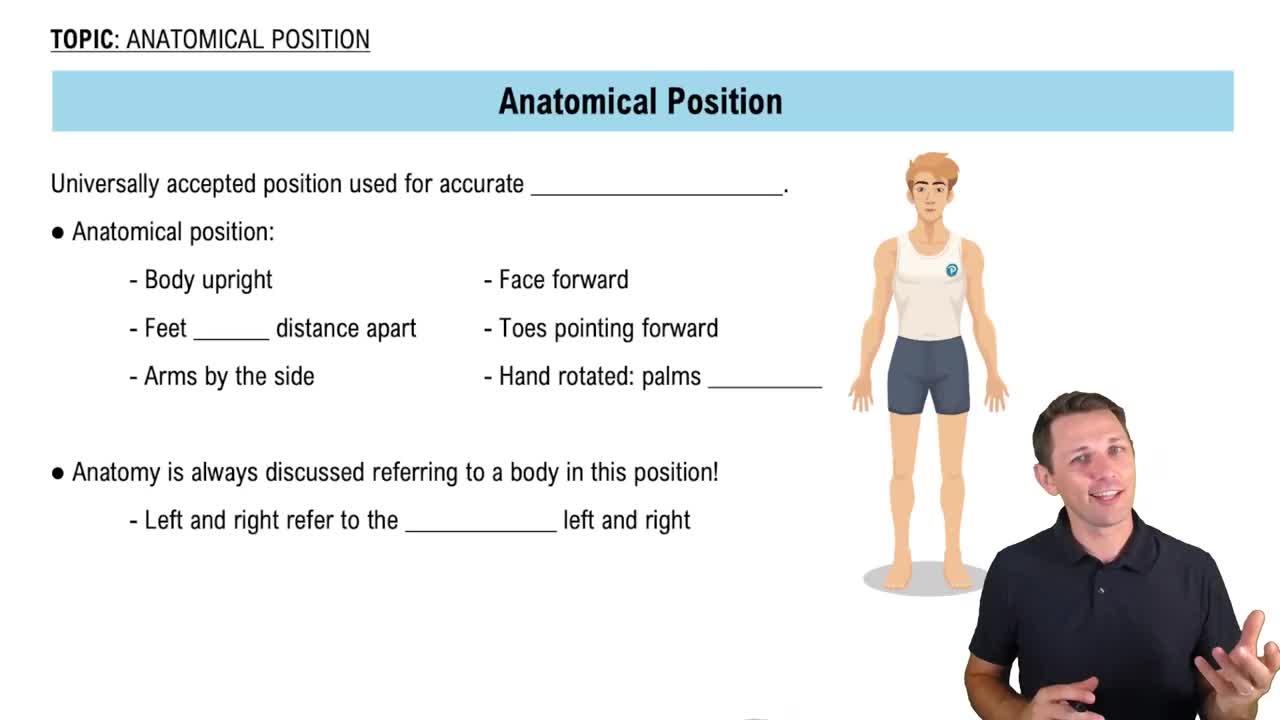
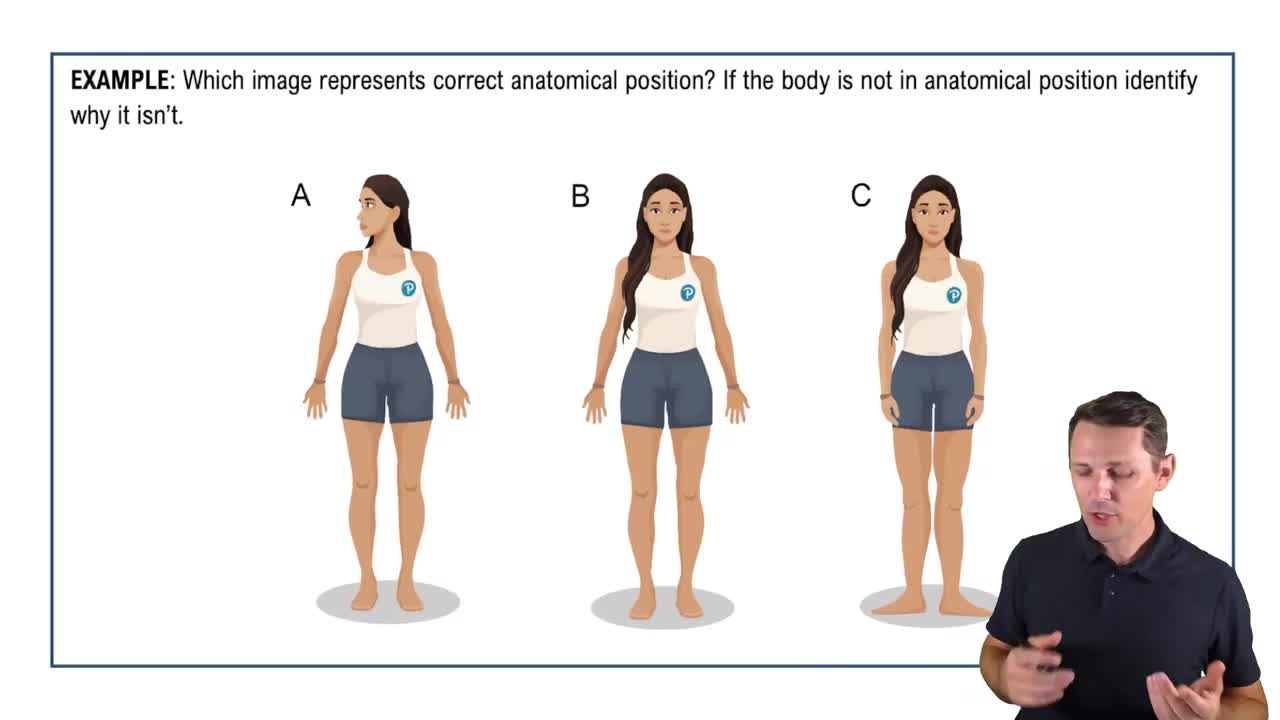
Anatomical position is the standard body position used as a reference in anatomy: standing upright, feet together, arms at sides, palms facing forward, and head facing forward. It ensures consistent directional terms.
The patellar region is the front of the knee, while the popliteal region is the back of the knee.
Use proximal (closer to trunk) and distal (farther from trunk) to describe positions on limbs instead of superior and inferior.
Right upper quadrant: liver, gallbladder; Left upper quadrant: stomach, spleen; Right lower quadrant: appendix, cecum; Left lower quadrant: descending colon, sigmoid colon.
Homeostasis is the body's ability to maintain a stable internal environment despite external changes.
Homeostatic imbalance occurs when the body’s internal environment is not maintained, leading to disease or dysfunction.
Includes receptor (detects change), control center (processes info), and effector (carries out response).
A response that reverses a change to maintain homeostasis, e.g., body temperature regulation by sweating when hot.
A response that amplifies a change, e.g., oxytocin release during childbirth intensifying contractions.
Because it stabilizes physiological variables by reversing changes, maintaining balance efficiently.
The effector executes the response to either reduce (negative feedback) or enhance (positive feedback) the stimulus.
Receptors detect cold, control center signals effectors like muscles to shiver, generating heat to raise temperature.
Receptors detect heat, control center signals sweat glands to produce sweat, cooling the body through evaporation.
Positive feedback: infant suckling stimulates oxytocin release, causing milk ejection from mammary glands.
A gradient is a difference in concentration, pressure, or temperature that drives movement, e.g., concentration gradient drives diffusion.
Carbohydrates, lipids, proteins, and nucleic acids; each made of specific monomers like sugars, fatty acids, amino acids, and nucleotides.
Atoms have protons, neutrons, electrons. Bonds: ionic (transfer electrons), covalent (share electrons), hydrogen (weak attraction).
Nonpolar bonds share electrons equally; polar bonds share unequally, creating partial charges.
Increased temperature (e.g., 101°F) generally increases reaction rates by providing more kinetic energy.
Water dissolves hydrophilic (polar) substances but repels hydrophobic (nonpolar) substances.
An ion is a charged particle; electrolytes are ions that conduct electricity in body fluids.
N2 is a molecule made of two nitrogen atoms; not a compound since it contains only one element.
Monosaccharides (glucose), disaccharides (sucrose), polysaccharides (glycogen).
Animals store excess glucose as glycogen in liver and muscle cells.
Acids release H+, bases accept H+, buffers maintain pH by neutralizing acids/bases; pH scale measures acidity.
ATP stores and transfers energy for cellular processes.
Buffers resist pH changes by binding or releasing H+ to keep blood pH stable.
The membrane is a fluid bilayer of phospholipids with embedded proteins that move laterally.
Integral proteins span the membrane; peripheral proteins attach to the membrane surface.