 Back
Anatomy & Physiology: The Blood
 2:36

Terms in this set (29)
Hematology is the study of blood.
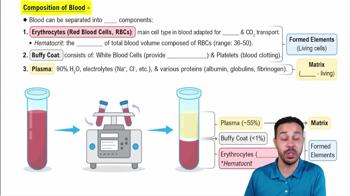
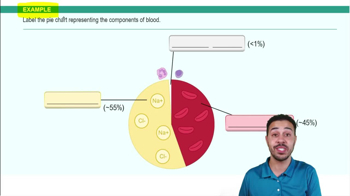
Blood consists of formed elements (living blood cells and fragments) and plasma (nonliving fluid matrix).
Erythrocytes (red blood cells) transport oxygen and carbon dioxide bound to hemoglobin.
About 100 to 120 days, after which they are recycled in the liver and spleen.
Anemia is a decrease in the oxygen-carrying ability of blood due to bleeding, fewer RBCs, or less hemoglobin per cell.
Sickle cell anemia is a genetic condition where RBCs sickle under low oxygen, rupture easily, or block small vessels.
Polycythemia is an excessive number of RBCs, possibly from bone marrow cancer or living at high altitude.
Leukocytes (white blood cells) protect the body by moving to damaged tissues and fighting infections.
Leukocytosis is an abnormal increase in WBCs, often due to infection or leukemia.
Leukopenia is an abnormal decrease in the number of white blood cells.
Granulocytes have visible granules (neutrophils, eosinophils, basophils); agranulocytes do not (monocytes, lymphocytes).
Platelets are cell fragments that participate in blood clotting.
A hemocytoblast is a blood stem cell in red bone marrow that produces all formed elements.
Erythropoietin stimulates red blood cell production.
Hemostasis involves vascular spasms, platelet plug formation, and blood clotting (coagulation).
A thrombus is a clot attached to an unbroken blood vessel wall.
An embolus is a detached clot traveling in the bloodstream.
Thrombocytopenia is a platelet deficiency that can cause spontaneous bleeding and petechiae.
Hemophilia is a genetic disorder caused by a lack of clotting factors, leading to bleeding problems.
ABO blood groups are determined by specific antigens on RBC membranes and corresponding antibodies in plasma.
Agglutination is clumping of RBCs when antibodies bind to their specific antigens, causing hemolysis.
Type O is the most common ABO blood type; AB is the least common.
The Rh system classifies blood as Rh+ (most Americans) or Rh−; Rh− individuals form antibodies if exposed to Rh+ blood.
Erythroblastosis fetalis is hemolytic disease of the newborn caused by Rh incompatibility between mother and fetus.
Physiologic jaundice is caused by immaturity of the infant’s liver, leading to yellowing of the skin.
Fetal hemoglobin (HbF) has a higher affinity for oxygen than adult hemoglobin (HbA).
Older adults have increased risk of anemia and clotting disorders.
Blood pH ranges from 7.35 to 7.45, slightly alkaline.
Plasma makes up about 55% of whole blood and is 90% water.