 Back
Anatomy & Physiology: The Integumentary System
 06:54

Terms in this set (20)
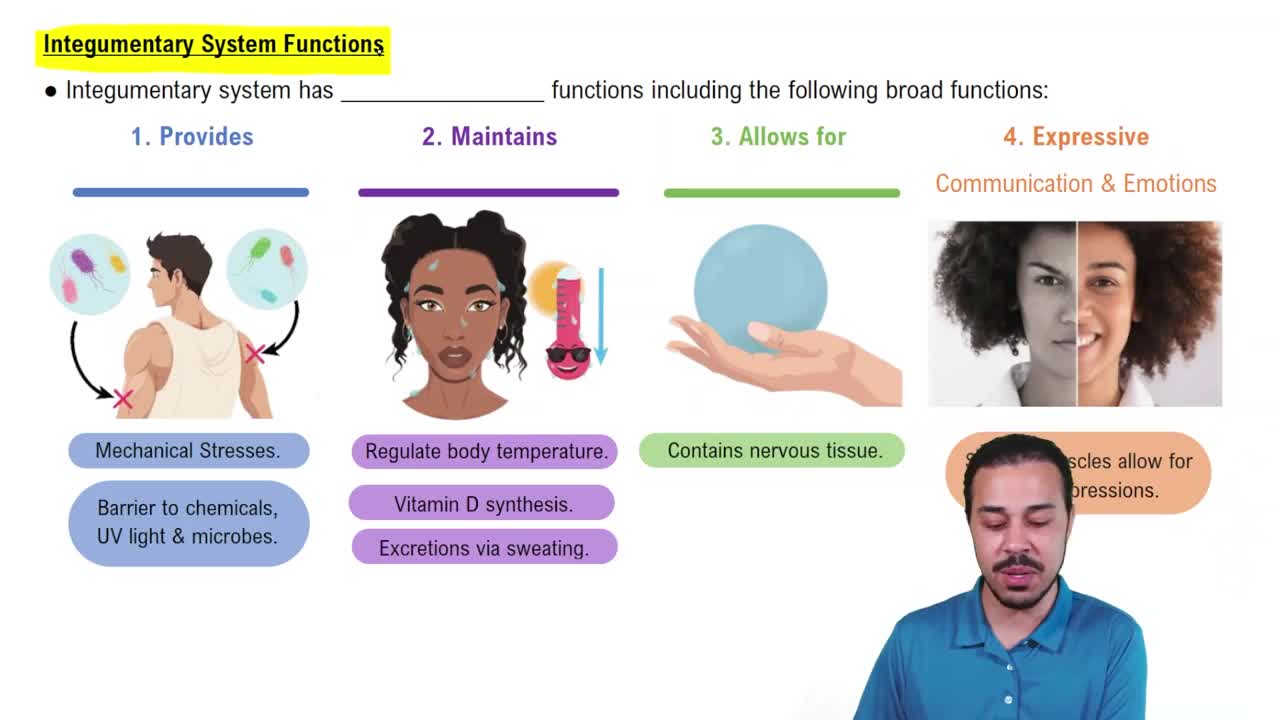
The integumentary system primarily protects the body from external damage, regulates temperature, and prevents water loss.
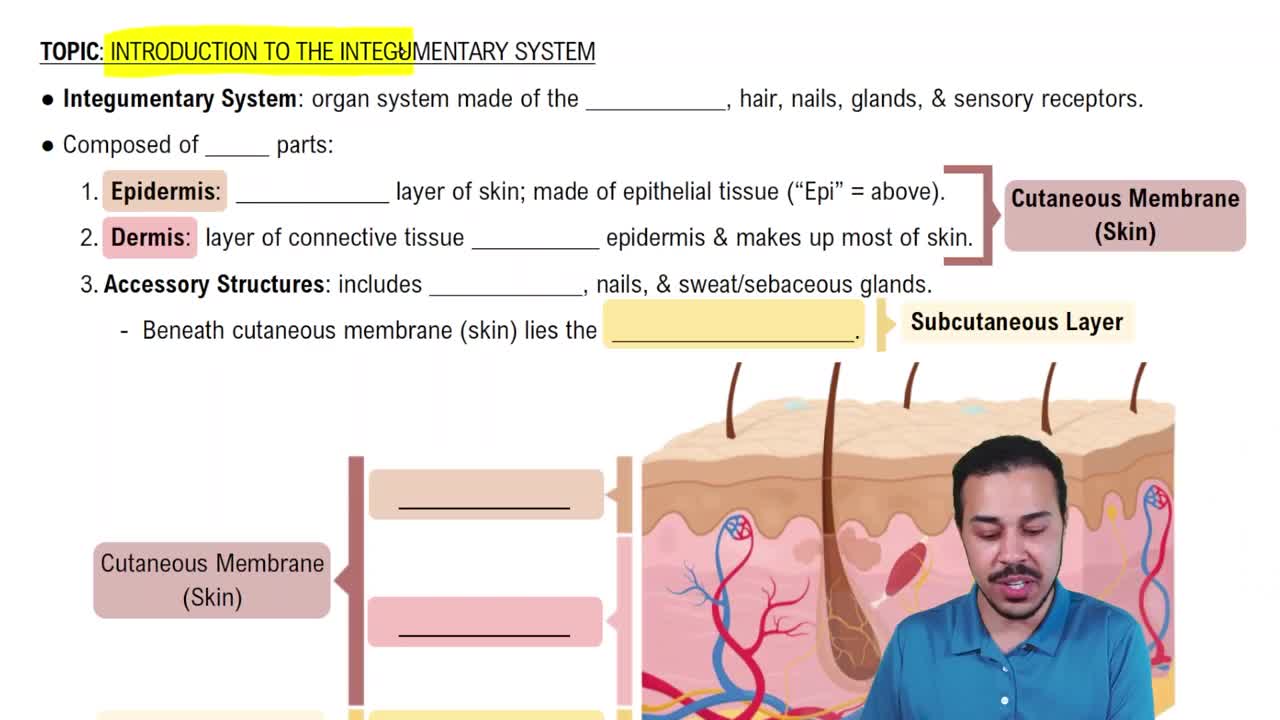
The main components are the skin, hair, nails, sweat glands, and sebaceous glands.
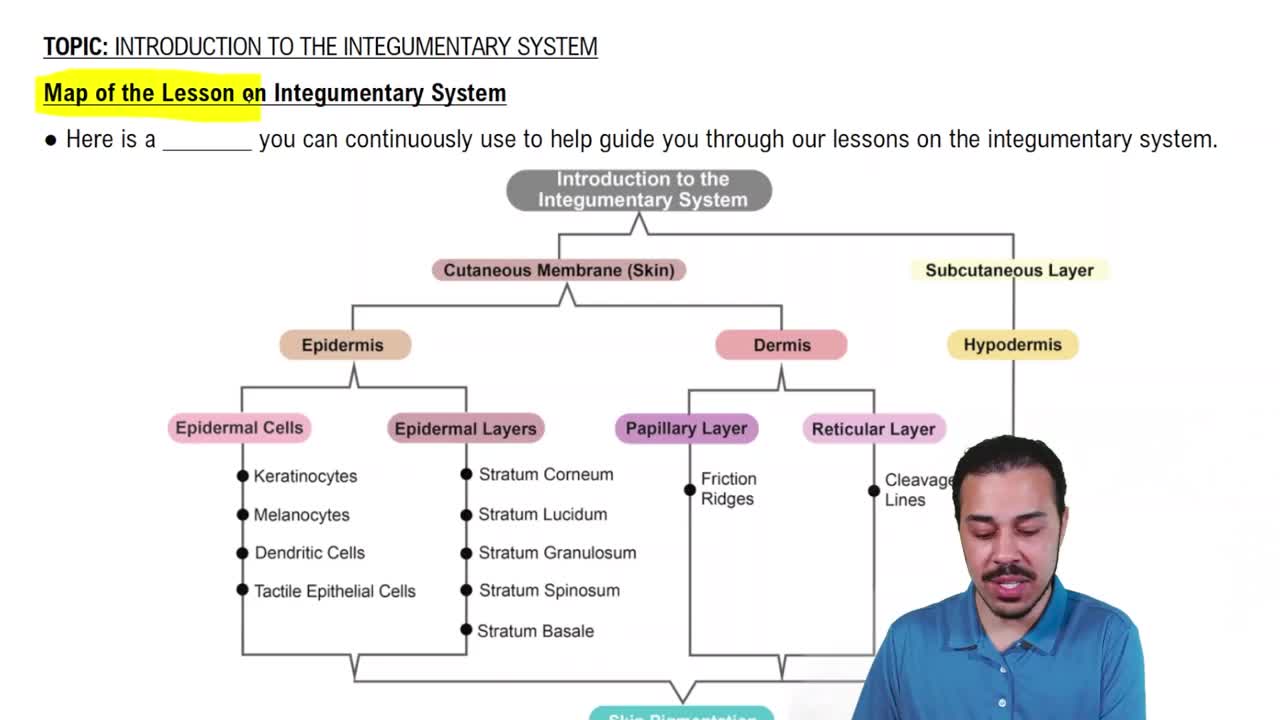
The three layers are the epidermis, dermis, and hypodermis (subcutaneous layer).
The epidermis is made of stratified squamous epithelial tissue.
Melanocytes produce melanin, which gives skin its color and protects against UV radiation.
The dermis provides structural strength, contains blood vessels, nerves, and glands, and supports the epidermis.
The dermis is primarily composed of dense irregular connective tissue.
The hypodermis is a layer of loose connective and adipose tissue that insulates and cushions the body.
It regulates temperature through sweat production and blood vessel dilation or constriction in the skin.
Sweat glands produce sweat to cool the body and excrete waste products.
Sebaceous glands secrete sebum, an oily substance that lubricates and waterproofs the skin and hair.
Hair follicles produce hair that protects the skin and helps with sensory input.
Keratin is a tough protein that strengthens the epidermis and makes it waterproof.
Langerhans cells in the epidermis help detect and fight pathogens.
New cells form in the basal layer of the epidermis and move upward, replacing dead cells that shed from the surface.
The stratum corneum is the outermost layer of dead cells that provides a tough, protective barrier.
It contains nerve endings that detect touch, pressure, pain, and temperature.
The skin synthesizes vitamin D when exposed to UV light, essential for calcium absorption and bone health.
Thick skin has a thicker epidermis and is found on palms and soles; thin skin covers most of the body and has hair follicles.
Aging reduces collagen and elastin, leading to thinner skin, wrinkles, and slower healing.