 Back
BackAnatomy & Physiology: The Male Reproductive System
 2:08
2:08
Terms in this set (21)
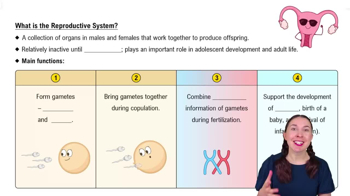
1. Form specialized gametes (sperm and ova)
2. Bring male and female gametes together via sexual intercourse
3. Combine genetic information through fertilization to form a zygote
4. Support fetus development (gestation) and birth (parturition)
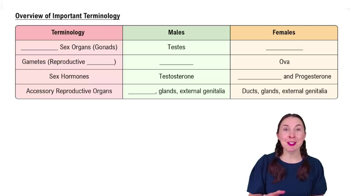
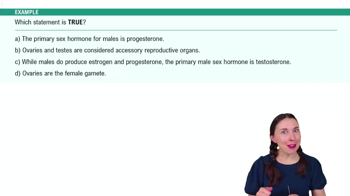
Gonads are testes in males and ovaries in females. They produce gametes (sperm and ova) via meiosis and sex hormones (testosterone in males; estrogens and progesterone in females).
A hormonal system involving the hypothalamus, anterior pituitary, and gonads that regulates gamete and hormone production through GnRH, FSH, LH, sex hormones, and inhibin feedback.
Hypothalamus becomes less sensitive to sex hormone inhibition, releasing GnRH in pulses, stimulating anterior pituitary to release FSH and LH, which then stimulate gonads to produce more sex hormones until adult hormone patterns are established.
Epididymis → Ductus deferens → Ejaculatory duct → Urethra
Seminal glands (~70% semen volume, fructose-rich alkaline fluid), prostate (~30% semen volume, milky acidic fluid with enzymes), bulbo-urethral glands (mucus for lubrication and neutralizing urine acidity).
Occurs in the seminiferous tubules of the testes and usually begins at puberty (~14 years of age).
Sustentocytes (nurse cells), spermatogenic cells, myoid cells (smooth muscle-like), and interstitial endocrine (Leydig) cells.
1. Mitosis of spermatogonia
2. Meiosis of spermatocytes
3. Spermiogenesis (transformation of spermatids into sperm)
Spermatogonia divide by mitosis; type A cells maintain stem cell pool, type B cells become primary spermatocytes.
Primary spermatocytes undergo meiosis I to form two secondary spermatocytes, which undergo meiosis II to form four spermatids.
Process where spermatids elongate, lose excess cytoplasm, and develop a tail to become mature sperm.
Head (genetic material and acrosome), midpiece (mitochondria for ATP), and tail (flagellum for movement).
Support developing sperm, form blood-testis barrier via tight junctions, and protect haploid cells from immune attack.
GnRH from hypothalamus stimulates FSH and LH release from anterior pituitary; LH stimulates testosterone from Leydig cells; FSH stimulates sustentocytes to release androgen-binding protein; testosterone and inhibin provide negative feedback.
ABP binds testosterone in seminiferous tubules to maintain high local testosterone levels, promoting spermatogenesis.
Testosterone inhibits GnRH, FSH, and LH release; inhibin selectively inhibits FSH release from the anterior pituitary.
Stimulates spermatogenesis, growth and maturation of sex organs, development of secondary sex characteristics, and libido.
Pubic, axillary, facial hair growth; deepening voice; increased bone and muscle mass; thicker, oilier skin; increased basal metabolic rate.
Approximately 64–72 days.
They are pushed by testicular fluid into the epididymis, where they gain motility and fertilizing ability.