 Back
BackAnatomy & Physiology: The Reproductive System
 2:08
2:08
Terms in this set (29)
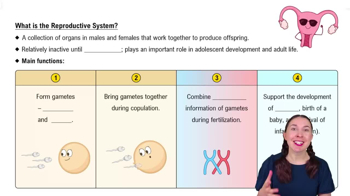
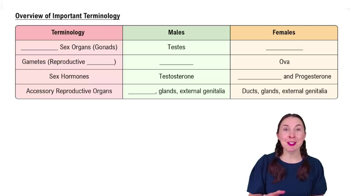
Gonads are organs that produce gametes and hormones in the reproductive system.
Testes produce male sex hormones (androgens) and spermatozoa (sperm). Spermatogenesis occurs in testes, controlled by hormones from hypothalamus, pituitary, and testes.
Ovaries release one immature gamete (oocyte) per month and produce hormones. Uterine tubes carry oocytes to uterus where fertilization occurs. Uterus supports embryo development. Vagina connects uterus to exterior.
Testis → Epididymis → Ductus deferens (vas deferens) → Ejaculatory duct → Urethra.
Testes require temperatures about 1.1°C lower than body temperature. Dartos and cremaster muscles adjust scrotal position to maintain this temperature.
A dense connective tissue layer deep to tunica vaginalis, forming fibrous partitions (septa) within testes supporting blood vessels and ducts.
About 800 tightly coiled tubules in testes lobules where sperm production occurs; each tubule is about 80 cm long.
1. Spermatogonia (stem cells)
2. Primary spermatocytes
3. Secondary spermatocytes
4. Spermatids
5. Spermatozoa (mature sperm)
Mitosis produces two diploid identical cells; meiosis produces four haploid cells with genetic variation for gametes.
Final stage of spermatogenesis where spermatids mature into spermatozoa, involving major structural changes.
Head contains nucleus and acrosomal cap with enzymes; middle piece has mitochondria for ATP; tail is flagellum for motility.
Monitors and adjusts fluid from seminiferous tubules, recycles damaged sperm, stores and protects sperm, and facilitates sperm maturation.
Produce about 60% of semen volume; seminal fluid contains fructose, prostaglandins, fibrinogen, and is slightly alkaline to aid sperm motility and neutralize acidity.
Secretes slightly acidic prostatic fluid (20-30% of semen), contains antibiotic seminalplasmin, and helps propel semen into urethra by peristalsis.
Secrete thick, alkaline mucus to neutralize urinary acids in urethra and lubricate glans penis during sexual arousal.
FSH targets nurse cells to promote spermatogenesis; LH targets interstitial cells to produce testosterone, which stimulates sperm production and male secondary sex characteristics.
Stimulates spermatogenesis, libido, protein synthesis, muscle growth, and maintains male reproductive organs and secondary sex characteristics.
Production of female gametes (oocytes) in ovaries, begins before birth, accelerates at puberty, and ends at menopause.
Primary oocytes are surrounded by follicle cells forming primordial follicles; monthly activation leads to follicular and luteal phases of ovarian cycle.
Menses (degeneration of functional zone), proliferative phase (repair and growth of endometrium), and secretory phase (gland enlargement and secretion).
Stimulates bone and muscle growth, maintains secondary sex characteristics, increases sexual drive, maintains accessory glands, and initiates endometrial repair.
Triggers completion of meiosis I, follicle rupture, and ovulation about 34-38 hours after surge begins.
Maintains corpus luteum, supports secretory phase of uterine cycle, and declines if pregnancy does not occur, leading to menstruation.
Passageway for menstrual fluid, receives sperm during intercourse, and forms inferior portion of birth canal.
Includes vestibule (urethral and vaginal openings), clitoris (erectile organ), labia majora and minora, mons pubis, and associated glands.
Specialized integumentary organs that secrete milk to nourish infants, controlled by reproductive hormones and placenta.
Arousal (parasympathetic stimulation causes erection), emission (sympathetic peristalsis moves sperm and fluids), and ejaculation (muscle contractions expel semen).
Time when ovulation and menstruation cease, typically between ages 45-55, with declining estrogen and progesterone and increased FSH and LH.
Gradual decline in male reproductive function with decreasing testosterone, increased FSH and LH, but continued sperm production and reduced sexual activity.