 Back
Anatomy & Physiology Unit 3 Study Guide: Integumentary System & Bone Tissue
 06:54

Terms in this set (31)
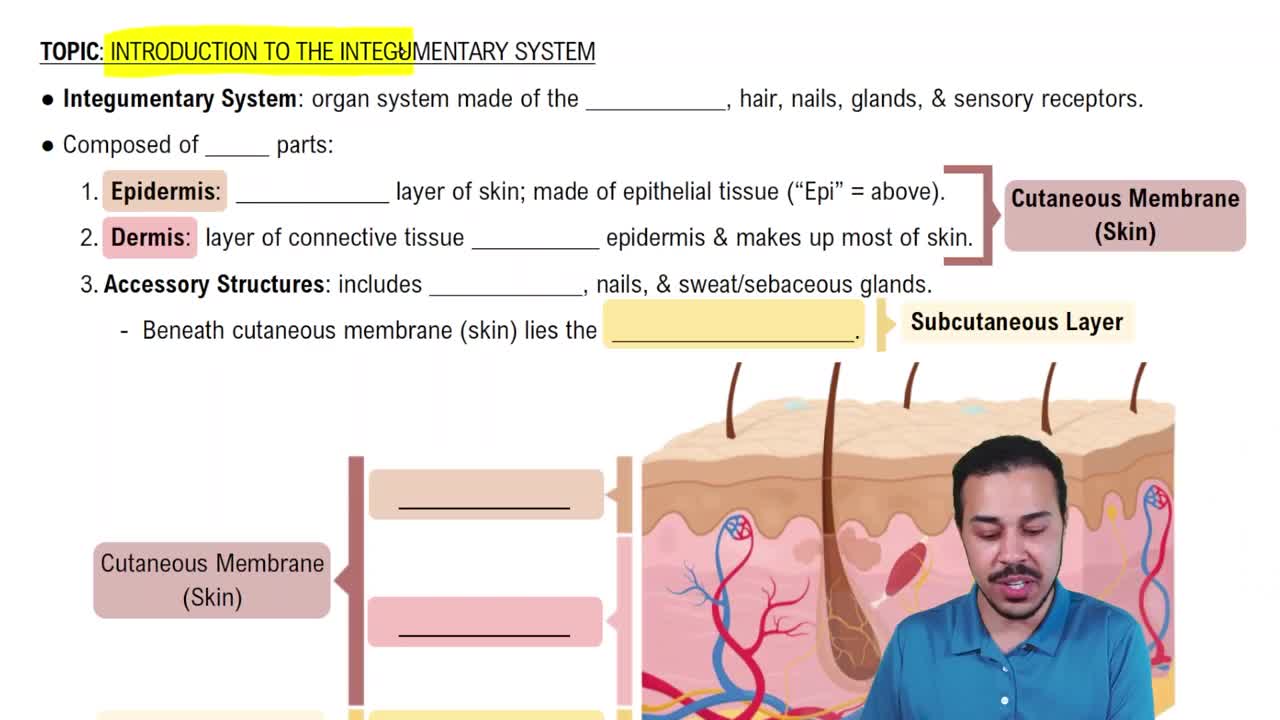
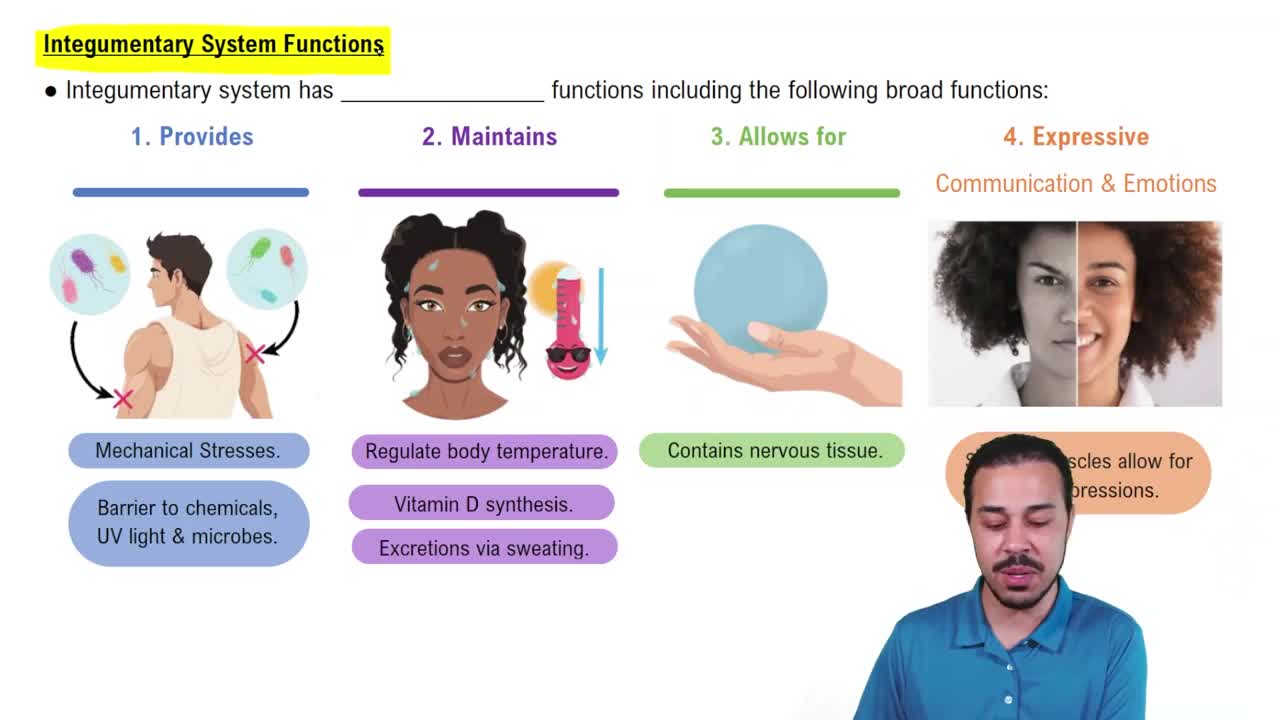
The integumentary system protects against environmental damage, regulates body temperature, prevents water loss, synthesizes vitamin D, and provides sensory information.
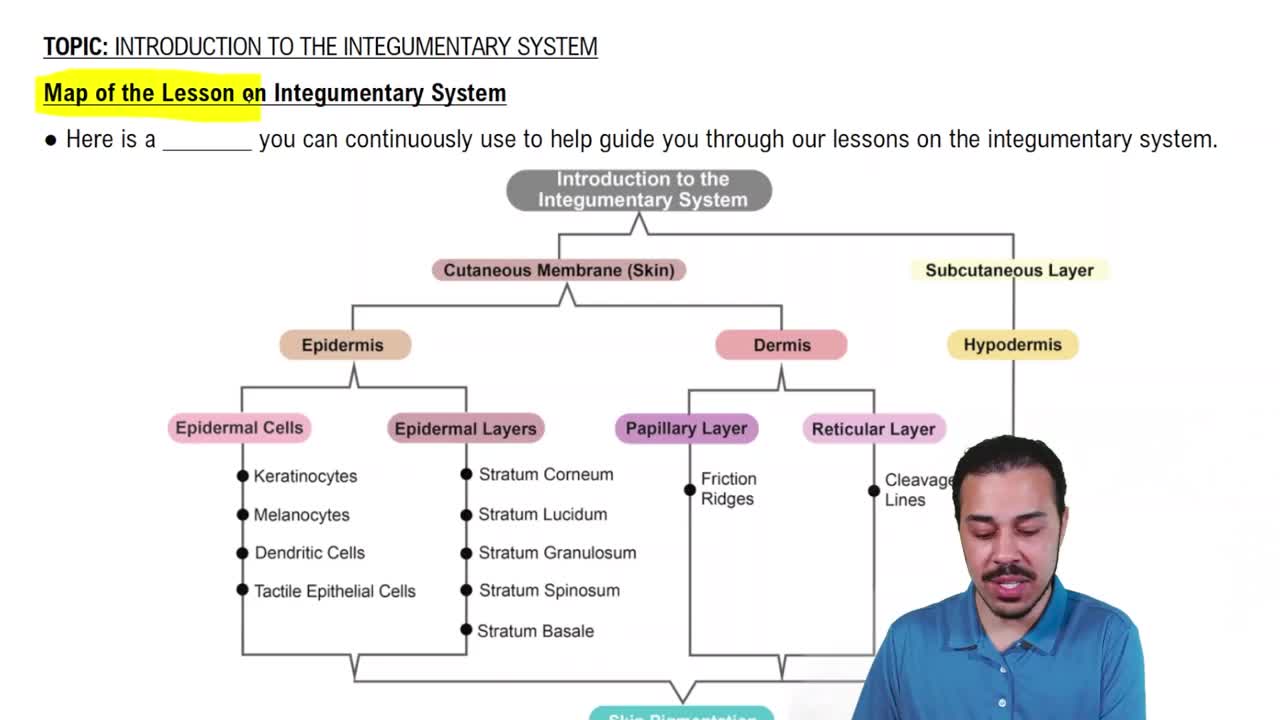
The epidermis has layers: stratum basale (cell division), stratum spinosum (strength), stratum granulosum (waterproofing), stratum lucidum (only in thick skin), and stratum corneum (dead cells, protection).
Thick skin has a thicker epidermis with a stratum lucidum and no hair follicles; found on palms and soles. Thin skin has hair follicles and lacks stratum lucidum.
EGF stimulates epidermal cell growth, division, and repair, aiding in wound healing and skin regeneration.
Papillary layer is superficial, made of loose connective tissue, supports epidermis, and contains capillaries. Reticular layer is deeper, dense irregular connective tissue, provides strength and elasticity.
Tension lines in the dermis are caused by collagen fiber orientation; surgeons use these lines (Langer's lines) to make incisions that heal better with less scarring.
The subcutaneous layer (hypodermis) anchors skin to underlying tissues, provides insulation, and stores energy as fat.
Intradermal (into dermis), subcutaneous (into hypodermis), and intramuscular (into muscle) injections differ by depth and absorption rate.
Melanocytes produce melanin in melanosomes, which are transferred to keratinocytes, providing pigmentation and UV protection.
Increased blood flow causes redness (erythema), decreased flow causes paleness, and deoxygenated blood causes a bluish tint (cyanosis).
Sunlight stimulates skin to produce vitamin D, which is essential for calcium absorption and healthy bone mineralization.
Sudoriferous glands produce sweat for thermoregulation, sebaceous glands secrete oil to lubricate skin, and ceruminous glands produce earwax.
The skin regulates temperature via sweat secretion, vasodilation to release heat, and vasoconstriction to conserve heat.
Wound healing stages: inflammation, proliferation (tissue formation), and remodeling (strengthening and scar formation).
Skin contains mechanoreceptors (touch), thermoreceptors (temperature), nociceptors (pain), and proprioceptors.
The skeletal system provides support, protection, movement, mineral storage, blood cell production, and energy storage.
Muscle origin is the fixed attachment; insertion moves with contraction, influencing bone leverage and movement.
Osteoblasts build bone, osteocytes maintain bone, osteoclasts resorb bone, and osteoprogenitor cells are stem cells for bone formation.
Osteoprogenitor cells differentiate into osteoblasts, which become osteocytes; osteoclasts derive from monocyte/macrophage lineage.
Compact bone is dense, forms the outer layer of bones, provides strength and support, and contains osteons.
Spongy bone has a porous, trabecular structure, reduces bone weight, and houses red bone marrow for blood cell production.
Red marrow produces blood cells; yellow marrow stores fat and can convert to red marrow if needed.
Long bones distribute compressive forces through the diaphysis and absorb stress via the trabeculae in spongy bone.
Periosteum covers outer bone surfaces, contains nerves and blood vessels; endosteum lines internal bone cavities and participates in bone growth and repair.
Endochondral ossification stages: cartilage model formation, primary ossification center, secondary ossification centers, and bone remodeling.
Intramembranous ossification involves mesenchymal cell differentiation, osteoid secretion, calcification, and trabeculae formation.
Bone is dynamic, constantly undergoing remodeling through resorption by osteoclasts and formation by osteoblasts.
Parathyroid hormone (PTH) increases blood calcium by stimulating osteoclasts; calcitonin lowers blood calcium by inhibiting osteoclasts.
Low blood calcium triggers PTH release to increase calcium; high calcium triggers calcitonin release to decrease calcium.
Fracture healing stages: hematoma formation, fibrocartilaginous callus formation, bony callus formation, and bone remodeling.
Both processes involve cell proliferation, matrix formation, calcification, and remodeling.