 Back
BackAnatomy & Physiology Unit I: Introduction and Overview
 3:06
3:06
Terms in this set (27)
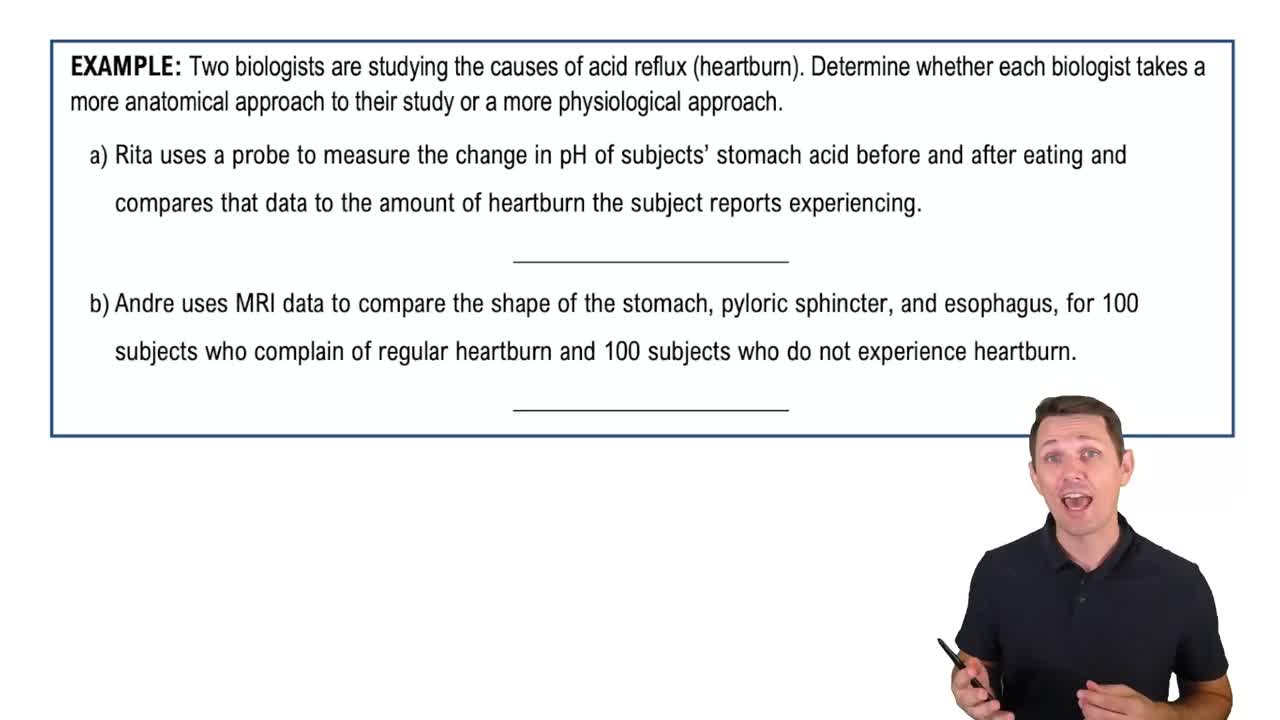
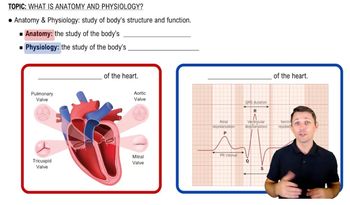
Anatomy is the study of the structures of the body.
Physiology is the study of body functions and how body parts work.
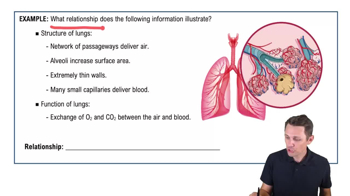
Functions carried out by any body part depend on its structure.
Cell biology (cytology) and histology (study of tissues).
Chemical, Cellular, Tissue, Organ, Organ system, Organism levels.
Homeostasis is the maintenance of a relatively constant and healthy internal environment.
Receptor, Control center, and Effector.
The effector negates the original change, returning the condition to its normal set point.
Blood clotting or labor and delivery, where the response enhances the original stimulus.
Body stands erect, facing observer, head and eyes forward, feet flat and forward, upper limbs at sides, palms facing forward.
The main axis including the head, neck, and trunk.
Cranial cavity (brain) and vertebral canal (spinal cord).
Closer to the origin of a body part or point of attachment of a limb to the trunk.
Divides the body into left and right parts.
Right hypochondriac, epigastric, left hypochondriac, right lumbar, umbilical, left lumbar, right iliac, hypogastric, left iliac.
Protects against hazards, regulates body temperature, and provides sensory information.
Support and protection, mineral storage, and blood cell formation.
Movement, protection/support of tissues, and heat generation to maintain body temperature.
Heart, blood, blood vessels; distributes blood, nutrients, gases, and heat.
Defends against infection, returns tissue fluids to the bloodstream.
Nasal cavities, sinuses, larynx, trachea, bronchi, lungs; delivers air, oxygenates blood, removes CO2, produces sound.
Processes and digests food, absorbs water and nutrients.
Excretes waste, controls water balance, regulates blood ion concentrations and pH.
Produces male sex cells (sperm) and hormones.
Produces female sex cells (oocytes) and hormones, supports embryo development, provides milk for newborn.
Double-layered membranes that reduce friction; visceral layer lines organs, parietal layer lines body cavity walls.
Pericardial (heart), pleural (lungs), and peritoneal (digestive organs) membranes.