 Back
Anatomy unit 5
 0:42

Terms in this set (21)
Fertilization is the process where sperm and oocyte combine to form a zygote, which contains genetic material from both parents.
Fertilization generally occurs in the uterine tube, about one-third of the way down from the ovary.
Cleavage refers to rapid cell divisions of the zygote without increasing the overall size of the developing organism.
A morula is a solid ball of approximately 16–32 cells formed during early embryonic development.
A blastocyst is a hollow structure with a cavity called the blastocoel. It has three parts: trophoblast (outer cells), embryoblast (inner cell mass), and the blastocyst cavity.
Implantation is the process where the blastocyst attaches to the endometrium, the inner lining of the uterus.
The epiblast forms the three germ layers and amnion, while the hypoblast contributes to the yolk sac.
The three germ layers are ectoderm, mesoderm, and endoderm.
Ectoderm forms the epidermis of the skin, nervous system, brain, spinal cord, and other nervous tissues.
Mesoderm forms muscles, bones, connective tissues, blood, blood vessels, and much of the cardiovascular system.
Endoderm forms the linings of the digestive and respiratory tracts, parts of the urinary and reproductive systems, and many glands.
Extraembryonic membranes are structures outside the embryo that support development, including the amnion, yolk sac, chorion, and umbilical cord.
The amnion surrounds the embryo, creating the amniotic cavity filled with fluid that protects, cushions, and regulates temperature for the embryo.
The yolk sac contributes to early blood cell formation, parts of the digestive tract, and primordial germ cell development.
The chorion is an extraembryonic membrane that forms chorionic villi, which facilitate exchange between maternal and fetal blood.
The placenta allows exchange of oxygen and nutrients from mother to fetus and removal of carbon dioxide and wastes from fetus to mother without mixing blood.
Chorionic villi are finger-like projections containing fetal blood vessels that increase surface area for exchange with maternal blood.
The umbilical cord connects the fetus to the placenta, allowing blood flow between them for nutrient and gas exchange.
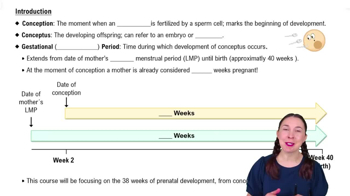
The embryonic period (weeks 3–8) is when major organ systems develop and the embryo undergoes significant structural formation.
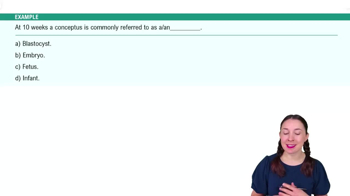
The fetal period (week 9 to birth) focuses on growth, maturation, and increased functionality of organs and tissues.
Ovulation → Fertilization → Zygote → Cleavage → Morula → Blastocyst → Implantation → Embryoblast → Epiblast + Hypoblast → 3 Germ Layers → Embryonic Period → Fetal Period.