 Back
Articulations and Body Movements
 04:06

Terms in this set (20)
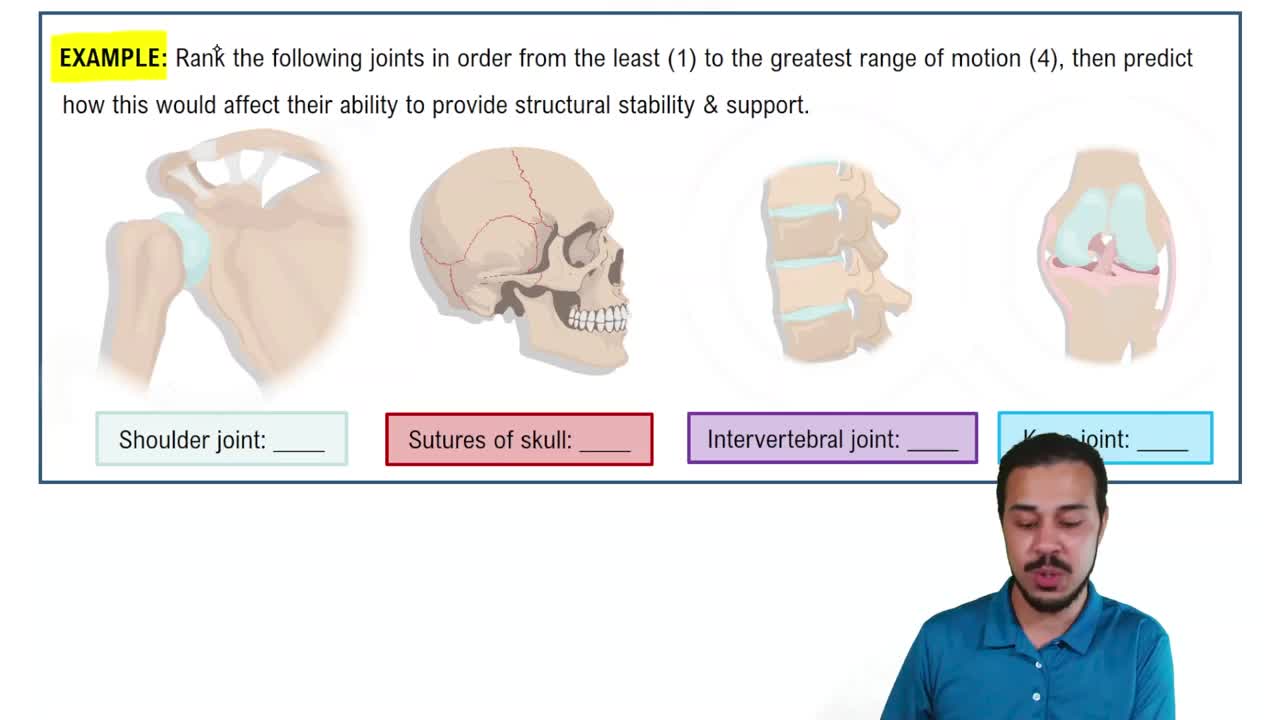
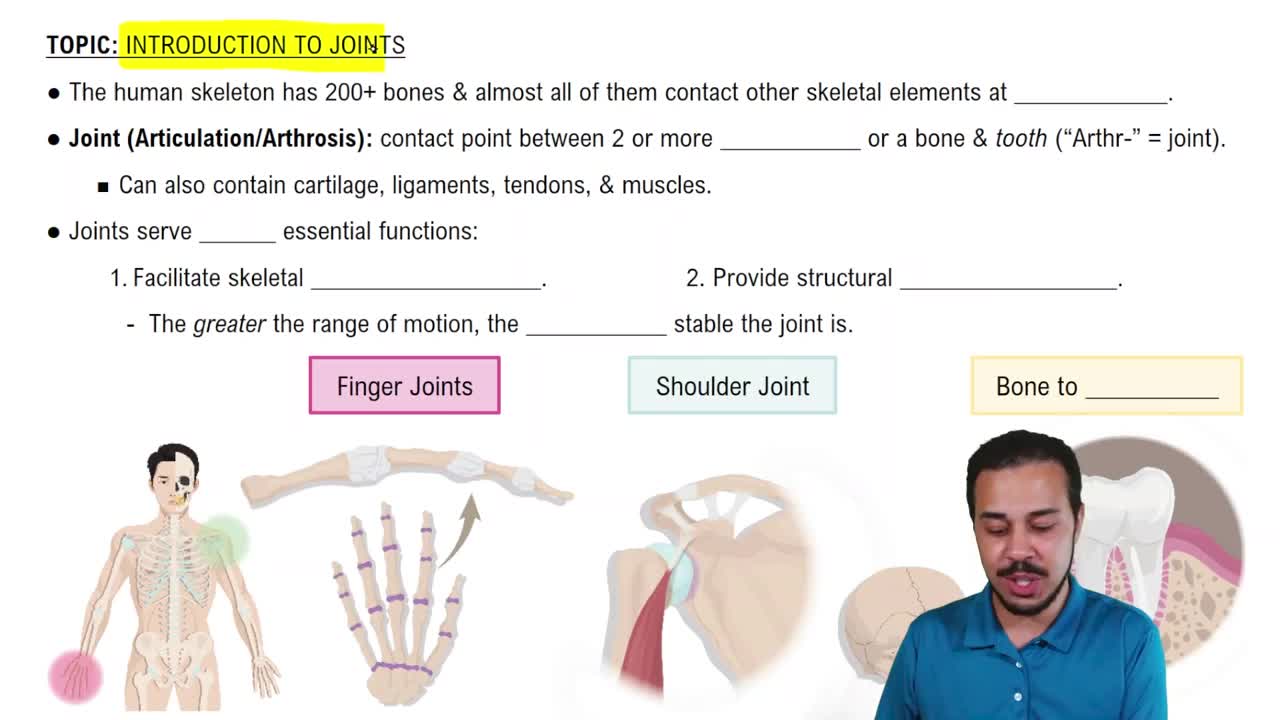
An articulation is a joint where two or more bones meet, allowing for movement and providing mechanical support.
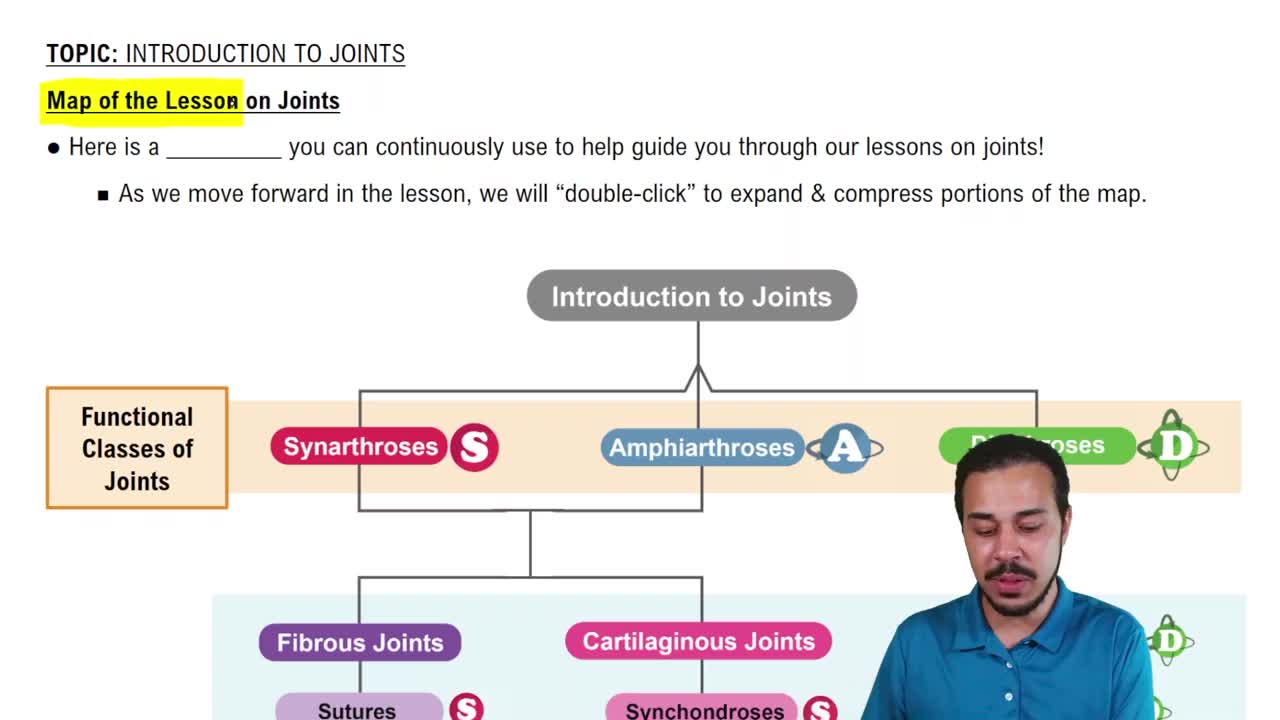
Synarthrosis (immovable), Amphiarthrosis (slightly movable), and Diarthrosis (freely movable).
Joints are classified structurally as fibrous, cartilaginous, or synovial based on the type of connective tissue binding the bones.
A fibrous joint is connected by dense connective tissue and generally allows little or no movement.
A cartilaginous joint is connected by cartilage and permits limited movement.
A synovial joint has a fluid-filled joint cavity allowing free movement between bones.
Synovial fluid lubricates the joint, reduces friction, and nourishes the articular cartilage.
Plane, hinge, pivot, condyloid, saddle, and ball-and-socket joints.
A hinge joint permits movement in one plane, like flexion and extension.
A pivot joint allows rotational movement around a single axis.
A ball-and-socket joint allows movement in multiple axes and planes, including rotation.
Flexion decreases the angle between bones; extension increases the angle.
Abduction moves a limb away from the midline; adduction moves it toward the midline.
Rotation is the turning of a bone around its own longitudinal axis.
Circumduction is a circular movement combining flexion, extension, abduction, and adduction.
Pronation rotates the forearm so the palm faces down; supination rotates it so the palm faces up.
Dorsiflexion raises the foot upwards; plantarflexion points the foot downward.
Inversion turns the sole of the foot inward; eversion turns it outward.
Opposition is the movement of the thumb to touch the fingertips, enabling grasping.
Ligaments connect bone to bone and help stabilize joints by limiting excessive movement.