 Back
Basic Chemistry and Macromolecules in Anatomy & Physiology
 02:13

Terms in this set (22)
Oxygen, carbon, hydrogen, and nitrogen are the four major elements that compose the human body.
The atomic number is the number of protons in an atom, and the atomic mass is the sum of protons and neutrons.
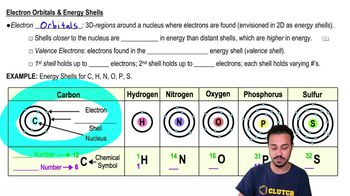
Atoms are stable when their outer electron shell is full; stability depends on the number of electrons in the valence shell.
A compound is chemically bonded atoms of different elements, while a mixture is a physical combination of substances without chemical bonding.
Solutions are homogeneous mixtures, colloids have larger particles that remain dispersed, and suspensions have particles that settle out over time.
Covalent bonds share electrons, ionic bonds transfer electrons, and hydrogen bonds are weak attractions between polar molecules.
Include synthesis (building molecules), decomposition (breaking down molecules), and exchange reactions (swapping parts).
Many reactions release energy or produce products that are quickly removed, making the reverse reaction unlikely under physiological conditions.
Include temperature, concentration of reactants, particle size, and presence of catalysts like enzymes.
Organic compounds contain carbon and hydrogen, while inorganic compounds generally do not.
Water is a polar molecule with hydrogen bonding, giving it high heat capacity, solvent abilities, and cohesion.
The pH scale measures acidity; acids release H+ ions, bases release OH- ions.
Buffers maintain stable pH by neutralizing excess acids or bases to protect cellular functions.
Macromolecules are built by dehydration synthesis and broken down by hydrolysis.
Reactants are starting substances, products are formed substances, and enzymes often act as catalysts.
Monomers are single units that join to form polymers, which are large molecules made of repeating monomers.
Monomer: monosaccharides; Polymer: polysaccharides like glycogen and starch.
Monomer: amino acids; Polymer: polypeptides or proteins.
Monomer: nucleotides; Polymer: DNA and RNA.
Lipids are not true polymers but are made of glycerol and fatty acids.
Enzymes lower activation energy to speed up chemical reactions without being consumed.
ATP stores and transfers energy for cellular processes.