 Back
BackBIO 141 Final Exam Review - Anatomy & Physiology
 01:59
01:59
Terms in this set (30)
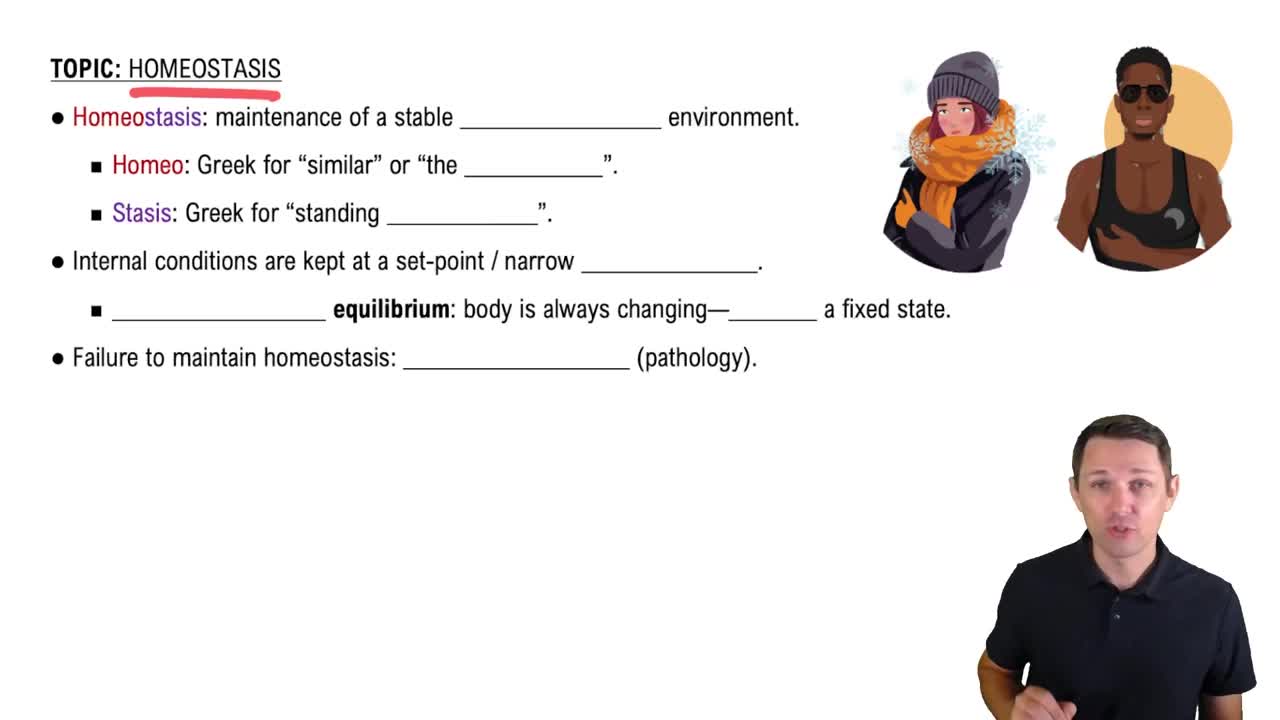
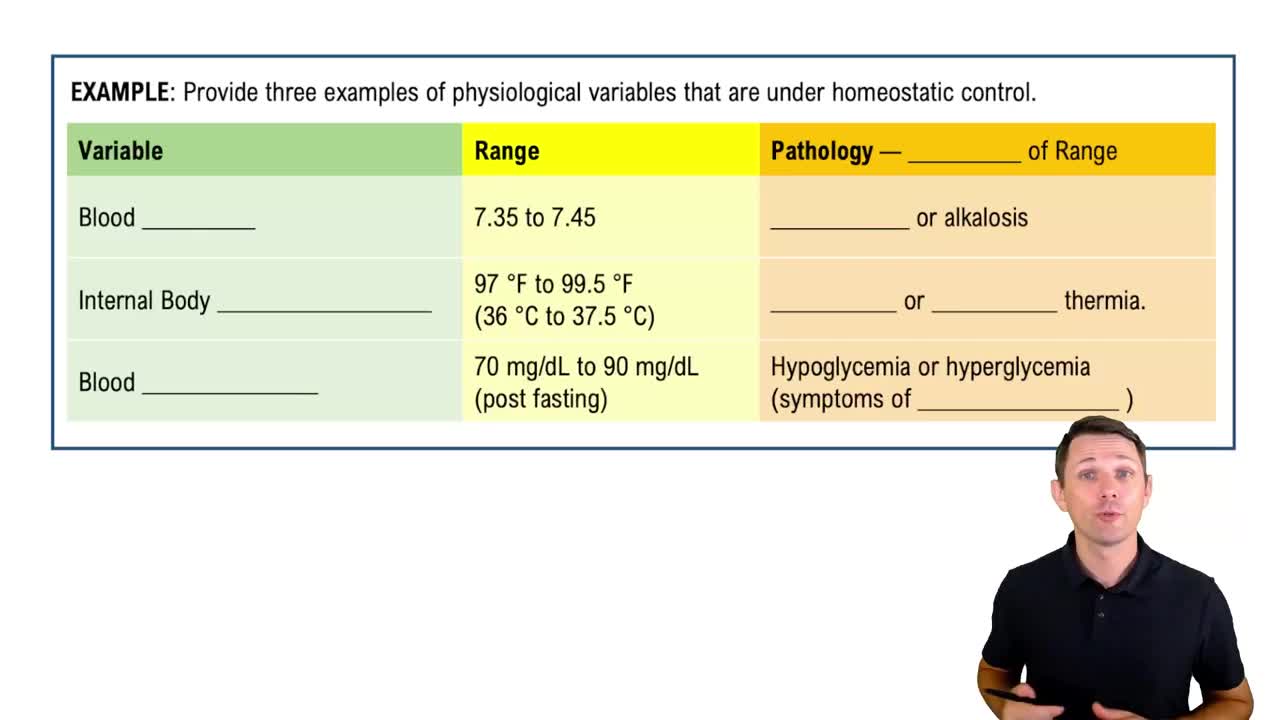
Homeostasis is the body's ability to maintain a stable internal environment despite external changes.
Negative feedback reverses a change to maintain balance; positive feedback amplifies a change to drive a process to completion.
Body planes include sagittal, frontal (coronal), and transverse planes.
Terms like anterior/posterior, superior/inferior, and medial/lateral describe locations on the body.
Atoms are the smallest units of matter, made of protons, neutrons, and electrons.
Anabolism builds complex molecules from simpler ones; catabolism breaks down molecules to release energy.
pH measures acidity or alkalinity; lower pH is acidic, higher pH is basic (alkaline).
Organic molecules include carbohydrates, lipids, proteins, and nucleic acids.
The cell membrane is selectively permeable, controls transport, and contains phospholipids and proteins.
Active transport requires energy to move substances against a gradient; passive transport does not require energy.
The cell cycle includes phases of growth, DNA replication, and cell division.
Connective tissue supports, binds, and protects; it has cells, fibers, and a matrix.
Epithelial tissue covers surfaces, lines cavities, and forms glands; cells are tightly packed.
Serous membranes line body cavities; parietal lines cavity walls; visceral covers organs.
The epidermis has layers like stratum basale and stratum corneum; the dermis contains connective tissue and glands.
Burns are classified by depth; common skin cancers include basal cell carcinoma and melanoma.
Bone types include long, short, flat, and irregular; shapes relate to function.
Projections are bone markings that grow out; depressions are indentations for joints or vessels.
Joints can be freely movable, slightly movable, or immovable, allowing various movements.
Muscle types include skeletal, cardiac, and smooth muscle.
Muscle contraction involves actin and myosin filaments sliding past each other using ATP.
CNS includes brain and spinal cord; PNS includes all other nerves.
Autonomic controls involuntary functions; somatic controls voluntary muscle movements.
Neurons transmit signals; neuroglia support and protect neurons.
An action potential is a rapid change in membrane potential that transmits nerve impulses.
Brain lobes include frontal (movement), parietal (sensory), occipital (vision), and temporal (hearing).
Ascending tracts carry sensory info to the brain; descending tracts carry motor commands from the brain.
Plexus nerves are networks of intersecting nerves that serve limbs and organs.
Parasympathetic promotes rest and digestion; sympathetic prepares body for fight or flight.
Special senses include vision, hearing, taste, smell, and balance.