 Back
Blood - Anatomy & Physiology Chapter 19
 2:36

Terms in this set (21)
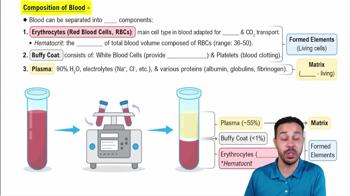
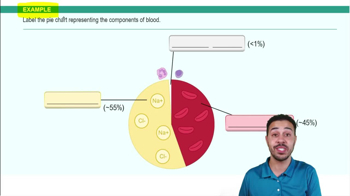
Plasma, red blood cells (erythrocytes), white blood cells (leukocytes), and platelets (thrombocytes).
To transport oxygen from the lungs to body tissues and carry carbon dioxide back to the lungs.
Hemoglobin binds oxygen molecules for transport.
Approximately 120 days.
About 90% water, plus proteins (albumins, globulins, fibrinogen), electrolytes, nutrients, gases, and waste products.
They are essential for blood clotting and help prevent bleeding.
Granulocytes (neutrophils, eosinophils, basophils) and agranulocytes (lymphocytes, monocytes).
They are the first responders to infection and perform phagocytosis of bacteria.
Erythropoietin (EPO), produced mainly by the kidneys.
The percentage of red blood cells in a volume of blood.
It is a clotting factor that converts to fibrin to form blood clots.
By regulating temperature, pH balance, and fluid volume.
Between 7.35 and 7.45, slightly alkaline.
They are involved in adaptive immunity, producing antibodies and destroying infected cells.
Serum is plasma without clotting factors like fibrinogen.
They combat parasitic infections and modulate allergic responses.
They release histamine and other chemicals during inflammatory and allergic reactions.
Hematopoiesis, occurring mainly in the bone marrow.
Determines compatibility for blood transfusions based on antigens on red blood cells.
Groups A, B, AB, and O, based on presence or absence of A and B antigens.
A protein antigen on red blood cells; presence is Rh-positive, absence is Rh-negative.