 Back
Blood and Hematology Concepts - Anatomy & Physiology
 2:36

Terms in this set (37)
Agglutinogens are red blood cell (RBC) antigens that determine blood groups and can trigger immune responses during transfusions.
An agranulocyte is a type of white blood cell without visible granules in its cytoplasm, including lymphocytes and monocytes.
Albumin is a plasma protein that maintains osmotic pressure and transports substances in the blood.
Anemia is a condition characterized by a reduced number of red blood cells or hemoglobin, leading to decreased oxygen delivery to tissues.
A basophil is a granulocyte white blood cell involved in inflammatory responses and releases histamine and heparin.
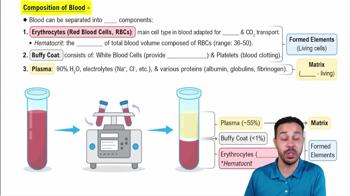
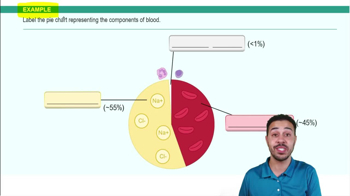
Blood components include plasma, erythrocytes (RBCs), leukocytes (WBCs), and thrombocytes (platelets).
The buffy coat is the thin layer of white blood cells and platelets between plasma and red blood cells after centrifugation.
Carbaminohemoglobin is hemoglobin bound to carbon dioxide for transport from tissues to lungs.
Coagulation is the blood clotting process that prevents excessive bleeding by forming a fibrin mesh.
Deoxyhemoglobin is hemoglobin without oxygen, carrying carbon dioxide back to the lungs.
An embolism is a blockage in a blood vessel caused by an embolus, such as a blood clot or air bubble.
An eosinophil is a granulocyte involved in combating parasitic infections and allergic reactions.
An erythrocyte or red blood cell carries oxygen from the lungs to tissues and carbon dioxide back to the lungs.
Erythropoiesis is the process of producing red blood cells in the bone marrow.
Erythropoietin (EPO) is a hormone that stimulates red blood cell production in response to hypoxia.
Fibrinogen is a plasma protein essential for blood clot formation by converting into fibrin.
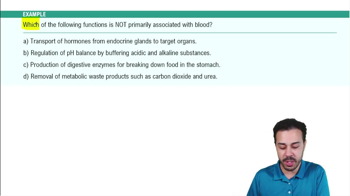
Blood functions include transporting gases, nutrients, wastes, regulating pH and temperature, and protecting against infection.
Globulins are plasma proteins involved in immune responses and transport of lipids and metals.
A granulocyte is a white blood cell with visible cytoplasmic granules, including neutrophils, eosinophils, and basophils.
Hematocrit is the percentage of red blood cells in a blood sample, indicating oxygen-carrying capacity.
Hematopoiesis is the process of blood cell formation, including red and white blood cells and platelets.
Hemoglobin is the iron-containing protein in red blood cells that binds oxygen for transport.
Hemorrhage is excessive bleeding due to blood vessel rupture or injury.
Hemostasis is the process that stops bleeding through vascular spasm, platelet plug formation, and coagulation.
Human blood groups are classifications based on RBC antigens, mainly ABO and Rh systems.
Hypoxia is a condition of low oxygen availability in tissues, stimulating erythropoietin release.
Interleukins and CSFs are signaling molecules that regulate white blood cell production and function.
Leukocytes or white blood cells defend the body against infection and remove debris.
Leukopoiesis is the production of white blood cells in the bone marrow.
A lymphocyte is a white blood cell involved in adaptive immunity, including B cells and T cells.
A monocyte is a large agranulocyte that differentiates into macrophages to phagocytize pathogens.
A neutrophil is the most abundant granulocyte that engulfs and destroys bacteria.
Oxyhemoglobin is hemoglobin bound to oxygen for transport from lungs to tissues.
Plasma is the liquid component of blood that transports cells, nutrients, hormones, and waste.
Thrombocytes or platelets are cell fragments that initiate blood clotting.
Thrombopoietin is a hormone that stimulates platelet production in the bone marrow.
A thrombus is a blood clot formed within a blood vessel that can obstruct blood flow.