 Back
Blood Composition and Function - Anatomy & Physiology
 2:36

Terms in this set (24)
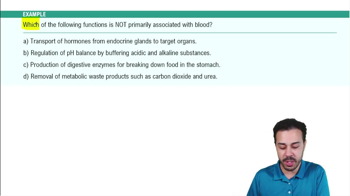
Transport of gases, nutrients, and wastes; regulation of pH, temperature, and water content; protection against blood loss and infection.
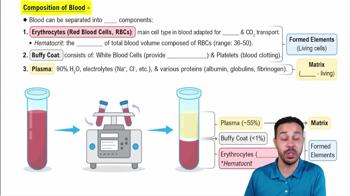
Blood has a liquid extracellular matrix (plasma) and cells suspended in it, connecting body systems by transporting substances.
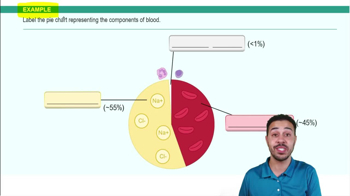
~55% plasma (water, proteins, solutes) and ~45% formed elements (erythrocytes, leukocytes, platelets).
Viscous, opaque, with a metallic taste; color varies from bright red (oxygenated) to dark red (deoxygenated); temperature ~38°C; pH 7.35-7.45.
~90% water, plasma proteins (albumins, globulins, fibrinogen), nutrients, gases, hormones, wastes; transports substances and maintains osmotic pressure.
Biconcave, anucleate cells with flexible membranes to maximize surface area for gas exchange.
Transport oxygen from lungs to tissues and carbon dioxide from tissues to lungs.
Produced in red bone marrow via erythropoiesis, stimulated by erythropoietin from kidneys.
Protein with four polypeptide chains, each containing a heme group with an iron ion that binds oxygen.
Anemia: low RBC or hemoglobin; Sickle cell disease: abnormal hemoglobin causes misshapen cells; Polycythemia: excess RBCs.
Granulocytes: neutrophils, eosinophils, basophils; Agranulocytes: lymphocytes, monocytes.
Have nuclei and organelles; granulocytes contain visible granules; agranulocytes lack visible granules.
Defend against pathogens, remove toxins and wastes, and attack abnormal cells.
Produced in red bone marrow from hematopoietic stem cells via leukopoiesis, regulated by colony-stimulating factors.
Leukemia: cancer causing excessive abnormal leukocytes; Leukopenia: low leukocyte count increasing infection risk.
Small, anucleate cell fragments derived from megakaryocytes; essential for blood clotting.
Vascular spasm, platelet plug formation, and coagulation to stop bleeding.
Anticoagulants like antithrombin, heparin, and fibrinolysis prevent excessive clotting.
Hemophilia: deficiency of clotting factors causing bleeding; Thrombosis: abnormal clot formation blocking vessels.
Based on presence of A and/or B antigens on RBCs; antibodies in plasma react against non-self antigens causing transfusion reactions.
Presence (+) or absence (-) of Rh antigen (D); Rh incompatibility can cause hemolytic disease of the newborn.
Recipient antibodies attack donor RBC antigens if incompatible, causing hemolysis and serious complications.
Crystalloids (saline, lactated Ringer's) and colloids (plasma, albumin) used depending on cause of volume loss.
Evaluates health status, detects diseases, monitors organ function, and guides treatment.