 Back
Bone and Bone Tissue - Anatomy & Physiology
 3:56

Terms in this set (20)
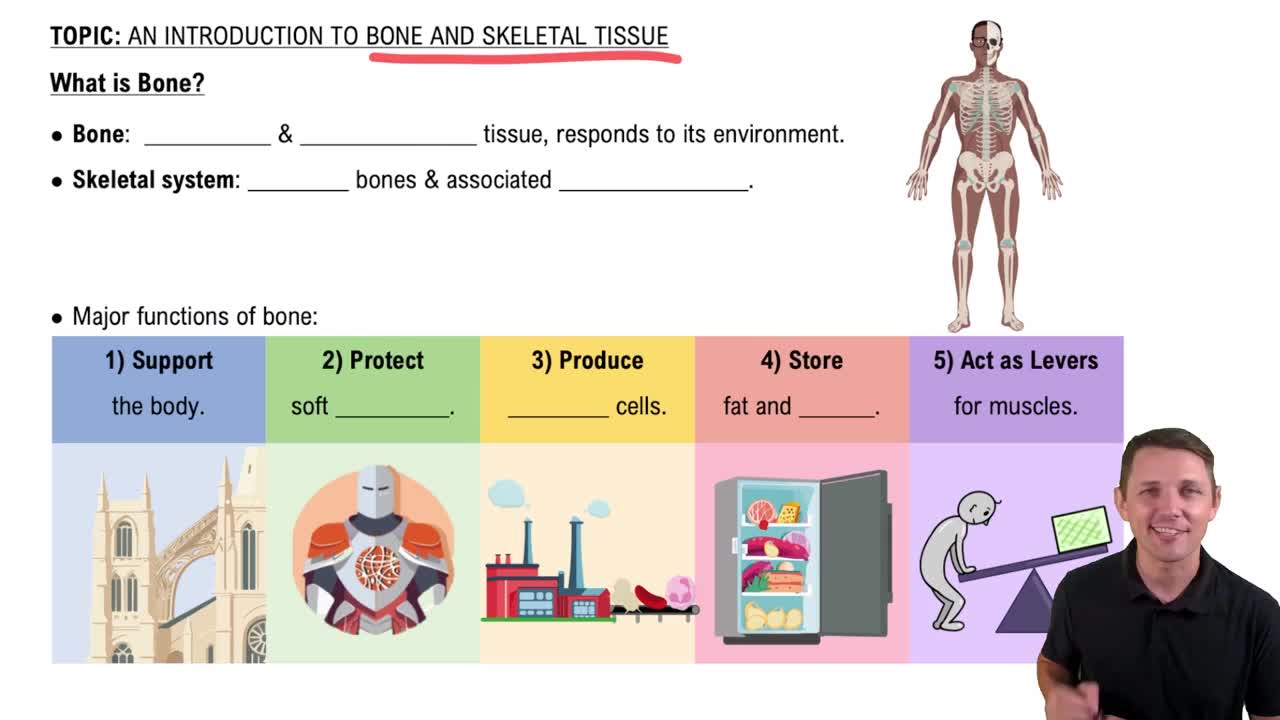
Protection, Support, Movement, Mineral storage and acid-base homeostasis, Blood cell formation, Fat storage, and Hormone production.
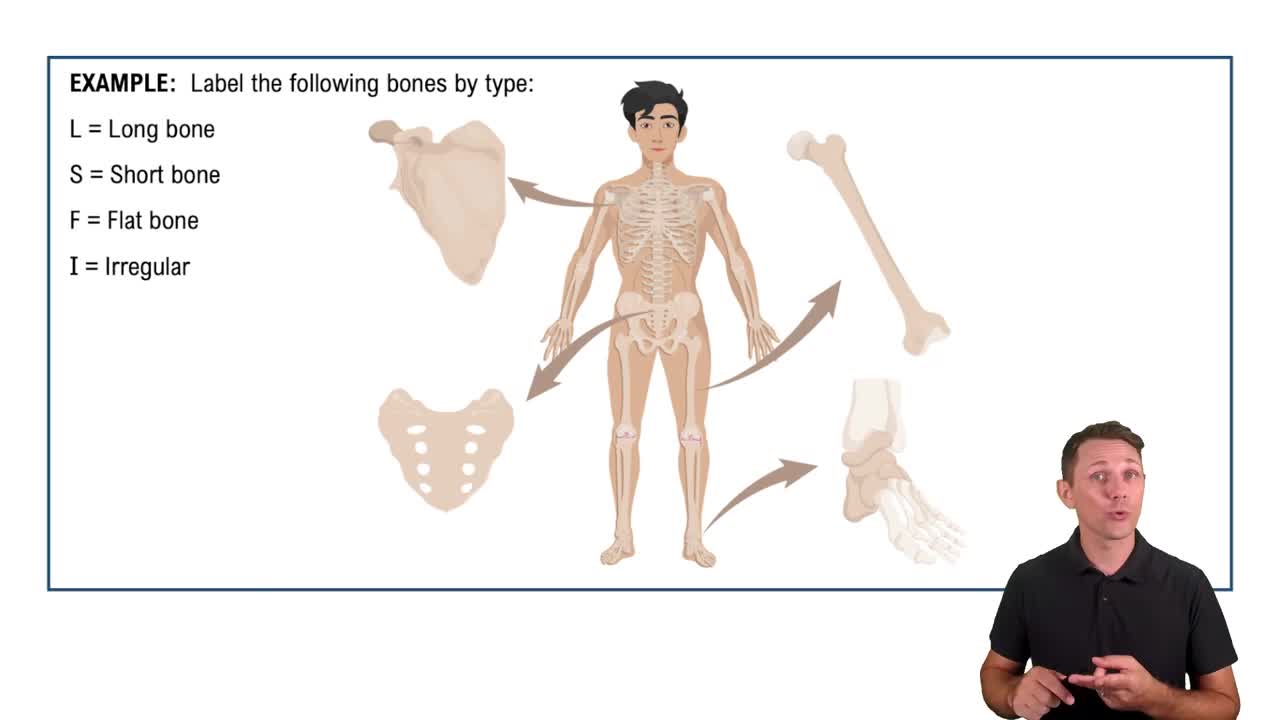
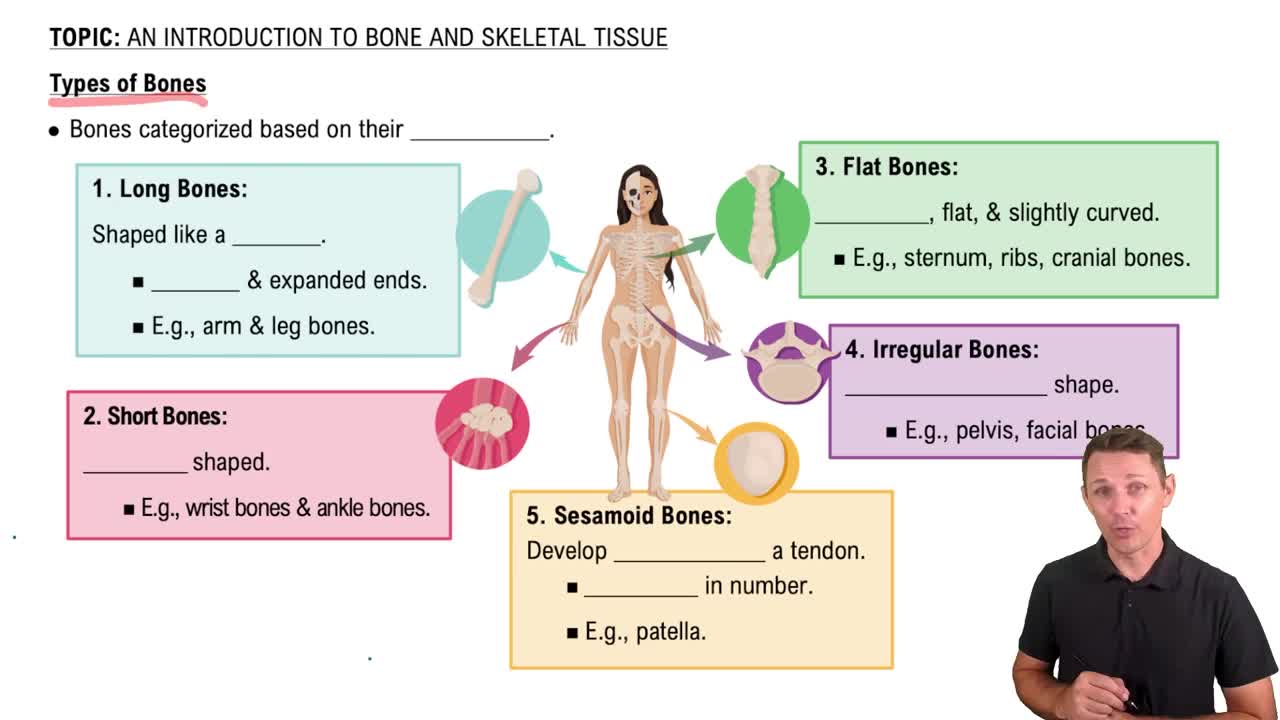
Long (longer than wide), Short (cube-shaped), Flat (thin and broad), Irregular (complex shapes), and Sesamoid (small, flat, within tendons).
Axial skeleton forms the long axis (skull, vertebrae, ribs). Appendicular skeleton includes limbs and girdles attaching limbs to axial skeleton.
Includes diaphysis (shaft), epiphyses (ends), medullary cavity with marrow, compact bone, spongy bone, periosteum, and endosteum.
Double-layered membrane: fibrous layer (dense irregular connective tissue with Sharpey’s fibers) and osteogenic layer (contains osteogenic stem cells). Anchors tendons and ligaments.
Red marrow produces blood cells (hematopoiesis). Yellow marrow stores fat in adipocytes.
Inorganic matrix (~65%) mainly hydroxyapatite crystals for strength. Organic matrix (osteoid, ~35%) mainly collagen and proteins for flexibility and tensile strength.
Osteoblasts build bone by secreting matrix. Osteocytes maintain bone matrix. Osteoclasts resorb bone by secreting acid and enzymes.
Defective osteoclasts cause excessive bone mass that is weak and brittle. Can cause nerve trapping and reduced marrow space.
Bone resorption exceeds deposition, leading to brittle bones and increased fracture risk. Caused by calcium/vitamin D deficiency, hormonal changes, and aging.
Composed of osteons with concentric lamellae, central (Haversian) canal, lacunae with osteocytes, and canaliculi connecting lacunae.
Consists of trabeculae with lamellae, lacunae, and canaliculi but no osteons. Blood supply comes from bone marrow vessels.
Bone forms directly from mesenchymal membrane; forms flat bones like skull and clavicles. Spongy bone forms first, then compact bone.
Bone forms by replacing hyaline cartilage model; forms most bones below the head. Compact bone forms first, then spongy bone inside.
Reserve cartilage, proliferation (mitosis), hypertrophy/maturation, calcification, and ossification zones involved in lengthening bones.
Growth in bone thickness by osteoblasts adding new circumferential lamellae under periosteum and osteoclasts resorbing inner bone to enlarge medullary cavity.
Growth hormone promotes chondrocyte mitosis and osteoblast activity. Testosterone increases appositional growth and mitosis. Estrogen has similar but less pronounced effects.
Controlled by hormonal feedback loops (PTH increases blood calcium, calcitonin decreases it) and mechanical stress (Wolff’s Law).
Hematoma formation, soft callus formation by fibroblasts and chondroblasts, hard bone callus formation by osteoblasts, and remodeling to secondary bone.
Includes spiral, compression, comminuted, avulsion, greenstick, and epiphyseal fractures, classified by break pattern and displacement.