 Back
Bone Structure, Growth, and Hormonal Regulation in Anatomy & Physiology
 2:58

Terms in this set (10)
Long, short, flat, irregular, and sesamoid are the main bone shapes, each with distinct functions and structures.
Red marrow produces blood cells; yellow marrow stores fat.
Bone forms by replacing hyaline cartilage, mainly in long bones during fetal development.
Bone develops directly from mesenchymal tissue, mainly forming flat bones like the skull.
Bone grows in thickness by adding new layers on the surface via osteoblasts.
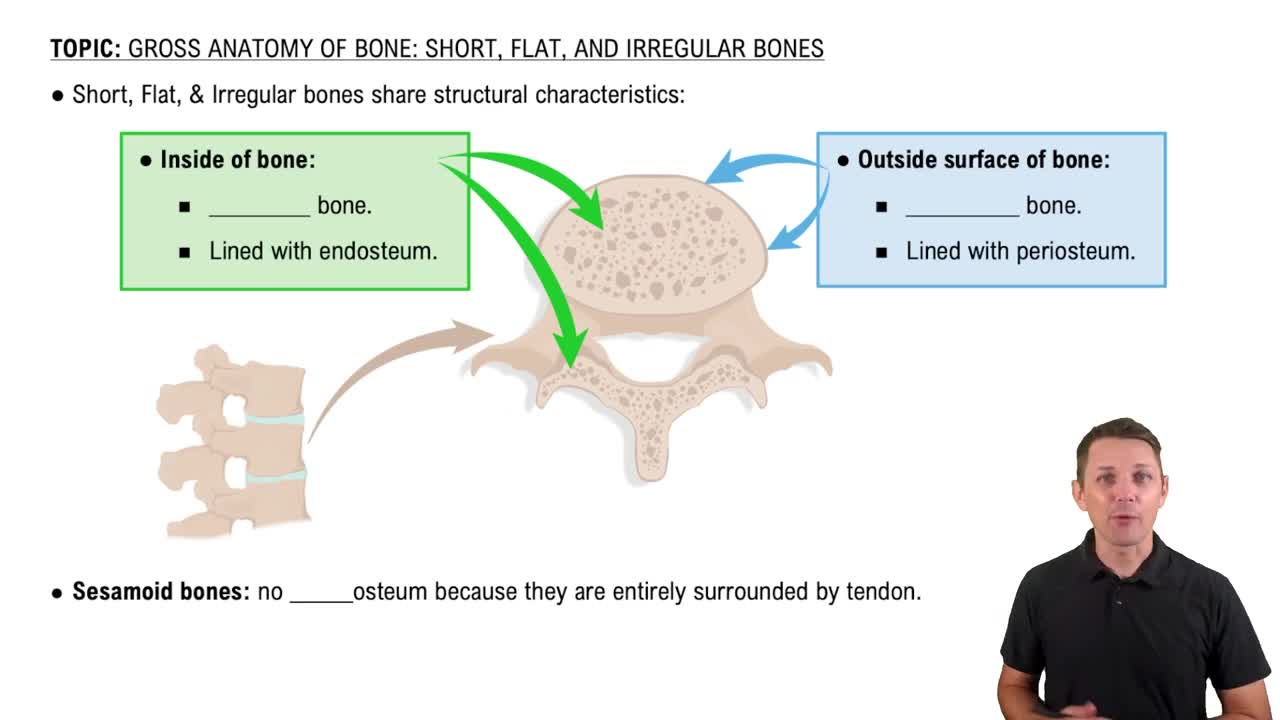
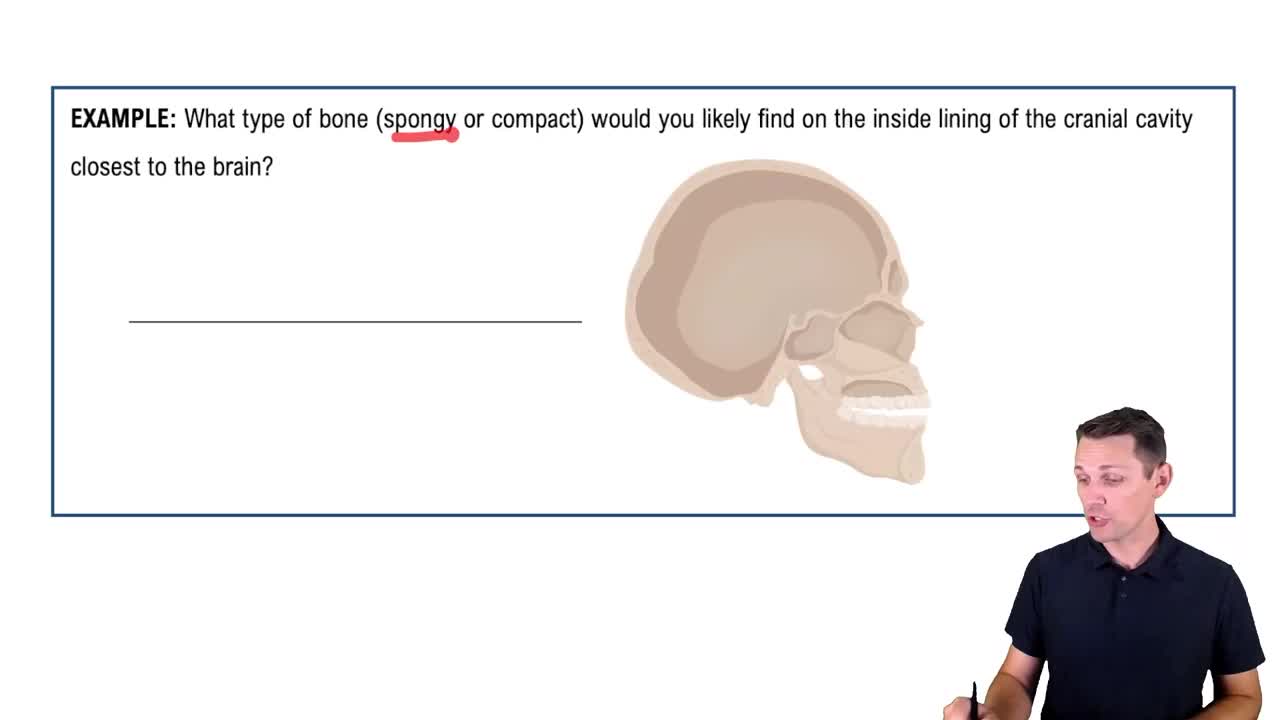
Lightweight, porous bone with trabeculae that support marrow and resist stress.
Dense, solid bone forming the outer layer, providing strength and protection.
PTH increases blood calcium by stimulating osteoclasts to break down bone.
Calcitonin lowers blood calcium by inhibiting osteoclast activity and promoting bone formation.
Calcitriol enhances calcium absorption in the intestines and supports bone mineralization.