 Back
Bones in the Human Body
 3:56

Terms in this set (20)
The adult human body has 206 bones.
The axial skeleton and the appendicular skeleton.
The axial skeleton includes the skull, vertebral column, ribs, and sternum.
The appendicular skeleton includes the limbs and girdles (pectoral and pelvic girdles).
The femur (thigh bone) is the largest bone.
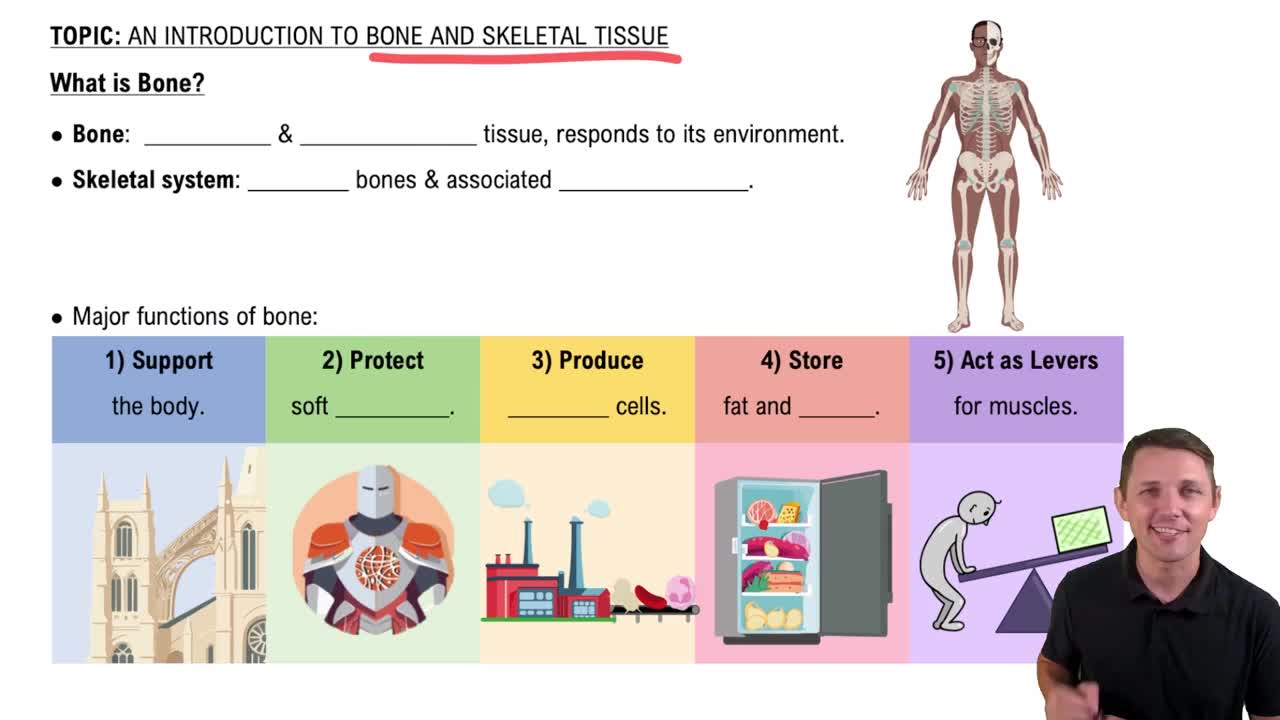
Bones provide support, protection, movement, mineral storage, and blood cell production.
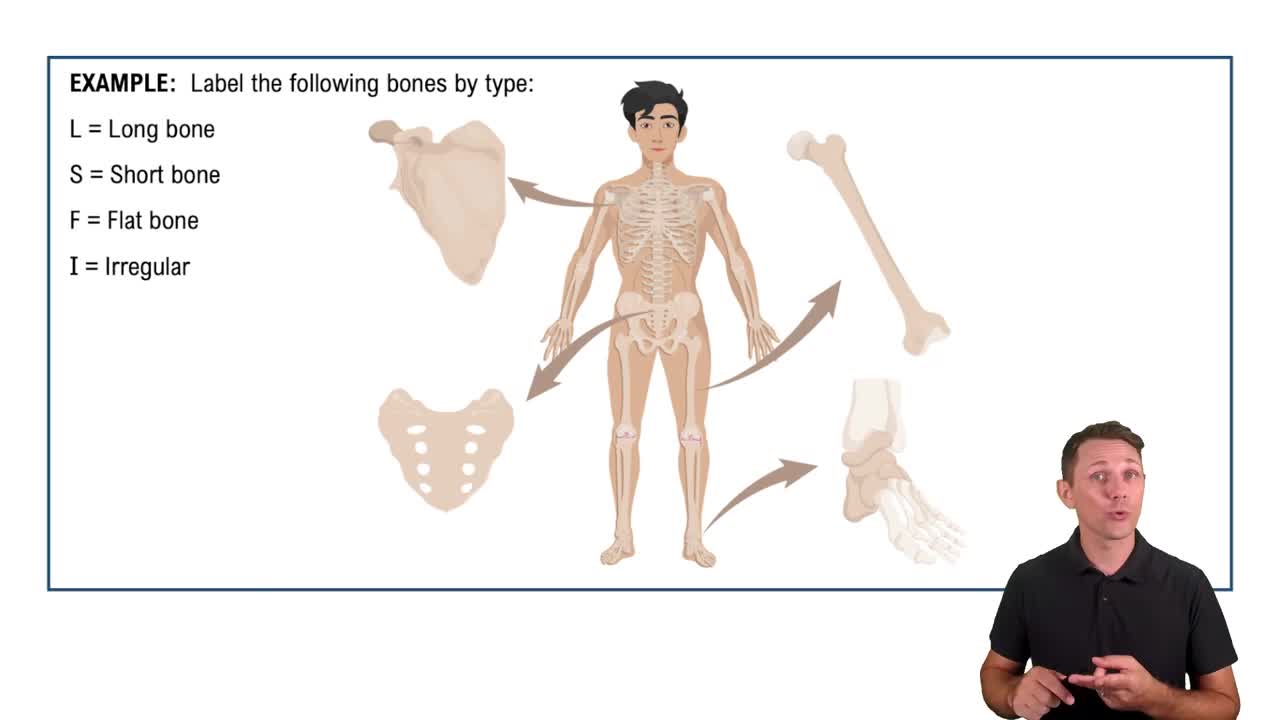
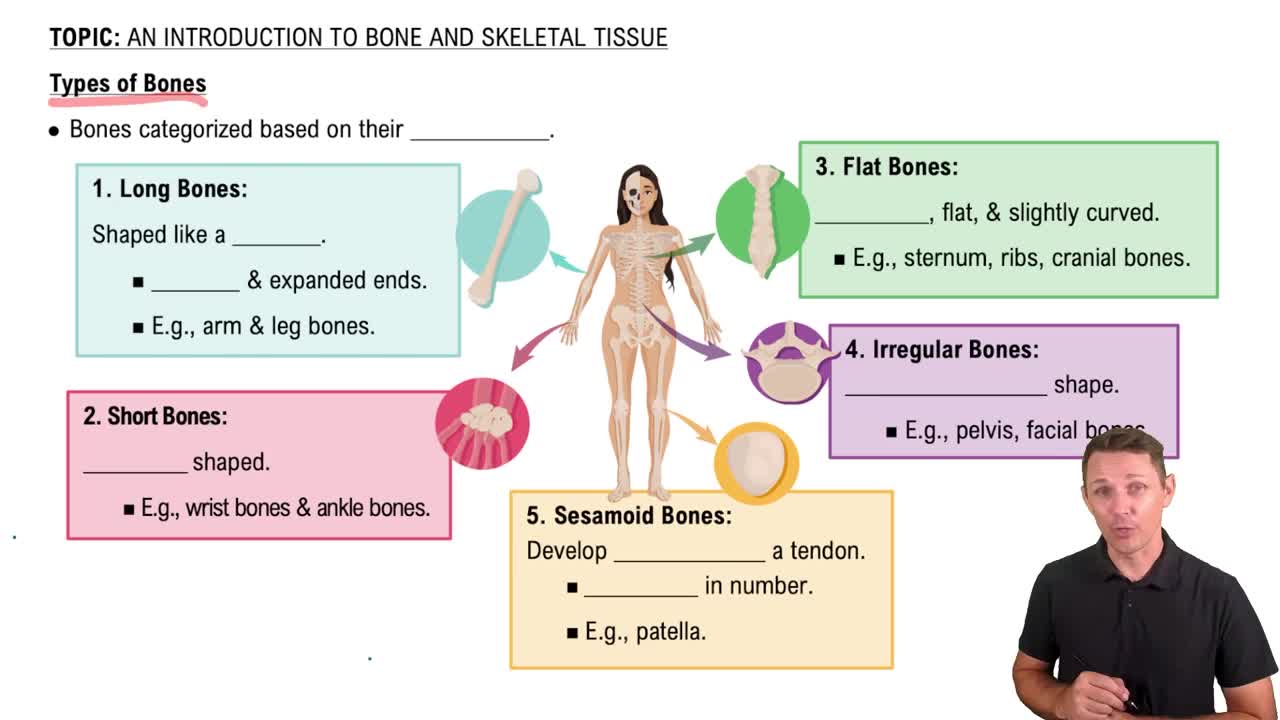
The femur is a long bone.
Long, short, flat, and irregular bones.
The sternum and scapula are examples of flat bones.
It supports the head, protects the spinal cord, and provides attachment points for ribs and muscles.
There are 33 vertebrae in total.
Cervical, thoracic, lumbar, sacral, and coccygeal regions.
The clavicle and scapula form the pectoral girdle.
The hip bones (ilium, ischium, and pubis) form the pelvic girdle.
The stapes bone in the middle ear is the smallest bone.
Red bone marrow produces red and white blood cells and platelets.
Compact bone is dense and strong; spongy bone is porous and lighter.
Spongy bone is found at the ends of long bones and inside flat bones.
The periosteum is a fibrous membrane covering the outer surface of bones except at joints.
Osteoblasts are responsible for bone formation.