 Back
Cell Cycle and Cell Death in Anatomy & Physiology
 04:02

Terms in this set (20)
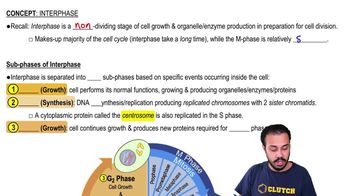
The sub-phases of Interphase are G1 (cell growth), S (DNA synthesis), and G2 (preparation for mitosis).
During G1 phase, the cell grows and performs normal functions while preparing for DNA replication.
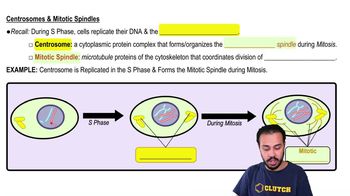
The S phase is when DNA replication occurs, duplicating the cell's genetic material.
In G2 phase, the cell continues to grow and prepares for mitosis by producing necessary proteins and organelles.
The phases of Mitosis are Prophase, Metaphase, Anaphase, and Telophase.
In Prophase, chromatin condenses into chromosomes, the nuclear envelope breaks down, and spindle fibers form.
During Metaphase, chromosomes align at the cell's equatorial plate, attached to spindle fibers.
In Anaphase, sister chromatids separate and move toward opposite poles of the cell.
Telophase involves the reformation of the nuclear envelope around separated chromosomes and the start of cytokinesis.
Apoptosis is programmed cell death, a controlled process that removes damaged or unnecessary cells without causing inflammation.
Necrosis is uncontrolled cell death caused by injury or disease, often resulting in inflammation.
Apoptosis is a regulated, clean cell death process, while necrosis is accidental and causes inflammation.
Spindle fibers attach to chromosomes and help separate sister chromatids during mitosis.
DNA replication ensures each daughter cell receives an identical set of chromosomes after mitosis.
The nuclear envelope breaks down during Prophase and reforms during Telophase.
Cytokinesis is the division of the cytoplasm, resulting in two separate daughter cells after mitosis.
The cell spends most of its time in Interphase, performing growth and DNA replication.
G0 phase is a resting state where cells exit the cycle and do not divide.
The cell uses the spindle assembly checkpoint to ensure chromosomes are properly attached before separation.
The completion of DNA replication and cell growth in G2 phase triggers the start of mitosis.