 Back
Cellular Respiration and Fermentation in Anatomy & Physiology
 01:52

Terms in this set (20)
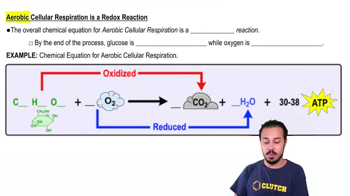
Cellular respiration is the process by which cells convert glucose and oxygen into energy (ATP), carbon dioxide, and water. It occurs mainly in the mitochondria. Without it, cells cannot produce enough energy to survive.
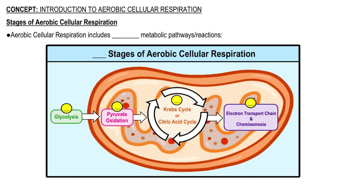
Glycolysis is the first step of cellular respiration, breaking glucose into two molecules of pyruvate in the cytoplasm. It produces a small amount of ATP and NADH. Without glycolysis, cells cannot start energy extraction from glucose.
The Krebs cycle occurs in the mitochondrial matrix, processing pyruvate into CO2 and transferring energy to NADH and FADH2. It is essential for producing electron carriers for the next stage. Without it, energy production is severely reduced.
The ETC is located in the inner mitochondrial membrane, where electrons from NADH and FADH2 create a proton gradient to produce most ATP. Oxygen is the final electron acceptor. Without ETC, ATP production drops drastically.
ATP is the main energy currency of the cell, produced during cellular respiration. It powers cellular functions. Without ATP, cells cannot perform vital activities and will die.
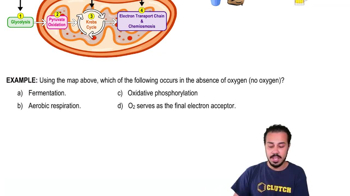
Fermentation is an anaerobic process that allows glycolysis to continue by regenerating NAD+ from NADH. It occurs in the cytoplasm when oxygen is absent. Without fermentation, cells would run out of NAD+ and stop producing ATP anaerobically.
Lactic acid fermentation converts pyruvate into lactic acid in muscle cells during low oxygen. It regenerates NAD+ but produces less ATP. Without it, muscles would fatigue faster under anaerobic conditions.
Alcoholic fermentation occurs in yeast, converting pyruvate into ethanol and CO2, regenerating NAD+. It allows ATP production without oxygen. Without it, yeast could not survive anaerobic environments.
Oxygen acts as the final electron acceptor in the ETC, enabling ATP production. Without oxygen, the ETC stops, and cells rely on less efficient fermentation.
Mitochondria are organelles where the Krebs cycle and ETC occur, producing most cellular ATP. Without mitochondria, aerobic respiration cannot proceed efficiently.
NAD+ is an electron carrier that accepts electrons during glycolysis and Krebs cycle, becoming NADH. NADH donates electrons to the ETC. Without NAD+, energy extraction from glucose halts.
FAD is another electron carrier reduced to FADH2 during the Krebs cycle. FADH2 donates electrons to the ETC. Both are essential for efficient ATP production.
Anaerobic respiration is energy production without oxygen, using fermentation to regenerate NAD+. It yields less ATP than aerobic respiration. Without it, cells in low oxygen would die quickly.
Pyruvate is the end product of glycolysis, entering mitochondria for the Krebs cycle or converted in fermentation. It is a key metabolic intermediate. Without pyruvate, energy pathways cannot continue.
The proton gradient across the inner mitochondrial membrane drives ATP synthesis by ATP synthase. It is created by electron transport. Without this gradient, ATP cannot be produced efficiently.
ATP synthase is an enzyme that uses the proton gradient to convert ADP to ATP. It is essential for producing most cellular ATP. Without it, energy production is minimal.
Carbon dioxide is a waste product released during the Krebs cycle. It is expelled from the body via respiration. Without CO2 removal, acid-base balance would be disrupted.
Aerobic respiration produces about 36-38 ATP molecules per glucose, making it highly efficient. Without aerobic respiration, cells rely on less efficient anaerobic processes.
Fermentation yields only 2 ATP per glucose from glycolysis, much less than aerobic respiration. It sustains cells temporarily without oxygen. Without fermentation, anaerobic ATP production stops.
NAD+ regeneration is crucial to keep glycolysis running by accepting electrons. Fermentation regenerates NAD+ when oxygen is absent. Without it, ATP production halts under anaerobic conditions.