 Back
Ch 6
 3:56

Terms in this set (16)
Axial skeleton: skull, thorax, vertebral column (~80 bones). Appendicular skeleton: limbs and pectoral/pelvic girdles (~126 bones).
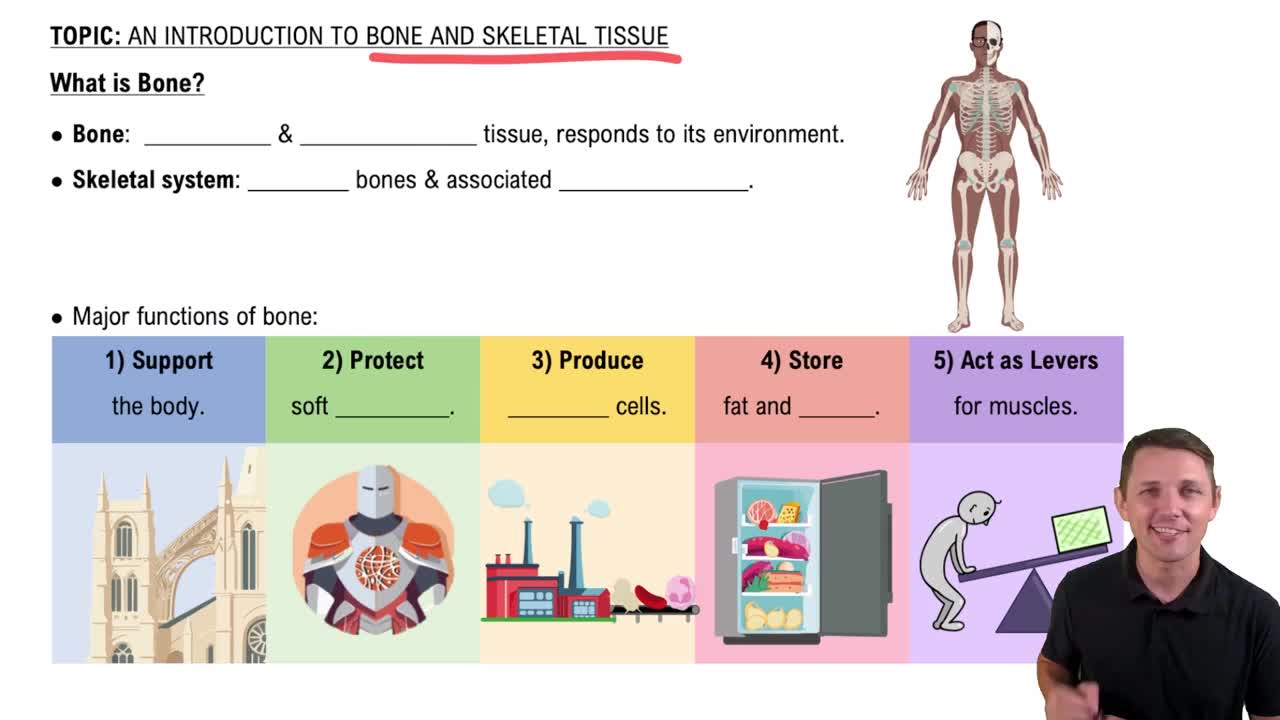
Support
Mineral and lipid storage
Blood cell production
Protection
Leverage for movement.
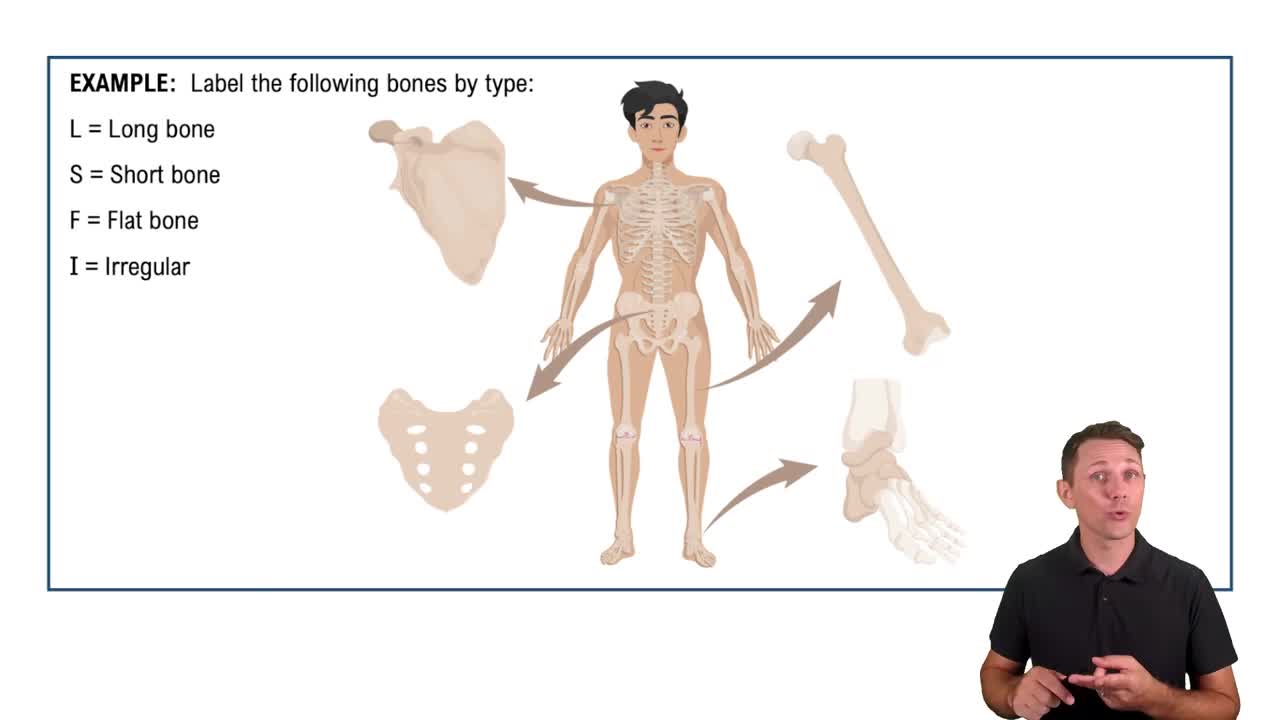
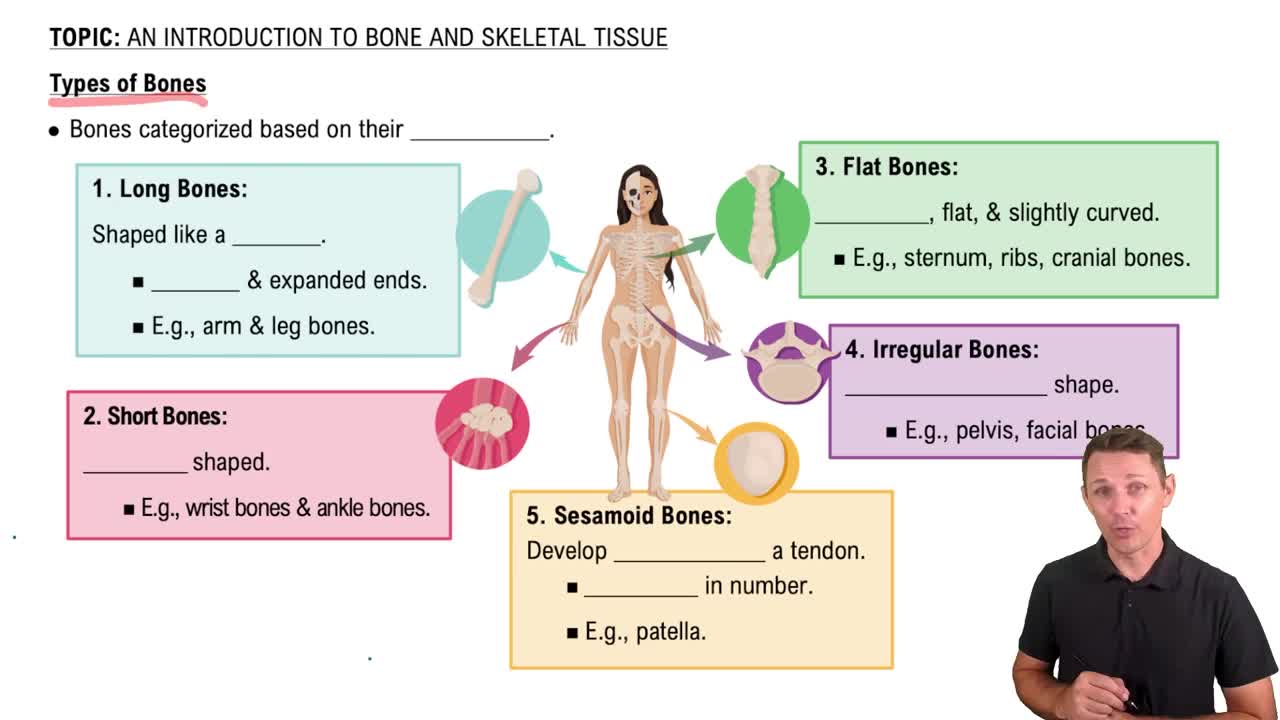
Long (humerus)
Flat (skull)
Short (carpals)
Irregular (vertebrae)
Sesamoid (patella)
Sutural (between cranial bones).
Process is a projection or bump for attachment or joints
Facet is a small, flat articular surface.
Epiphysis: expanded ends with spongy bone.
Diaphysis: shaft with medullary cavity.
Metaphysis: narrow region with epiphyseal plate/line.
Outer connective tissue covering that isolates bone
Provides blood/nerves route
Aids growth and repair.
Incomplete cellular layer lining medullary cavity
Active in growth, repair, and remodeling.
Compact bone provides axial strength
Spongy bone reduces weight and resists stress from multiple directions.
Osteogenic: stem cells
Osteoblasts: form bone matrix
Osteocytes: maintain matrix
Osteoclasts: dissolve/remodel bone.
Central (Haversian) canal
Concentric lamellae
Osteocytes in lacunae
Canaliculi connecting them.
Endochondral: replaces hyaline cartilage with bone (most bones)
Intramembranous: bone forms directly from mesenchyme (skull, mandible).
Growth at the epiphyseal plate:
Chondrocytes multiply on the epiphyseal side
Replaced by bone on the diaphyseal side.
Appositional growth:
Osteoblasts beneath the periosteum add circumferential lamellae.
Increases blood calcium by stimulating osteoclasts, enhancing intestinal absorption, and reducing urinary loss.
Decreases blood calcium by inhibiting osteoclasts and increasing calcium loss in urine.
Fracture hematoma
Soft callus formation
Hard callus formation
Remodeling.