Back

ch 8

Control buttons has been changed to "navigation" mode.
1/14
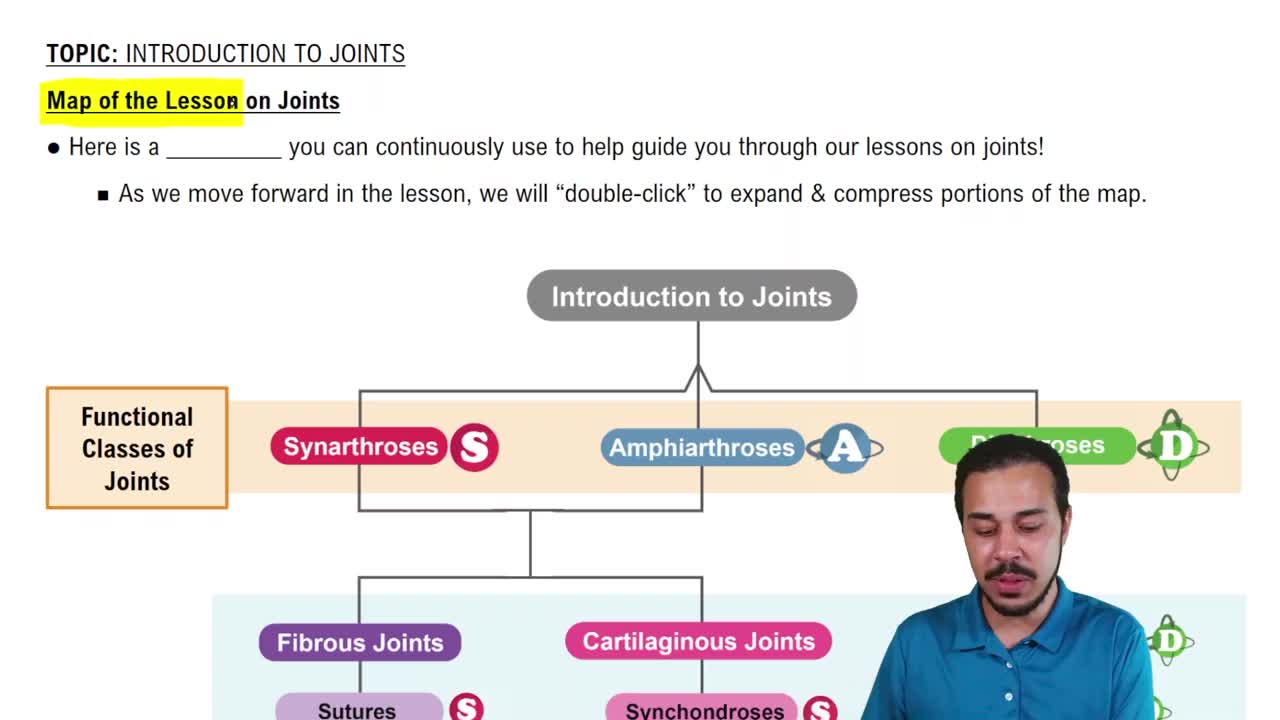
  • Difference between structural and functional classification of joints

    Structural: Based on what separates the bones

    (Fibrous, Cartilaginous, Synovial).

    Functional: Based on movement allowed

    (Synarthrosis = immovable, Amphiarthrosis = slightly movable, Diarthrosis = freely movable).

  • Structural and functional classification of a cranial suture

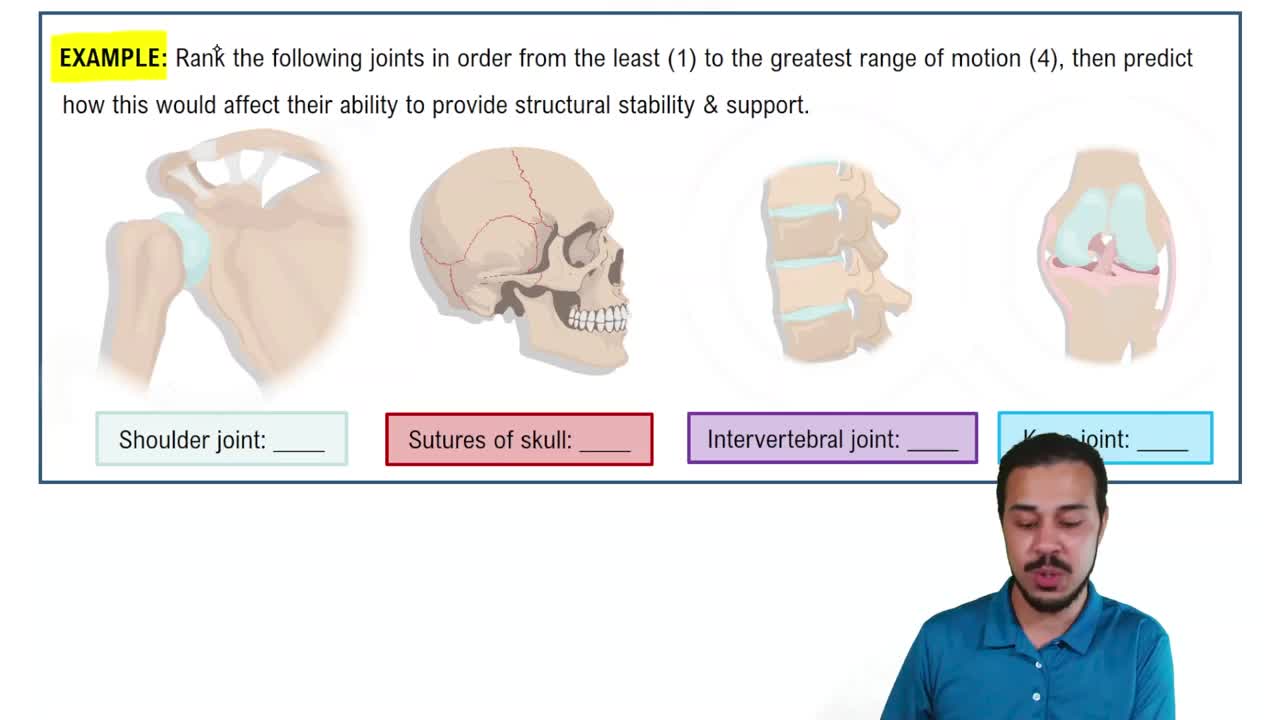
    Structural: Fibrous (suture).

    Functional: Synarthrosis (immovable).

  • Key anatomical components of a synovial joint

    Articular cartilage

    joint (articular) cavity

    joint capsule (fibrous capsule + synovial membrane)

    synovial fluid

    reinforcing ligaments.

  • Primary functions of synovial fluid

    Lubrication to reduce friction

    Nutrient and waste exchange for avascular articular cartilage

    Shock absorption.

  • Difference between meniscus, labrum, and bursa

    Meniscus: Fibrocartilage pad between bones for fit and shock absorption.

    Labrum: Fibrocartilage rim that deepens a socket.

    Bursa: Synovial fluid-filled sac reducing friction where tissues rub.

  • Six major types of synovial joints and their movement planes

    Plane/Gliding: Nonaxial.

    Hinge: Uniaxial.

    Pivot: Uniaxial.

    Condylar/Ellipsoid: Biaxial.

    Saddle: Biaxial.

    Ball-and-Socket: Triaxial.

  • Example joints for each synovial joint type

    Plane: intercarpal

    Hinge: elbow

    Pivot: atlanto-axial

    Condylar: radiocarpal

    Saddle: thumb carpometacarpal

    Ball-and-Socket: shoulder.

  • Why does the shoulder have more mobility than the hip?

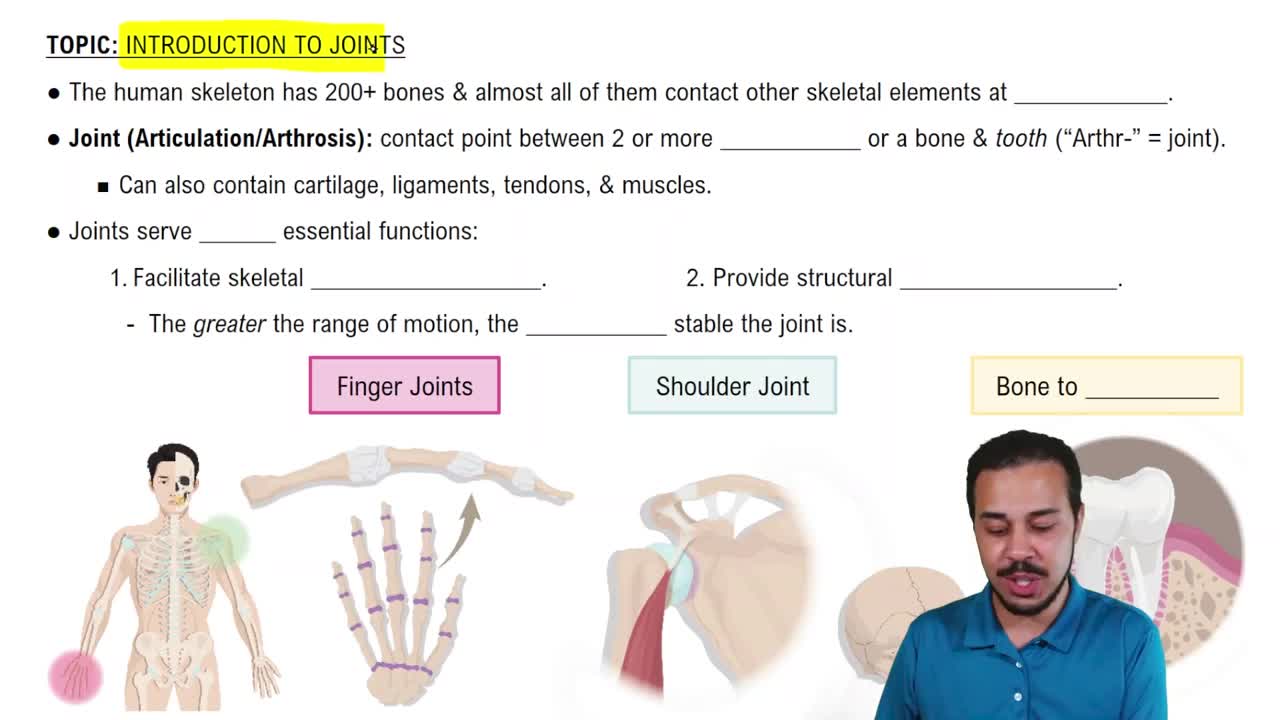
    The shoulder has a shallow glenoid cavity allowing a wide range of motion (triaxial) but less bony stability.
  • Why does the hip have more stability than the shoulder?

    The hip has a deep acetabulum enclosing the femoral head, providing high structural stability for weight-bearing.
  • Definition of flexion and extension

    Flexion: Decreases the angle between bones (bending). Extension: Increases the angle between bones (straightening).
  • Difference between pronation and supination

    Supination: Forearm rotates so palm faces anteriorly/up. Pronation: Forearm rotates so palm faces posteriorly/down.
  • Common cause of most lateral ankle sprains

    Excessive inversion of the foot stresses and can tear lateral ligaments.
  • Ligaments most commonly injured in lateral ankle sprains

    Anterior talofibular and calcaneofibular ligaments.
  • Pathological changes in osteoarthritis

    Wear-and-tear damages articular cartilage, leaving rough collagen fibers that increase friction and cause joint degeneration.