 Back
CH.6 - Bones and Skeletal Tissues - Anatomy & Physiology
You can tap to flip the card.
Control buttons has been changed to "navigation" mode.
1/24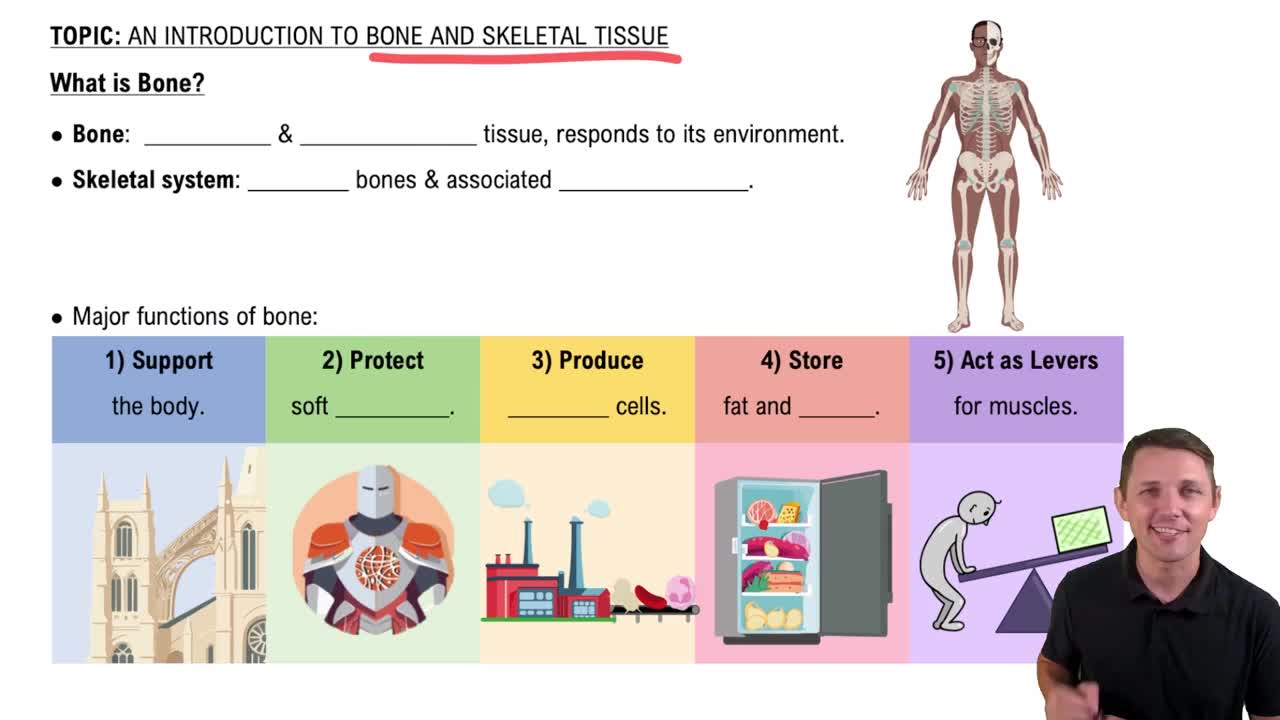
 3:56

Terms in this set (24)
Elastic cartilage: contains elastic fibers, found in external ear and epiglottis.
Fibrocartilage: thick collagen fibers, great tensile strength, found in menisci and intervertebral discs.
Interstitial growth: chondrocytes divide within lacunae, secreting new matrix, increasing thickness.
2. Protection of brain and vital organs
3. Movement as levers for muscles
4. Mineral and growth factor storage
5. Blood cell formation (hematopoiesis)
6. Triglyceride (fat) storage
7. Hormone production (osteocalcin)
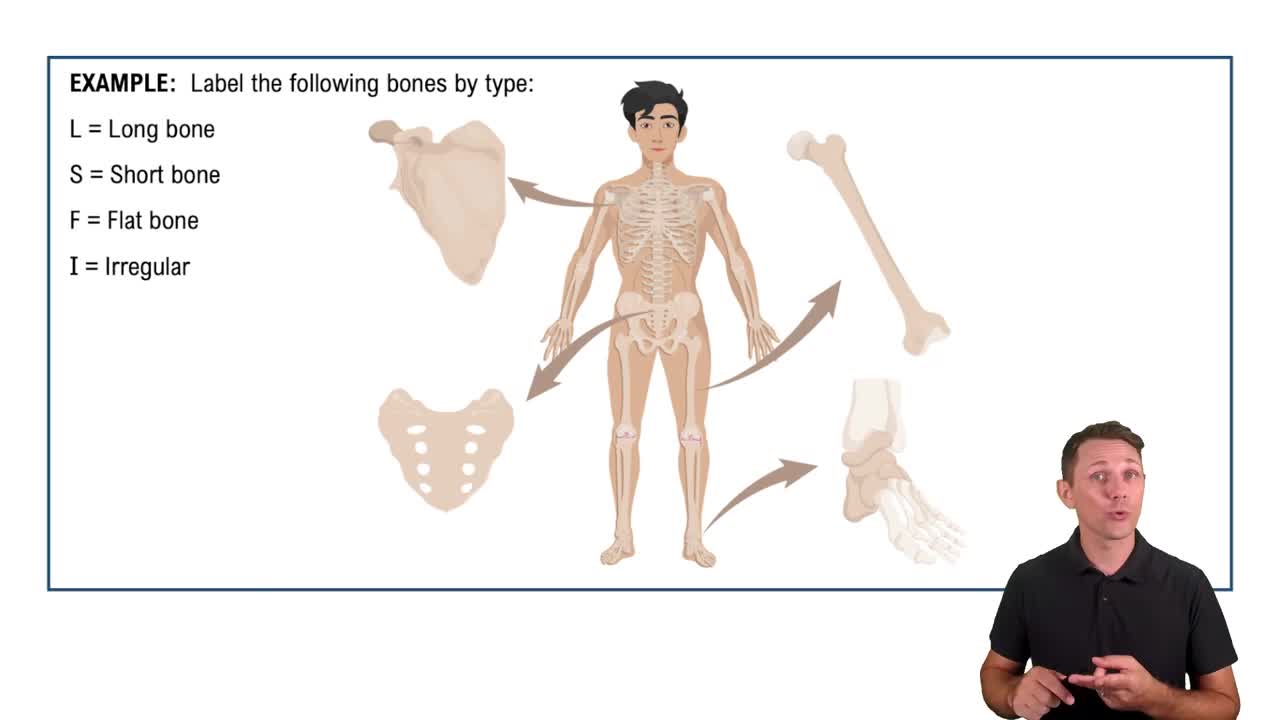
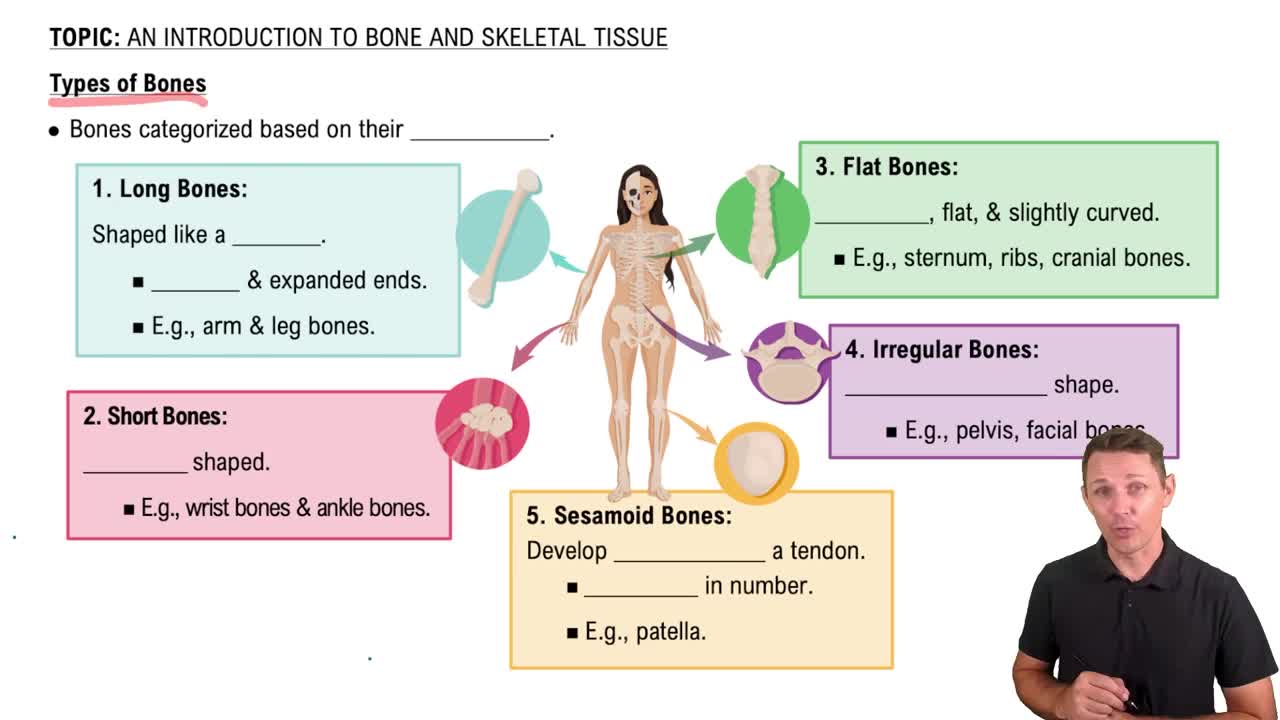
Short bones: cube-shaped, e.g. talus.
Flat bones: thin and curved, e.g. sternum.
Irregular bones: complex shapes, e.g. vertebrae.
Spongy bone consists of a honeycomb of trabeculae with spaces filled with red or yellow marrow.
Endosteum: delicate membrane covering internal bone surfaces and trabeculae, also contains osteogenic cells.
Depressions: grooves or indentations for vessels or joints.
Openings: holes or canals for blood vessels and nerves.
Osteoblasts: bone-forming cells secreting osteoid.
Osteocytes: mature cells maintaining matrix.
Bone-lining cells: maintain matrix on bone surfaces.
Osteoclasts: bone-resorbing cells breaking down matrix.
Intramembranous ossification: bone develops from fibrous membrane.
Endochondral ossification: bone replaces hyaline cartilage.
Width growth occurs by appositional growth with osteoblasts adding bone matrix on the surface and osteoclasts resorbing bone inside.
2. Fibrocartilaginous callus formation
3. Bony callus formation
4. Bone remodeling