 Back
Chapter 1_A&P I_Basic Concepts - slideshow 2
 01:59

Terms in this set (21)
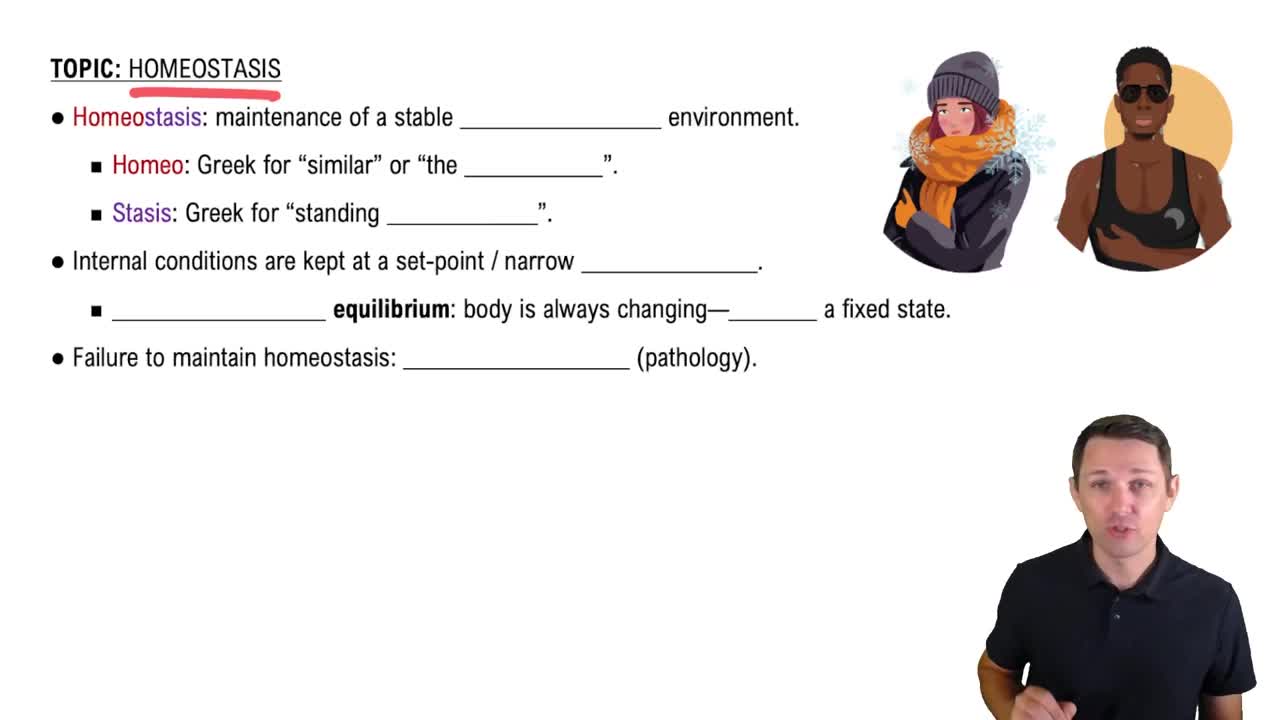
Homeostasis is the maintenance of a stable internal environment within a narrow, normal range close to a set point despite changing external conditions.
1. Homeostasis and feedback loops
2. Structure and function are complementary
3. Gradients drive physiological processes
4. Cell-cell communication is crucial
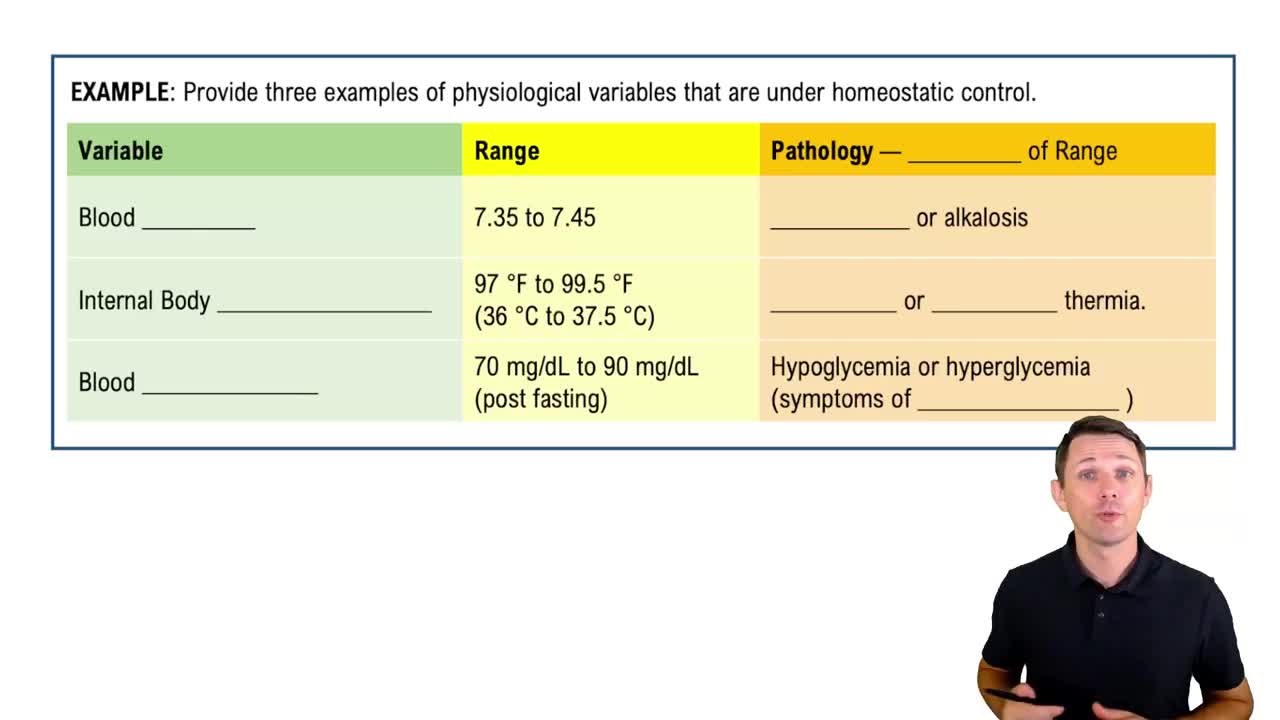
Body temperature (~37°C), blood glucose (70–120 mg/dL), water and electrolytes (Na⁺, K⁺, fluid), blood pH (~7.4), oxygen and carbon dioxide levels, and blood pressure (~120/80 mmHg).
A control mechanism where a change in a variable causes a physiological response that feeds back to adjust that variable.
A process where changes in a variable trigger responses that oppose the change and return the variable to its normal range, shutting off once balance is restored.
Stimulus, receptor, control center (input), and effector (output) which together regulate a physiological variable.
When body temperature drops, receptors detect the change, the control center signals effectors like skeletal muscles to shiver, producing heat and raising temperature back to normal.
A process where a physiological change is amplified by reinforcing itself, causing rapid change until the loop is shut off.
During labor, stretching of the cervix causes oxytocin release, which increases uterine contractions, further stretching the cervix until delivery occurs.
Platelets release signals that recruit more platelets, amplifying clot formation until the vessel is sealed.
Positive feedback loops often occur within larger negative feedback loops to amplify a response temporarily before returning to homeostasis.
1. Negative feedback is bad and positive feedback is good.
2. Homeostasis means no internal change.
3. Feedback loops are simply on/off switches.
4. Any variable can be perfectly controlled.
Organs, tissues, and cells are organized to reflect their specific functions; form and function are complementary and shaped by evolution.
A difference in concentration, pressure, or temperature between two connected areas that stores energy to drive physiological processes.
Stored energy in gradients is used to perform work, such as diffusion of gases or movement of fluids across membranes.
Cells coordinate actions through chemical or electrical signals to maintain homeostasis and function properly.
Endocrine, paracrine, autocrine, and juxtacrine signaling.
Cells release hormones into the bloodstream to affect distant target cells.
Cells release signals that affect nearby cells in the local environment.
Cells release signals that act on themselves.
Direct cell-to-cell communication through physical contact.