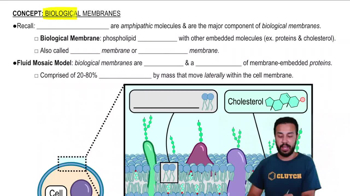
A double layer of fat molecules with hydrophilic heads facing water and hydrophobic tails hidden inside, forming the basic structure of the plasma membrane.
Role of Cholesterol in the Membrane
Acts like glue or stiffeners inside the phospholipid bilayer to keep the membrane stable and flexible.
Integral Membrane Proteins
Proteins that span the entire membrane, forming tunnels or channels for molecules to pass through.
Peripheral Membrane Proteins
Proteins that sit on the surface of the membrane like sticky notes, involved in signaling or structural support.
Six Main Functions of Membrane Proteins
Anchors, Identifiers, Enzymes, Receptors, Carriers, and Channels.
Glycocalyx
A sugary coating on the cell surface that acts as an ID card, lubricant, and sticking agent.
Microfilaments (Actin)
Thin protein fibers that shape the cell and aid in movement and muscle contraction.
Intermediate Filaments
Structural protein cables that provide internal strength to the cell.
Microtubules
Protein tubes that serve as tracks for moving organelles and help split chromosomes during cell division.
Cilia vs. Flagella
Cilia are tiny oars that move fluid across the cell surface; flagella are long tails that propel the entire cell.
Mitochondria Structure
Double membrane organelle with inner folds called cristae and fluid matrix inside, producing ATP.
DNA Packaging in the Nucleus
DNA wraps around histones forming chromatin when resting and condenses into chromosomes during cell division.
Central Dogma of Molecular Biology
DNA is transcribed to RNA, which is translated into protein.
Selective Permeability of the Membrane
The membrane allows small, lipid-soluble molecules to pass easily but blocks large or charged molecules without assistance.
Passive Transport
Movement of molecules down their concentration gradient without using energy (ATP).
Active Transport
Movement of molecules against their concentration gradient using energy (ATP).
 Back
 02:21