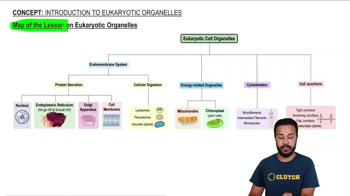
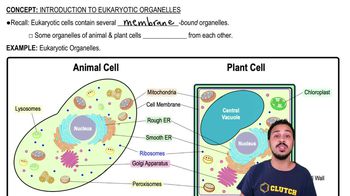
Organelle with a double membrane and folded inner membrane called cristae; synthesizes the majority of the cell's ATP and contains its own DNA and ribosomes.
Peroxisome
Membrane-enclosed organelle that detoxifies chemicals through oxidation, metabolizes fatty acids, and synthesizes certain phospholipids.
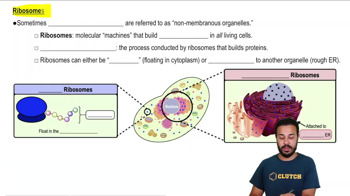
Ribosome
Non-membrane-bound organelle made of protein and rRNA; responsible for protein synthesis.
Rough Endoplasmic Reticulum (RER)
Series of saclike membranes with ribosomes on the surface; modifies and folds proteins made by ribosomes and assembles plasma membrane components.
Smooth Endoplasmic Reticulum (SER)
Series of tubular membranes without ribosomes; stores calcium ions, synthesizes lipids, and detoxifies substances.
Golgi Apparatus
Stack of flattened membrane sacs that sorts, modifies, and packages proteins and other products made by the ER.
Mutation causing a missing protein component of the chloride ion channel, leading to thick mucus that blocks airways.
Human Genome composition
46 chromosomes in somatic cells: 22 pairs of autosomes and 1 pair of sex chromosomes (XX or XY), representing the diploid (2n) state.
Chromatin and Chromosomes
DNA is compacted by histone proteins into chromatin, which condenses into chromosomes for segregation during mitosis.
DNA Replication
Process where helicase unwinds DNA, and DNA polymerase synthesizes new strands using the old strand as a template.
Protein Synthesis purpose
Converts genetic code into traits, synthesizes structural proteins, and produces enzymes and hormones for homeostasis.
Transcription
Process of copying DNA into mRNA, which carries the genetic information to the ribosome.
Translation
Process where ribosomes read mRNA to assemble amino acids into a polypeptide chain (protein).
Cell Cycle phases
Includes interphase (G1, S, G2 phases) for growth and DNA replication, followed by the mitotic phase for cell division.
Mitosis stages
Five stages: prophase, prometaphase, metaphase, anaphase, and telophase, followed by cytokinesis.
Cell Cycle checkpoints
Internal controls at G1, G2/M transition, and M phase that monitor and regulate cell cycle progression.
Cancer and cell cycle
Cancer results from uncontrolled cell growth due to faulty cell cycle control and accumulation of genetic damage.
Tumor formation
Occurs when checkpoints fail, allowing rapid cell division that crowds out normal cells, forming tumors or leukemia.
Proto-oncogenes and tumor suppressors
Normal genes regulate cell growth; mutations can create oncogenes (accelerators jammed) or defective tumor suppressors (brakes broken), leading to cancer.
 Back
 03:45