 Back
Chapter 6
 3:56

Terms in this set (27)
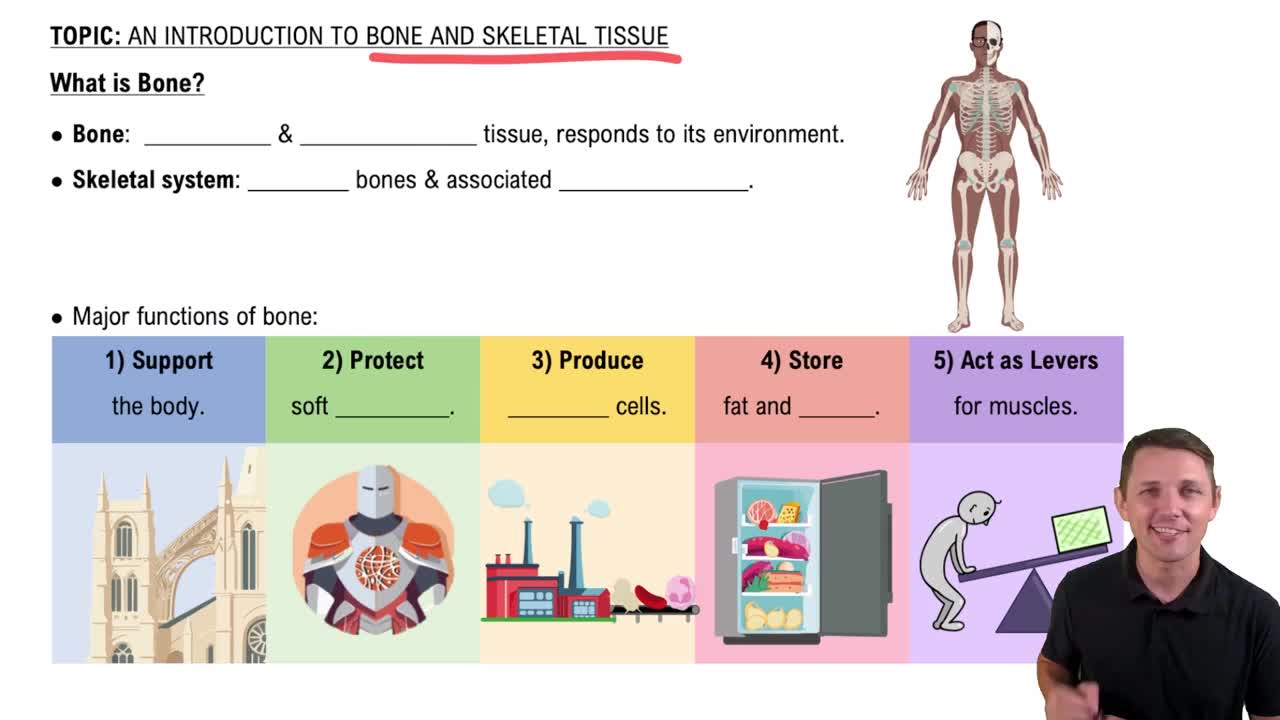
The skeletal system provides support, protection, movement, mineral storage, blood cell production, and energy storage.
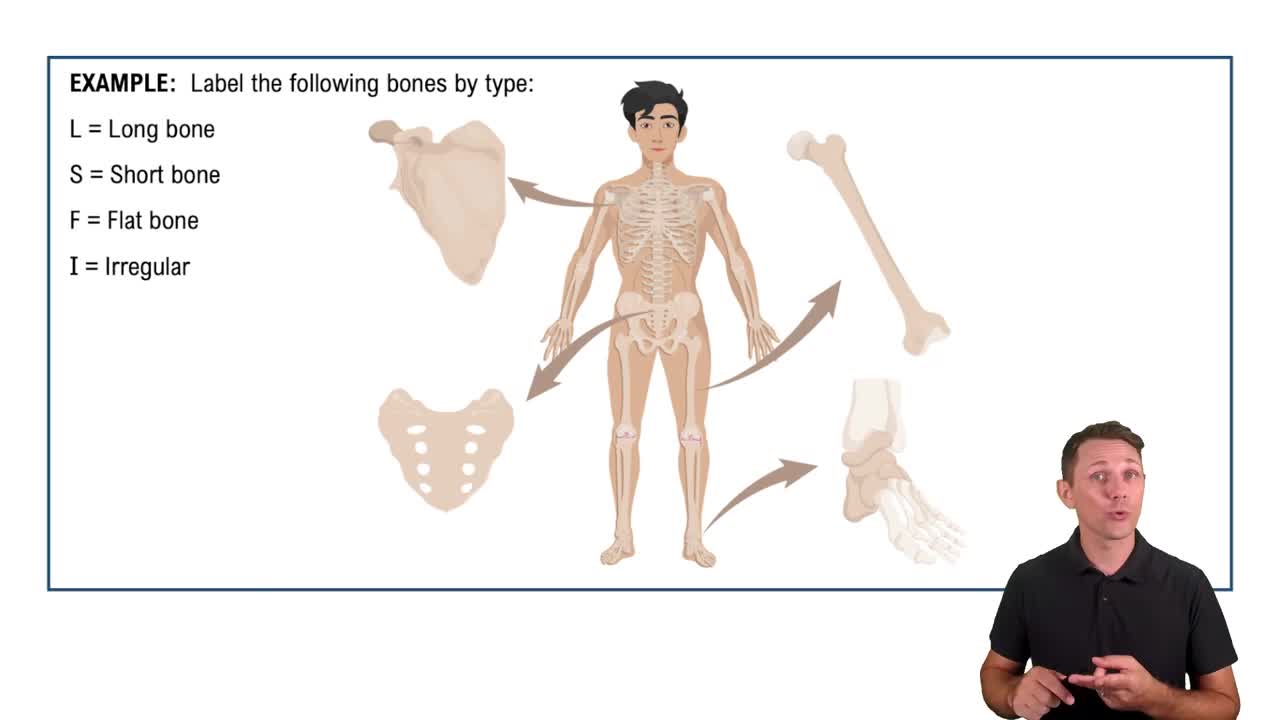
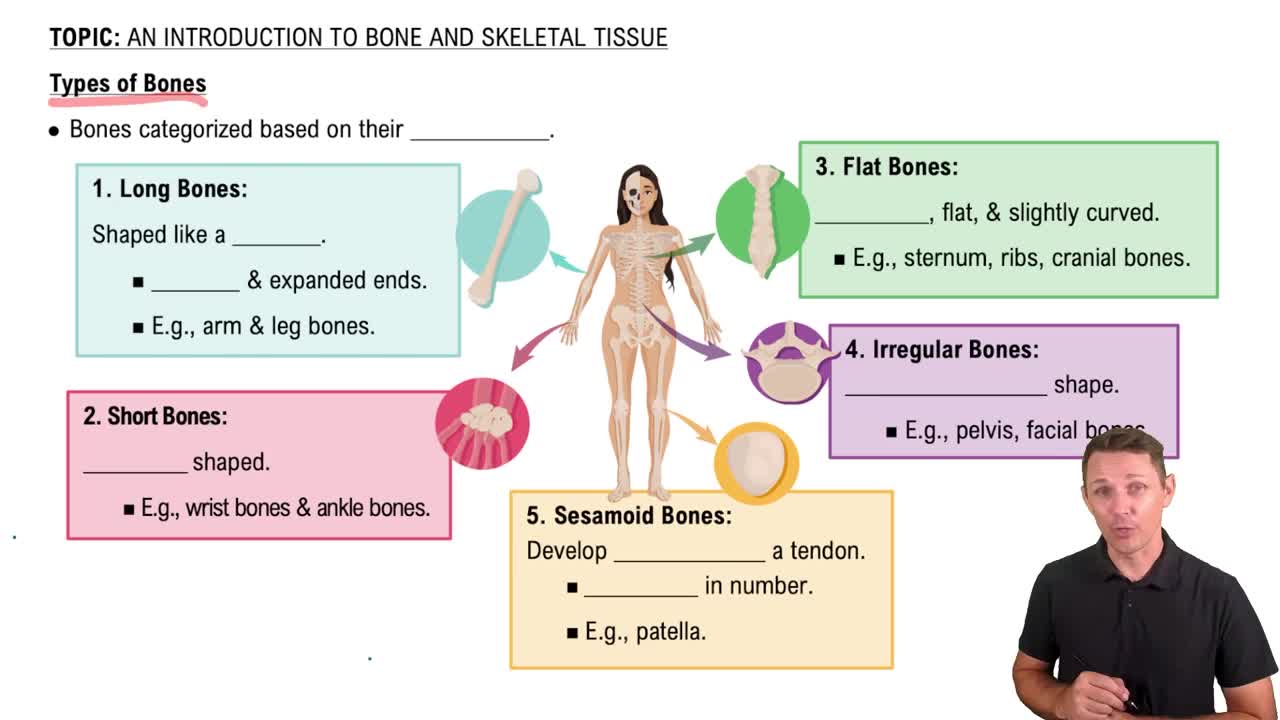
Bone shapes include sutural, irregular, short, flat, long, and sesamoid bones.
Small, flat, irregularly shaped bones found between flat bones of the skull; borders fit like a jigsaw puzzle.
Thin, parallel surfaces; provide protection and large surface area for muscle attachment; examples include skull roof, sternum, ribs, scapulae.
Complex shapes with ridges or notches; examples include vertebrae, pelvic bones, and some skull bones.
Relatively long and slender; found in arms, legs, palms, soles, fingers, and toes; femur is the largest and heaviest.
Boxlike in appearance; examples include carpal (wrist) and tarsal (ankle) bones.
Small, round, flat bones developing within tendons near joints; patellae (kneecaps) are universal sesamoid bones.
Projections serve as attachment points for muscles and ligaments or form joints; openings allow passage of blood vessels and nerves.
Trochanter, crest, spine, head, neck, line, tubercle, tuberosity, facet, condyle, and trochlea.
Sinus, foramen, fissure, meatus, canal, sulcus, and fossa.
Consists of a diaphysis (shaft) of compact bone surrounding a medullary cavity, and epiphyses (ends) mostly of spongy bone; metaphysis is the region between.
Consist of spongy bone (diploë) sandwiched between two layers of compact bone (cortex).
Dense connective tissue with a solid extracellular matrix of collagen fibers and calcium salts; contains osteocytes in lacunae connected by canaliculi.
Osteogenic cells (stem cells), osteoblasts (build bone matrix), osteocytes (maintain matrix), osteoclasts (resorb bone matrix).
Organized into osteons with central canals containing blood vessels; lamellae are concentric layers of matrix; perforating canals connect osteons.
Lacks osteons; composed of trabeculae forming an open network; spaces filled with red or yellow bone marrow.
Periosteum covers outer bone surfaces with fibrous and cellular layers; endosteum lines medullary cavity and trabeculae, active in growth and repair.
Bone forms by replacing hyaline cartilage; primary ossification center forms in diaphysis, secondary centers in epiphyses; epiphyseal plate allows growth in length.
Bone develops directly from mesenchymal tissue; forms dermal bones like mandible and clavicles; involves ossification centers and spicule formation.
Continuous process involving osteoclasts resorbing bone and osteoblasts forming new bone; maintains bone strength and mineral homeostasis.
Weight-bearing exercise stimulates osteoblasts, increasing bone density and strength; inactivity leads to rapid bone loss.
Calcium, phosphorus, vitamins D, C, A, K, B12, and hormones like growth hormone, thyroxine, estrogen, testosterone, parathyroid hormone, and calcitonin regulate bone growth and maintenance.
Parathyroid hormone increases blood calcium by stimulating osteoclasts and reducing excretion; calcitonin lowers blood calcium by inhibiting osteoclasts and increasing excretion.
Include transverse, displaced, compression, spiral, epiphyseal, comminuted, greenstick, Colles, and Pott’s fractures.
Fracture hematoma formation, callus formation (internal and external), spongy bone formation, and compact bone formation.
Bone mass decreases (osteopenia), increasing fragility; osteoporosis is severe bone loss, especially in postmenopausal women; cancer can accelerate bone loss.