 Back
chapter 9
 04:06

Terms in this set (35)
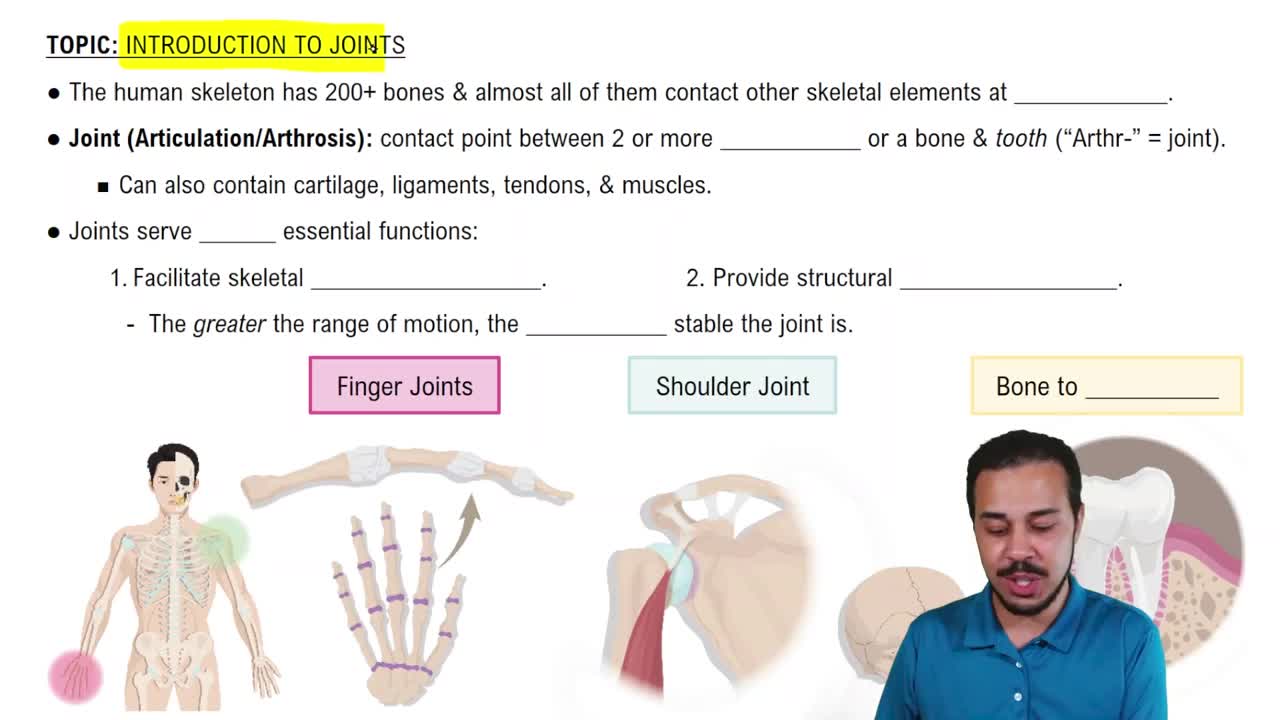
definition of a joint
where two bones connect (articulation), bone and cartilage, or bone and teeth
do all joints allow movement
no
functions of joints
facilitate movement and provide mechanical support
what is structural classification based on
material connecting the bones and the presence of basence of a joint cavity
what is the functional classification based on
degree of movement permitted
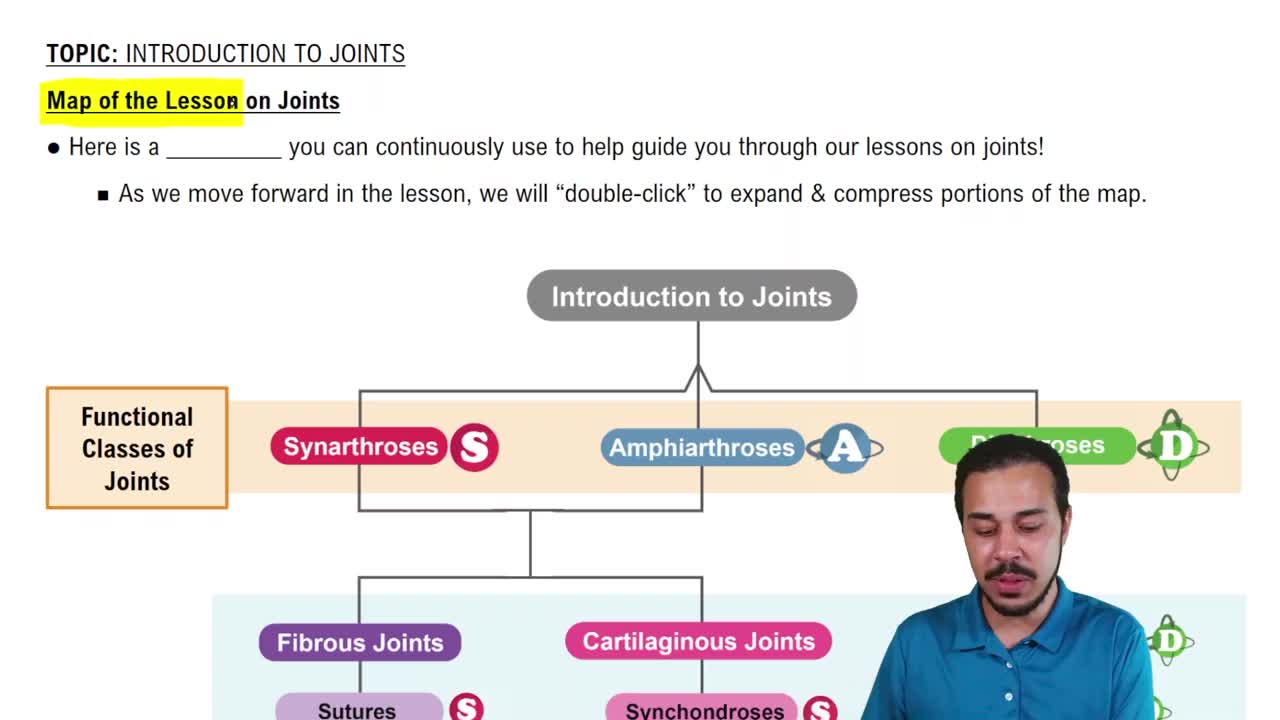
fibrous joints (definition)
bones are connected by fribrous connective tissue
cartilaginous joints
bones are connected by cartilage (hylaine or fibrocartilage)
bony fusion (synotsosis)
bones fuse and boundary disappears
synovial joints
bones are connected by a fluid-filled joint cavity
synarthrosis
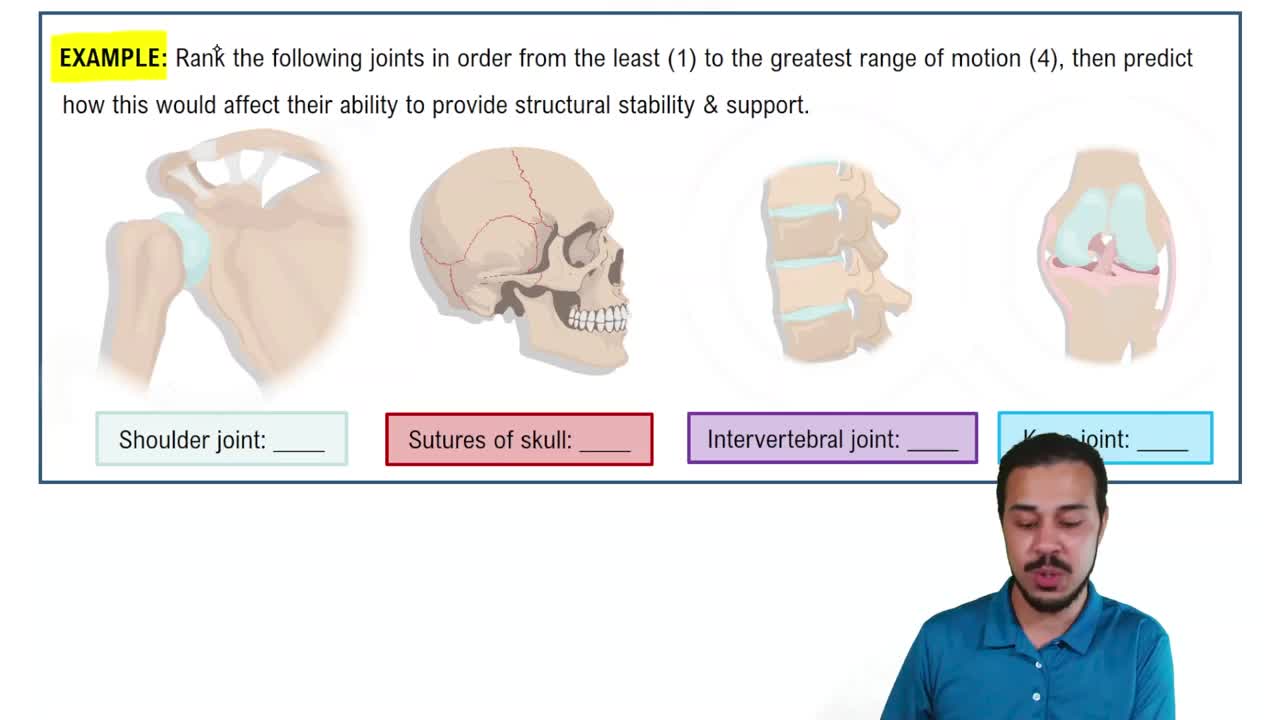
immobile joint
amphiarthrosis
joint permitting limited movement
diarthrosis
freely moveable joint
fibrous synarthrosis (suture)
sutures of the skull (ex)
fibrous synathrosis (gomphosis)
binds teeth to bony sockets via the peridontal ligament
cartilaginous synathrosis (synchondrosis)
rigid cartilaginous bridge; i.ce connection of sternum and vertebrosternal ribs
bonh synathrosis (synotosis)
fusion of bones, i.e epiphyseal lines of mature long bones
cartilaginous amphiarthrosis (symphysis)
bones are seperated by a pad of fibrocartilage; i.e pubic symphysis
fibrous amphiarthrosis (syndesmosis)
bones connected by fibrous connective tissue; i.e interosseus membrane between ulna and radius
strucure of diarthrosis
articulating bones are connected by fluid-filled joint cavity
examples of diathrosis
shoulder, elbow, hip, wrist, and ankle joints
uniaxial joints
motion around a single axis
biaxial joints
motion zround 2 axes
triaxial joints
motion around 3 axes
articular capsule of joint (whar does it to, whats it composed of and what does it attach to)
surrounds joint, composed of fibrous connective tissue, attaches to periosteum
the synovial membrane (layer and function)
inner layer; secretes synovial fluid for lubrication, nutrient supply, and shock absorption
articular cartilage (what does it cover, difference in cartilage)
coversarticulating surfaces, similar to cartilage but with more water and no perichondrium
accesory ligaments (whar do they do)
support and reinforce joint
meniscus
pad of fbrocartilage for shock absorption and cushioning
bursa
small fluid-filled sac that reduces friction between structures
pivot joints (description and what movement)
rounded bone portion enclosed in a ring, allows uniaxial rotation
hinge joints (description and what movement)
convex surface articulates with convex surface, allows bending and straightening (uniaxial)
condyloid joints (description and what movement)
shallow depression articulates with rounded structure; allows movement in 2 plans (biaxial)
plane joints (description and what movement)
flat or slightly curved surfaces, allow sliding movements
saddle joints (description and what movement)
saddle-shaped surfaces, fit together like rider on saddle (biaxial)
ball-and socket joints (description and what movement)
rounded head fits into cup-shaped depression, greatest range of motion (triaxial)