The cardiovascular system includes the heart and blood vessels, while the circulatory system encompasses the cardiovascular system plus the blood, responsible for transporting substances throughout the body.
Describe the functions of a circulatory system.
The circulatory system transports nutrients, gases, hormones, and wastes; regulates body temperature; and protects against blood loss and infection.
Major functions of blood, heart, and blood vessels.
Blood transports substances, heart pumps blood, and blood vessels serve as conduits for blood flow.
General pathway of blood through the circulatory system.
Blood flows from the heart to arteries, arterioles, capillaries, venules, veins, and back to the heart.
Compare systemic and pulmonary circuits.
The systemic circuit carries oxygenated blood from the heart to the body and returns deoxygenated blood, while the pulmonary circuit carries deoxygenated blood to the lungs and returns oxygenated blood to the heart.
Define hematology.
Hematology is the study of blood, blood-forming tissues, and blood disorders.
List the functions of blood.
Blood transports gases, nutrients, wastes, hormones; regulates pH and temperature; and protects via clotting and immune responses.
Composition and physical characteristics of whole blood.
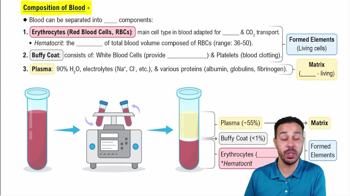
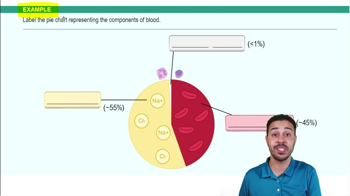
Whole blood consists of plasma (55%) and formed elements (45%), with a pH around 7.4 and a slightly viscous, opaque red appearance.
Define hematocrit and its physiological significance.
Hematocrit is the percentage of red blood cells in blood, indicating oxygen-carrying capacity.
Identify the formed elements of blood.
Formed elements include erythrocytes (RBCs), leukocytes (WBCs), and platelets.
Define hematopoiesis.
Hematopoiesis is the process of blood cell formation.
Locations for hematopoiesis in adults.
Hematopoiesis occurs primarily in the red bone marrow of flat bones and proximal epiphyses of long bones.
Role of plasma in the blood.
Plasma transports nutrients, gases, hormones, wastes, and plasma proteins.
Major groups of solutes dissolved in plasma.
Plasma solutes include ions, gases, nutrients, wastes, hormones, and plasma proteins.
Major types of plasma proteins and their functions.
Albumin maintains osmotic pressure, globulins aid immunity and transport, and fibrinogen is essential for clotting.
Key characteristics and function of erythrocytes.
Erythrocytes are biconcave, anucleate cells that transport oxygen via hemoglobin.
Describe the structure of hemoglobin and its function.
Hemoglobin has four polypeptide chains each with a heme group that binds oxygen for transport.
Describe erythropoiesis.
Erythropoiesis is the production of red blood cells from hematopoietic stem cells in bone marrow.
Site and regulation of erythropoietin (EPO) production.
EPO is produced mainly by the kidneys in response to low oxygen, stimulating RBC production in bone marrow.
Explain hemostasis and its three major steps.
Hemostasis stops bleeding via vascular spasm, platelet plug formation, and coagulation.
 Back
Back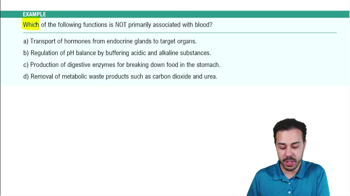
 2:36
2:36