 Back
Classification of Bones in Anatomy & Physiology
 2:58

Terms in this set (20)
The four main types are long bones, short bones, flat bones, and irregular bones.
A long bone is longer than it is wide and primarily made for support and movement, e.g., femur and humerus.
Examples include the femur, humerus, tibia, and fibula.
Short bones are roughly cube-shaped and provide stability with some movement, e.g., carpals and tarsals.
Short bones are found in the wrist (carpals) and ankle (tarsals).
Flat bones are thin, flattened, and usually curved; they protect internal organs and provide broad surfaces for muscle attachment.
Examples include the sternum, scapulae, ribs, and skull bones.
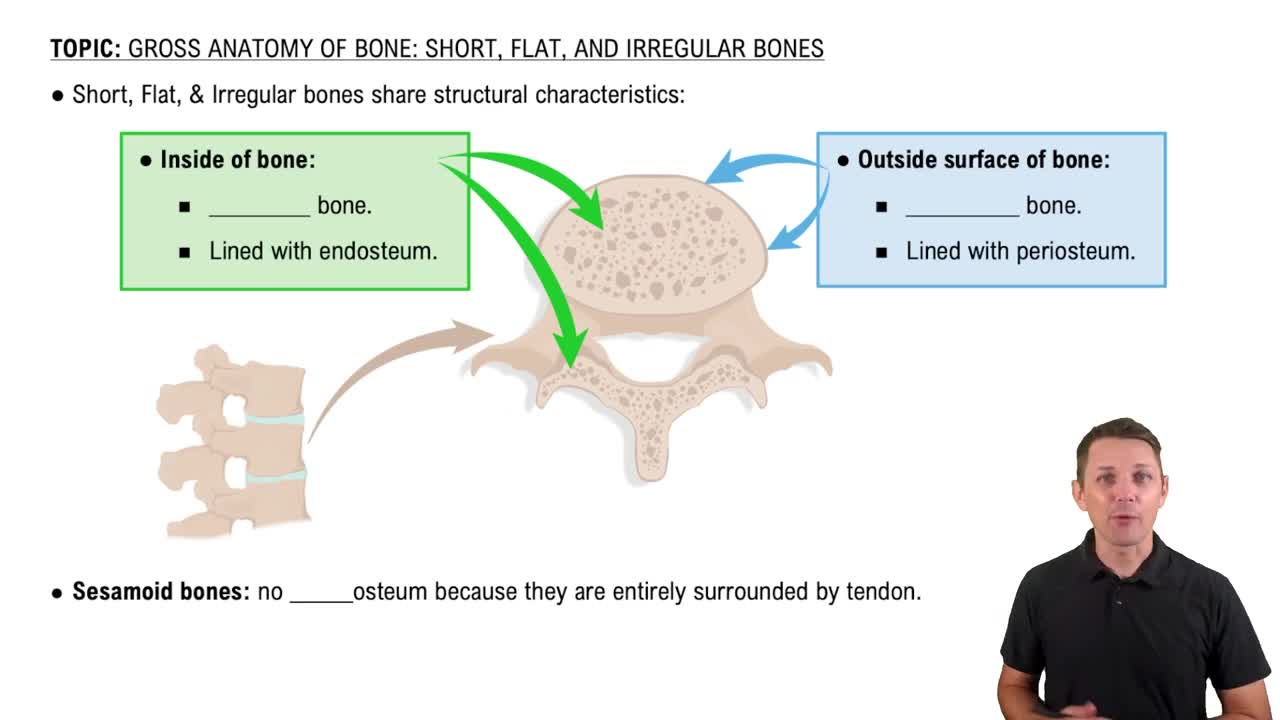
Irregular bones have complex shapes that do not fit other categories, e.g., vertebrae and some facial bones.
Examples include vertebrae, hip bones, and certain facial bones.
A sesamoid bone is a small, round bone embedded within a tendon, like the patella.
The largest sesamoid bone is the patella (kneecap).
They protect tendons from stress and wear and improve mechanical advantage of muscles.
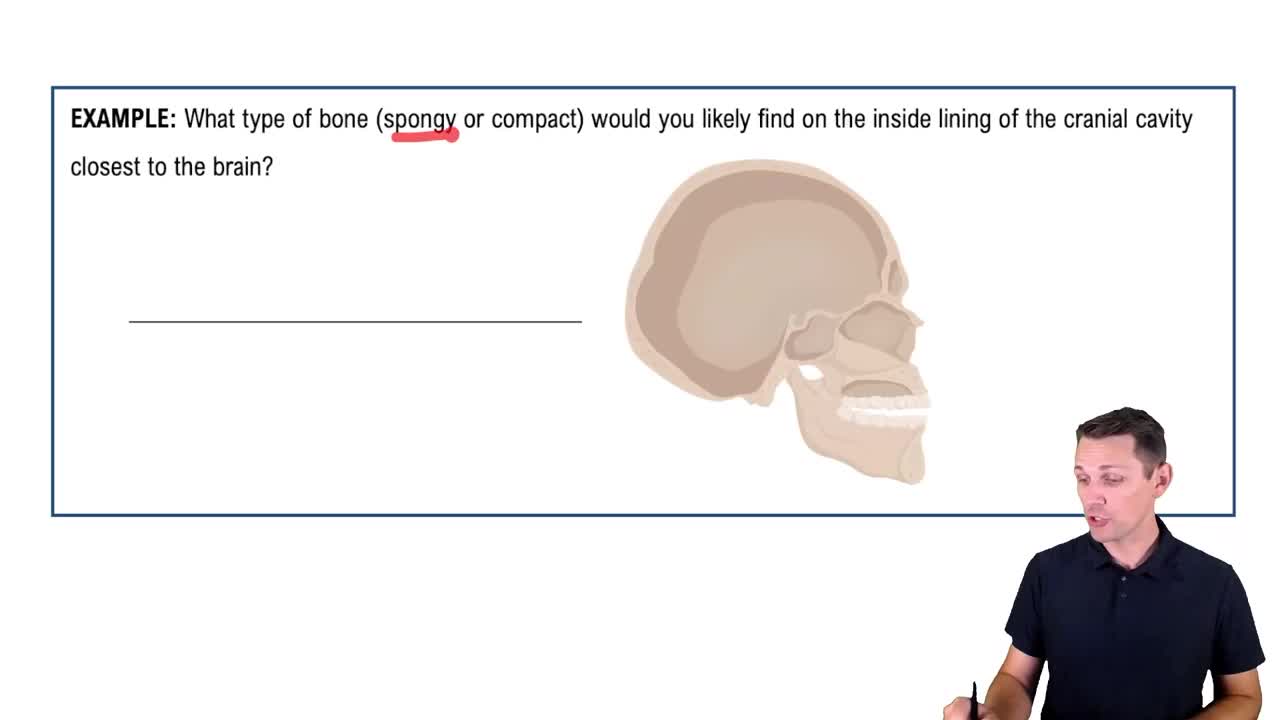
By internal structure, bones are classified as compact bone or spongy (cancellous) bone.
Compact bone is dense and solid, forming the outer layer of bones, providing strength and protection.
Spongy bone is porous and found inside bones, containing red bone marrow for blood cell production.
Spongy bone contains red bone marrow responsible for hematopoiesis.
The diaphysis is the shaft or central part of a long bone.
The epiphysis is the rounded end of a long bone, usually covered with articular cartilage.
The metaphysis is the region between the diaphysis and epiphysis, containing the growth plate in children.
Long bones are primarily involved in movement and support.