 Back
BackEndocrine System High-Yield Flashcards
 7:06
7:06
Terms in this set (33)
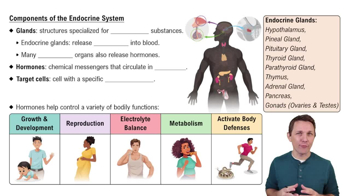
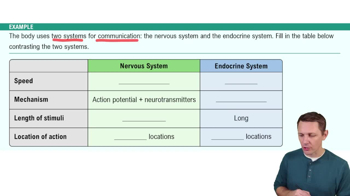
The endocrine system uses hormones for slow, long-lasting effects in the body.
The nervous system acts fast with short effects, while the endocrine system acts slowly with long-lasting effects.
Exocrine glands have ducts and secrete substances like sweat and saliva.
Endocrine glands have no ducts and release hormones directly into the blood.
Hormones are chemical messengers transported in the blood to target cells.
Target cells have specific receptors for particular hormones.
Autocrine affects the same cell, paracrine affects nearby cells, and endocrine uses hormones in blood for long-distance signaling.
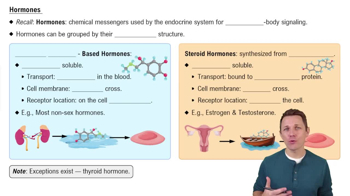
Amino acid derivatives: epinephrine, thyroid hormones; Peptide hormones: ADH, GH; Steroid hormones: cortisol, estrogen.
Free hormones are active with short life; bound hormones attach to proteins and last longer.
First messenger: the hormone itself; Second messenger: molecules like cAMP or Ca²⁺ that amplify the signal inside the cell.
Amplification means a small amount of hormone causes a large cellular effect.
Membrane receptors bind peptide hormones; intracellular receptors bind steroid and thyroid hormones that enter the cell.
Negative feedback is the main control mechanism that maintains hormone levels.
Down-regulation: high hormone levels decrease receptors; Up-regulation: low hormone levels increase receptors.
Controls the pituitary gland, produces ADH and oxytocin, and releases releasing and inhibiting hormones to regulate pituitary.
The anterior pituitary produces 7 hormones.
The posterior pituitary releases 2 hormones: ADH and oxytocin.
ADH promotes water retention in the kidneys.
Oxytocin stimulates uterine contractions and milk release.
T3 and T4 increase the body's metabolism.
TSH regulates thyroid hormone production.
Lack of iodine causes goiter, an enlarged thyroid gland.
Calcitonin lowers blood calcium levels.
PTH increases blood calcium levels, opposing calcitonin.
Mineralocorticoids (aldosterone): Na⁺ retention; Glucocorticoids (cortisol): increase glucose and stress response; Androgens: sex hormones.
Epinephrine and norepinephrine mediate the fight-or-flight response.
Alpha cells: glucagon raises blood glucose; Beta cells: insulin lowers blood glucose; Delta cells: somatostatin inhibits hormone release.
Insulin is released when blood sugar is high; glucagon is released when blood sugar is low.
Type 1: autoimmune destruction of insulin-producing cells; Type 2: insulin resistance.
Cushing: excess cortisol; Addison: cortisol deficiency.
Melatonin regulates the sleep cycle.
Testes: produce testosterone; Ovaries: produce estrogen and progesterone.
Kidneys: produce EPO and calcitriol; Heart: produces ANP to lower blood pressure; Fat: produces leptin for satiety.