Skip to main content
Anatomy & Physiology
My Course
Learn
Exam Prep
AI Tutor
Study Guides
Textbook Solutions
Flashcards
Explore
Try the app
My Course
Learn
Exam Prep
AI Tutor
Study Guides
Textbook Solutions
Flashcards
Explore
Try the app
Back
Functions of the Skeletal System
You can tap to flip the card.
What is the primary function of the skeletal system?
You can tap to flip the card.
👆
What is the primary function of the skeletal system?
The skeletal system provides
support
for the body and maintains its shape.
Track progress
Control buttons has been changed to "navigation" mode.
1/20
Recommended videos
Guided course
3:56
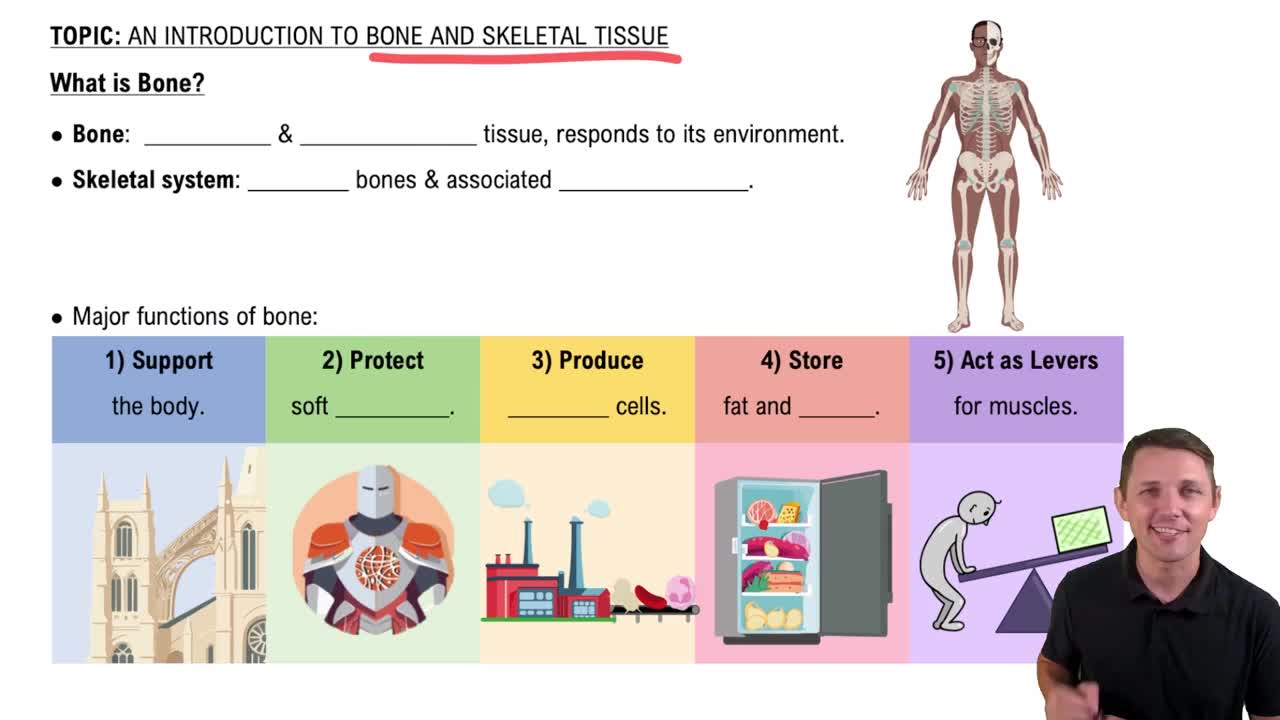
What is Bone?
29698
views
936
rank
3
comments
Guided course
3:00
An Introduction to Bone and Skeletal Tissue Example 2
16626
views
357
rank
1
comments
Guided course
4:14
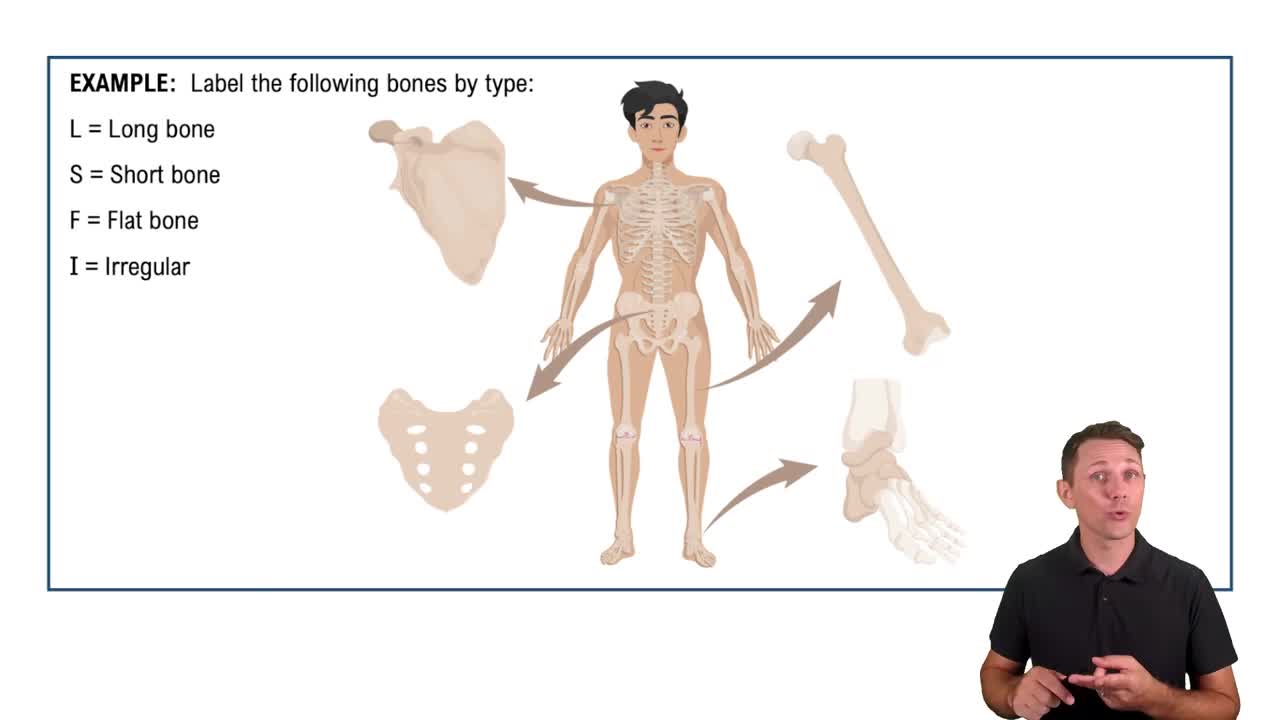
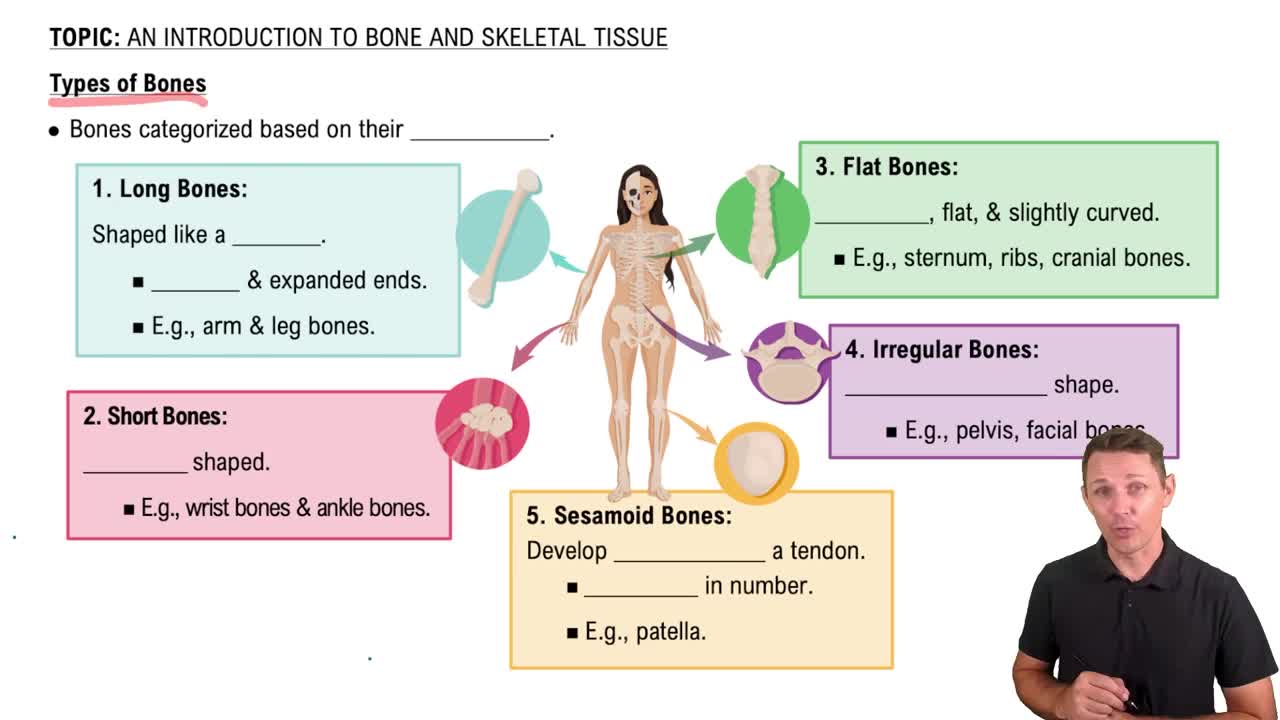
Types of Bones
19747
views
503
rank
1
comments
Terms in this set (20)
Hide definitions
What is the primary function of the skeletal system?
The skeletal system provides
support
for the body and maintains its shape.
How does the skeletal system protect the body?
It protects vital organs by enclosing them in
bone structures
, such as the skull protecting the brain.
What role does the skeletal system play in movement?
Bones act as
levers
and joints as
fulcrums
, allowing muscles to produce movement.
How does the skeletal system contribute to blood cell production?
Bone marrow inside certain bones produces
red and white blood cells
and platelets, a process called
hematopoiesis
.
What is the skeletal system's role in mineral storage?
Bones store minerals like
calcium
and
phosphorus
, releasing them into the bloodstream as needed.
How does the skeletal system aid in fat storage?
Yellow bone marrow stores
fat
, which serves as an energy reserve.
What is the importance of the skeletal system in endocrine regulation?
Bones release hormones like
osteocalcin
that influence blood sugar regulation and fat deposition.
Name the four main functions of the skeletal system.
Support, protection, movement, and blood cell production
.
Which part of the bone is responsible for producing blood cells?
Red bone marrow
located in the spongy bone.
How do bones assist in maintaining homeostasis?
By regulating mineral levels and producing hormones, bones help maintain
internal balance
.
What type of connective tissue connects bones to muscles for movement?
Tendons
connect muscles to bones.
What is the function of joints in the skeletal system?
Joints allow
flexibility and movement
between bones.
How does the skeletal system support the body structurally?
It provides a
framework
that supports soft tissues and anchors muscles.
What is the role of calcium stored in bones?
Calcium is essential for
nerve transmission, muscle contraction, and blood clotting
.
How does the skeletal system protect the brain?
The
cranium
encases and shields the brain from injury.
Which bones protect the heart and lungs?
The
rib cage
protects the heart and lungs.
What is hematopoiesis?
The process of
blood cell formation
occurring in red bone marrow.
What type of bone marrow stores fat?
Yellow bone marrow
stores fat.
How do bones act as levers in the body?
Bones serve as rigid bars that muscles pull on to create
movement
at joints.
Why is the skeletal system considered dynamic?
Because bones constantly
remodel
and adapt to stress and mineral needs.
 BackBack
 3:56