What is the primary function of the immune system?
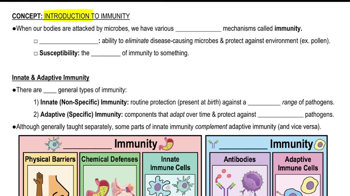
The immune system protects against disease by identifying and killing pathogens and tumor cells while distinguishing them from the organism's own healthy cells.
Name the main immune mechanisms involved in innate immunity.
Antimicrobial peptides called defensins, phagocytosis, and the complement system.
What is adaptive immunity?
Adaptive immunity is a specific immune response that adapts over time to recognize specific pathogens more efficiently, leading to immunological memory.
What are the two main types of adaptive immunity?
Humoral immunity (B-lymphocytes producing antibodies) and cell-mediated immunity (T-lymphocytes).
List the physical barriers involved in the first line of defense.
What are the key components of the second line of defense?
Antimicrobial proteins, natural killer cells, phagocytes, inflammation, and fever.
Describe the role of interferons in immunity.
Interferons are antimicrobial proteins that interfere with viral replication.
What is phagocytosis and its main steps?
Phagocytosis is the process where phagocytes engulf and digest pathogens. Steps: chemotaxis, adherence, ingestion, digestion, and killing.
What are the cardinal signs of inflammation?
Redness, pain, heat, swelling, and loss of function.
What triggers the inflammatory response?
Body tissue injury triggers inflammation to prevent spread of damaging agents, dispose of debris, alert adaptive immunity, and initiate repair.
How do B cells become activated in humoral immunity?
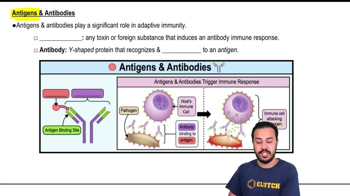
B cell receptors bind to antigen, leading to receptor-mediated endocytosis, proliferation, and differentiation into plasma cells and memory B cells.
Differentiate between active and passive humoral immunity.
Active immunity involves the body producing antibodies after infection or vaccination; passive immunity involves receiving antibodies from another source.
Name the five major classes of immunoglobulins (antibodies).
IgG, IgA, IgM, IgE, and IgD.
What is immunologic memory?
Immunologic memory is the enhanced and quicker immune response upon secondary exposure to the same antigen.
Describe the difference between primary and secondary immune responses.
Primary response has a lag phase with initial IgM production; secondary response is faster, stronger, and dominated by IgG due to memory cells.
What are the main types of T cells and their roles?
Helper T cells (activate B and T cells), cytotoxic T cells (kill infected cells), and regulatory T cells (suppress immune responses).
How are T cells activated?
T cells are activated by antigen presentation via MHC proteins and require co-stimulation to proliferate and function.
What is the complement system and its functions?
A group of plasma proteins that enhance phagocytosis, cause cytolysis via membrane attack complex, promote inflammation, and eliminate immune complexes.
Explain opsonization in the complement system.
Opsonization is the binding of complement proteins to pathogens, marking them for enhanced phagocytosis.
What is the membrane attack complex (MAC)?
MAC is a protein complex formed by complement components that creates pores in pathogen membranes, causing cytolysis.
How does the immune system distinguish self from non-self?
Self molecules are recognized as part of the body, while non-self molecules are identified as foreign and targeted by the immune system.
What factors influence immune system function?
Nervous system states like stress and grief impair immunity; vitamin D is required for activation of CD8 T cells.
 Back
 5:52