 Back
Immune System: Lines of Defense and Innate Immunity
 5:52

Terms in this set (29)
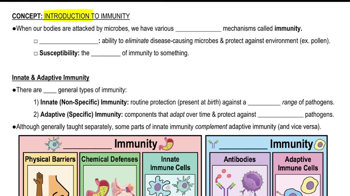
The first line is surface barriers, the second line is innate immunity, and the third line is adaptive immunity.
The second line of defense includes innate immunity.
The third line of defense includes adaptive immunity.
Innate immunity is nonspecific and immediate, while adaptive immunity is specific and develops memory over time.
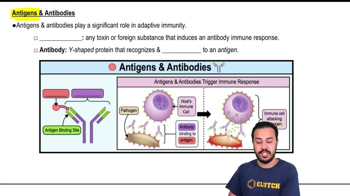
An antigen is any substance that can trigger an adaptive immune response.
The three types are naturally acquired active, artificially acquired active, and passive immunity.
B cells produce antibodies that target specific antigens.
Surface barriers are the first line of defense, including skin and mucous membranes.
Keratin is the hard protein found in the skin that provides protection.
Mucous membranes line body cavities open to the exterior, such as the respiratory and digestive tracts.
Sebum is an oily secretion from sebaceous glands that helps protect skin by lowering pH and inhibiting bacteria.
Mucus is a sticky secretion that traps pathogens and particles in mucous membranes.
Acid in areas like the stomach and skin inhibits microbial growth by creating a hostile environment.
Defensins are antimicrobial peptides that disrupt microbial membranes.
Normal flora are harmless microbes that compete with pathogens on body surfaces.
Agranulocytes include monocytes, macrophages, and lymphocytes.
Granulocytes include neutrophils, eosinophils, and basophils.
Phagocytes engulf and digest pathogens and debris.
Natural Killer (NK) cells are lymphocytes that kill virus-infected and cancerous cells without recognizing specific antigens.
Dendritic cells link innate and adaptive immunity by presenting antigens to lymphocytes.
Monocytes differentiate into macrophages in tissues.
Macrophages use enzymes and toxic chemicals to destroy pathogens inside phagosomes.
APCs display processed antigens on their surface to activate adaptive immunity.
Neutrophils are the most abundant phagocytes that respond quickly to infection.
Respiratory burst is a rapid release of reactive oxygen species by phagocytes to kill pathogens.
Eosinophils combat parasitic infections and participate in allergic responses.
Natural Killer (NK) cells recognize and kill cancerous and virus-infected cells.
No, NK cells do not recognize specific antigens.
Basophils are granulocytes that release histamine and become similar to mast cells when activated.