Back

Integument Structure and Function

Control buttons has been changed to "navigation" mode.
1/20
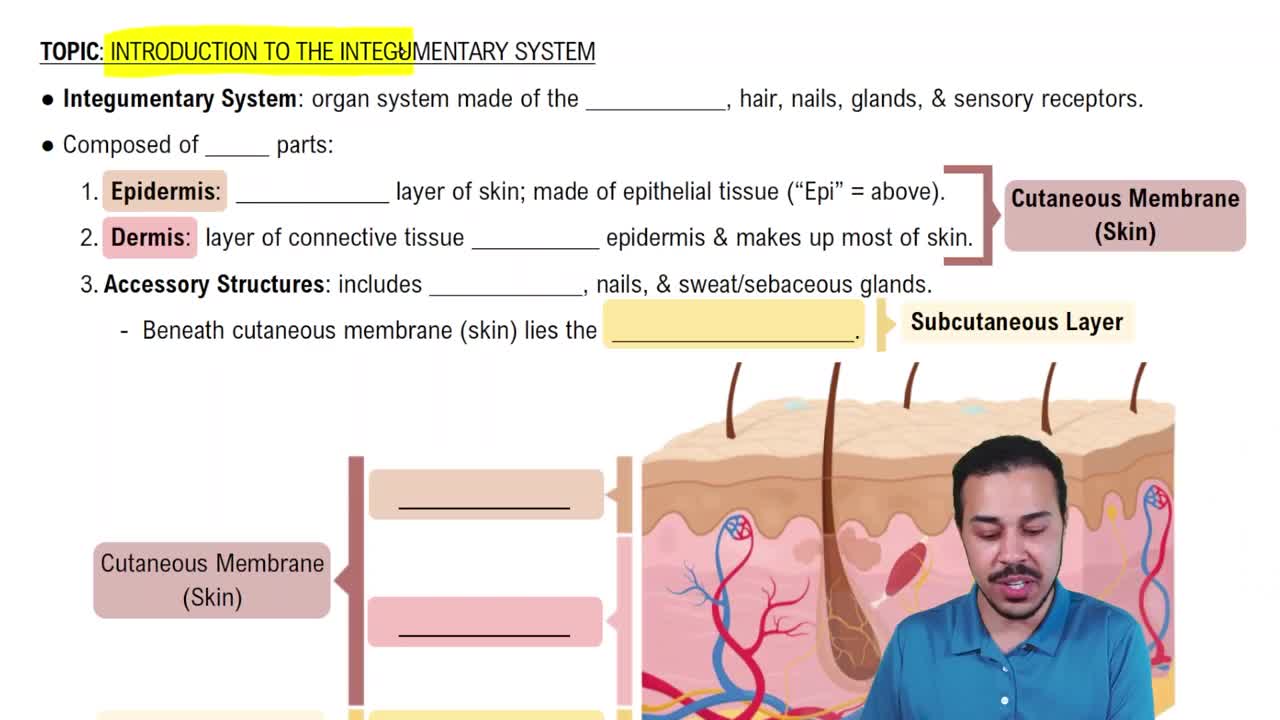
  • What are the two principal tissue layers of the integument?

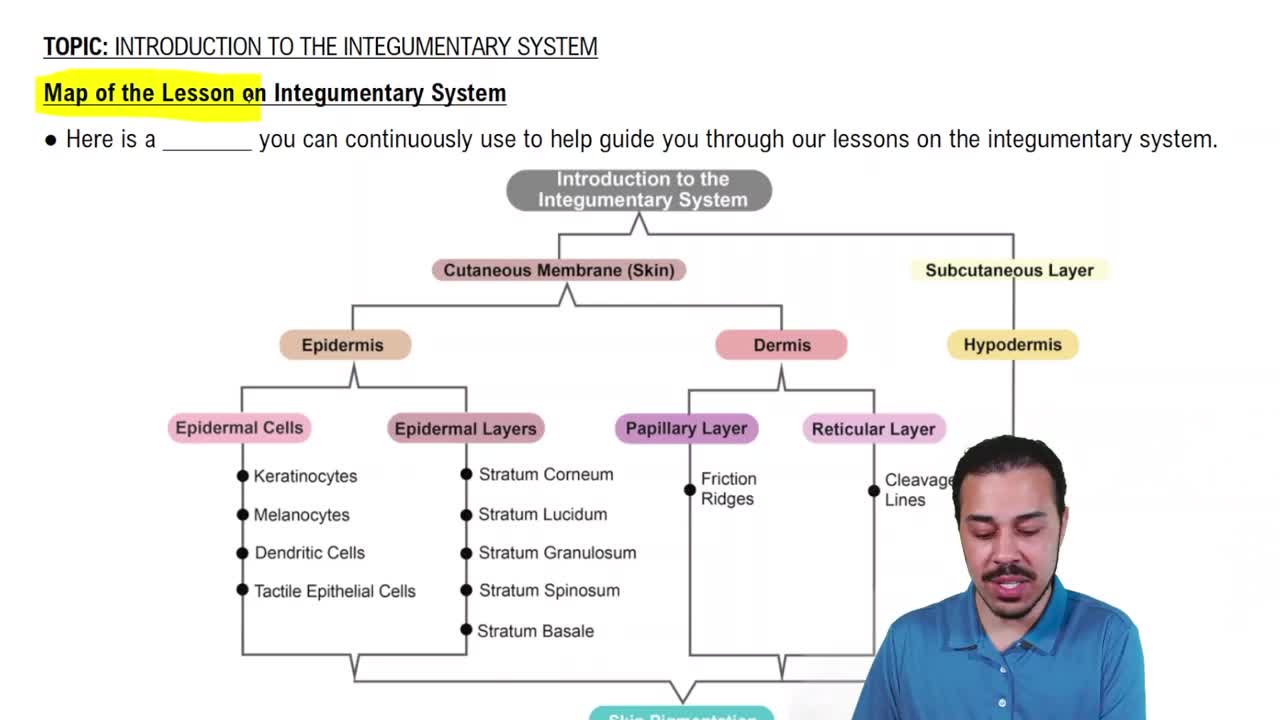
    The integument has two principal tissue layers: the epidermis (stratified squamous epithelium) and the dermis (dense irregular connective tissue).
  • What is the 'unofficial' third layer of the skin?

    The hypodermis or subcutaneous layer, composed mainly of adipose tissue and areolar connective tissue.
  • What type of epithelium composes the epidermis?

    The epidermis is made of keratinized, stratified squamous epithelium.
  • Is the epidermis vascular or avascular?

    The epidermis is avascular, meaning it contains no blood vessels.
  • Name the five layers of the epidermis.

    From deep to superficial: stratum basale, stratum spinosum, stratum granulosum, stratum lucidum (only in thick skin), and stratum corneum.
  • What are the three types of cells found in the stratum basale?

    1. Keratinocytes (stem cells producing keratin), 2. Melanocytes (produce melanin pigment), 3. Tactile cells (touch receptors).
  • What is the function of melanocytes?

    Melanocytes produce melanin, a black/brown/yellow-brown pigment that protects against UV radiation.
  • What characterizes the stratum spinosum?

    Several layers thick, keratinocytes begin differentiation, connected by desmosomes, and contains epidermal dendritic cells which are immune phagocytes.
  • What happens in the stratum granulosum?

    Keratinization begins; cells undergo morphological changes including shape, permeability, and organelle degradation, leading to cell death.
  • Where is the stratum lucidum found?

    The stratum lucidum is a very thin layer found only in thick skin such as the soles of the feet and palms of the hands.
  • Describe the stratum corneum.

    The outermost layer, many layers thick, composed of dead, anucleate keratinocytes called corneocytes that remain for about 2 weeks.
  • What forms fingerprints?

    Fingerprints are formed by friction ridges, which are valleys and folds of the dermis and epidermis that provide grip and traction.
  • Why do hands and feet wrinkle after being in water?

    Wrinkling is caused by the skin's response to water, likely involving the nervous system and changes in the dermal ridges.
  • What is the dermis mainly composed of?

    The dermis is mainly composed of connective tissue rich in collagen fibers.
  • Name the two layers of the dermis and their features.

    1. Papillary layer: contains capillaries and sensory receptors. 2. Reticular layer: contains accessory structures like glands and hair follicles.
  • What are the two types of exocrine glands in the skin?

    1. Sebaceous glands (oil glands), 2. Sweat glands.
  • What are the two types of sweat glands?

    1. Merocrine glands (eccrine), 2. Apocrine glands.
  • What causes goosebumps?

    Goosebumps are caused by contraction of arrector pili muscles attached to hair follicles, usually in response to cold or emotional stimuli.
  • What are lines of cleavage in the skin?

    Lines of cleavage are patterns of parallel collagen and elastic fibers in the dermis that influence the direction of skin tension and healing.
  • Why is an incision parallel to cleavage lines preferred?

    Incisions parallel to cleavage lines heal faster and are less likely to gape open compared to those perpendicular to cleavage lines.