 Back
BackIntegumentary System - Anatomy & Physiology
 06:54
06:54
Terms in this set (27)
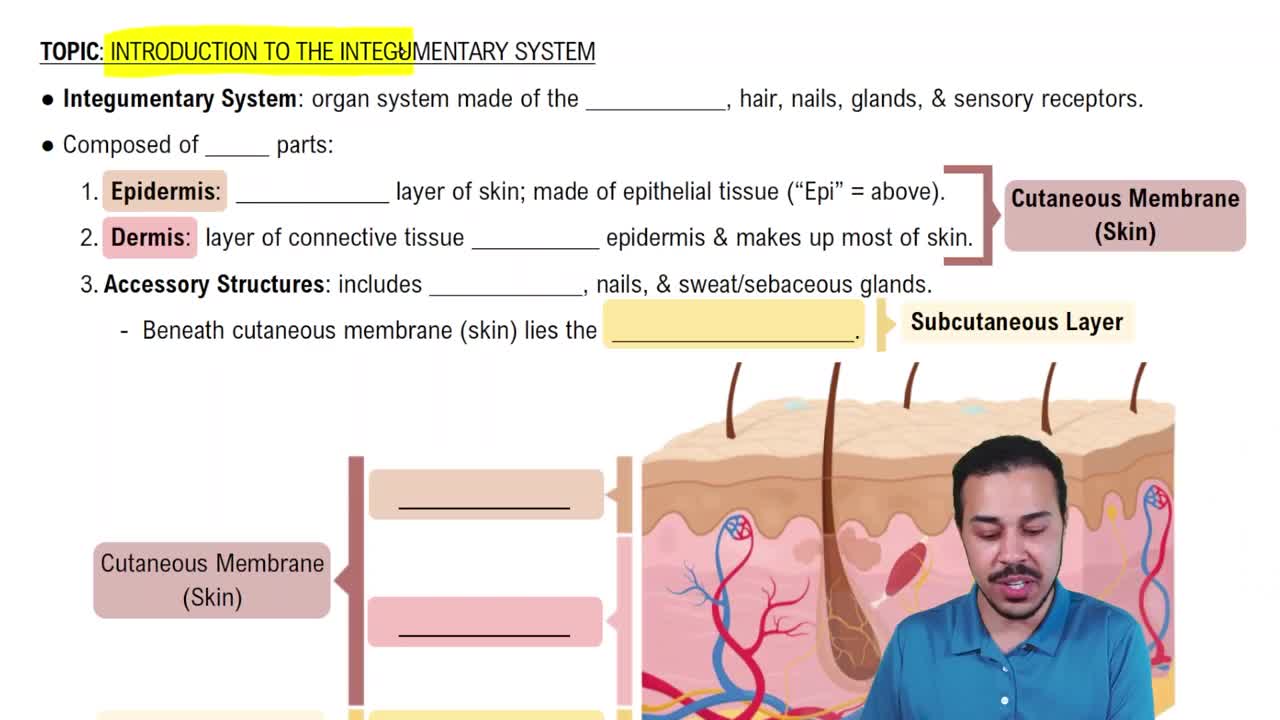
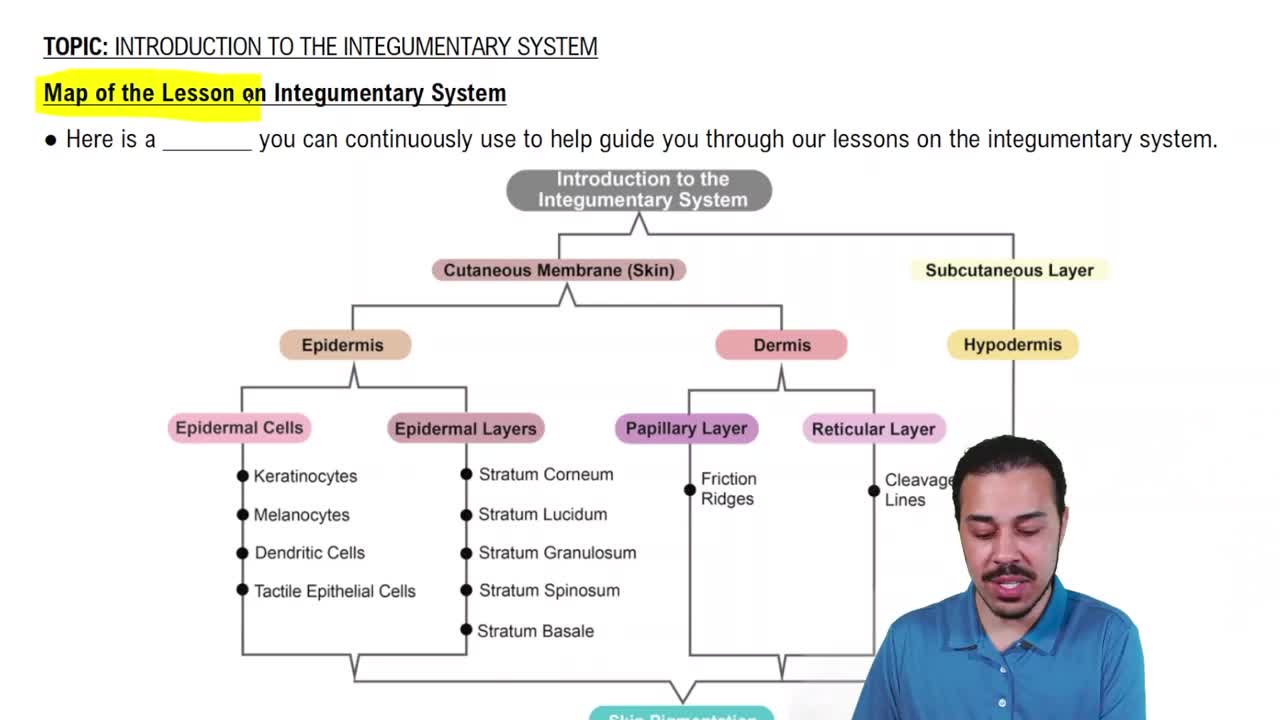
The cutaneous membrane (epidermis and dermis) and accessory structures (hairs, nails, glands, sensory receptors, arrector pili muscles).
No, the hypodermis is a deep stabilizing layer beneath the dermis and is not technically part of the skin.
Loose connective tissue, mostly adipose and loose areolar tissue.
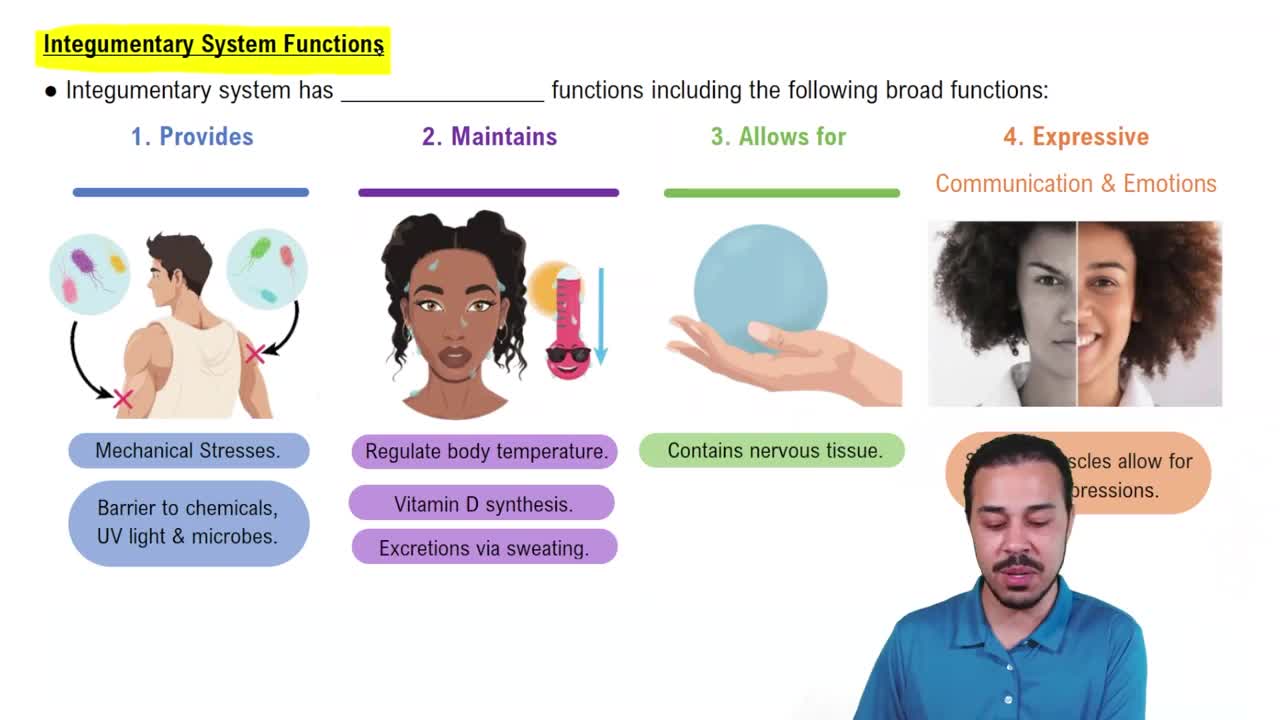
Protection, excretion, temperature regulation, melanin and keratin production, Vitamin D3 synthesis, lipid storage, and sensory detection.
Stratified squamous epithelium, which is avascular and relies on diffusion from dermal capillaries.
Thin skin has 4 layers and covers most body surfaces; thick skin has 5 layers (includes stratum lucidum) and covers palms and soles.
Stratum basale → Stratum spinosum → Stratum granulosum → Stratum lucidum (only in thick skin) → Stratum corneum.
Basal stem cells, Merkel cells (touch receptors), and melanocytes (melanin producers).
Melanocytes produce melanin, which protects epidermal and dermal DNA from UV damage by clustering around nuclei in keratinocytes.
Immune cells in the stratum spinosum that defend against microorganisms and superficial skin cancers.
Differences in the amount of melanin produced, not the number of melanocytes.
UV exposure increases melanin synthesis and melanosome transfer to keratinocytes, causing tanning.
A bluish tint to the skin caused by reduced blood flow or oxygenation in the dermis.
The most common skin cancer originating in the stratum basale; it rarely metastasizes.
A dangerous skin cancer from melanocytes; signs include Asymmetry, Border irregularity, Color variation, Diameter >6mm, and Evolving lesions (ABCDE rule).
Papillary layer: loose areolar connective tissue with capillaries and nerves; Reticular layer: dense irregular connective tissue with collagen and elastic fibers.
Stabilizes skin to underlying tissues, acts as shock absorber, energy reserve, and insulator.
Hair is dead keratinocytes packed with hard keratin, produced in hair follicles; it provides sensory input via root hair plexus and can be raised by arrector pili muscles.
Holocrine glands that secrete sebum, an oily lipid that lubricates and waterproofs hair and inhibits bacterial growth.
Apocrine glands: active at puberty, secrete nutrient-rich fluid into hair follicles causing body odor; Merocrine glands: widespread, secrete sweat directly to skin for cooling and excretion.
At the nail root, an epithelial fold hidden under the skin.
Inflammation, Migration, Proliferation, and Scarring phases.
A thick, raised scar that grows beyond the original wound boundaries.
Dendritic (Langerhans) cell numbers decrease by about 50%, weakening immune defense.
Production drops by approximately 75%, reducing bone strength.
Overactive sebaceous glands causing crusted, greasy skin patches, known as 'cradle cap' in infants.
Because tattoo pigment is injected into the dermis, where cells do not shed like epidermal cells.