What are the two main layers of the skin and the layer beneath it?
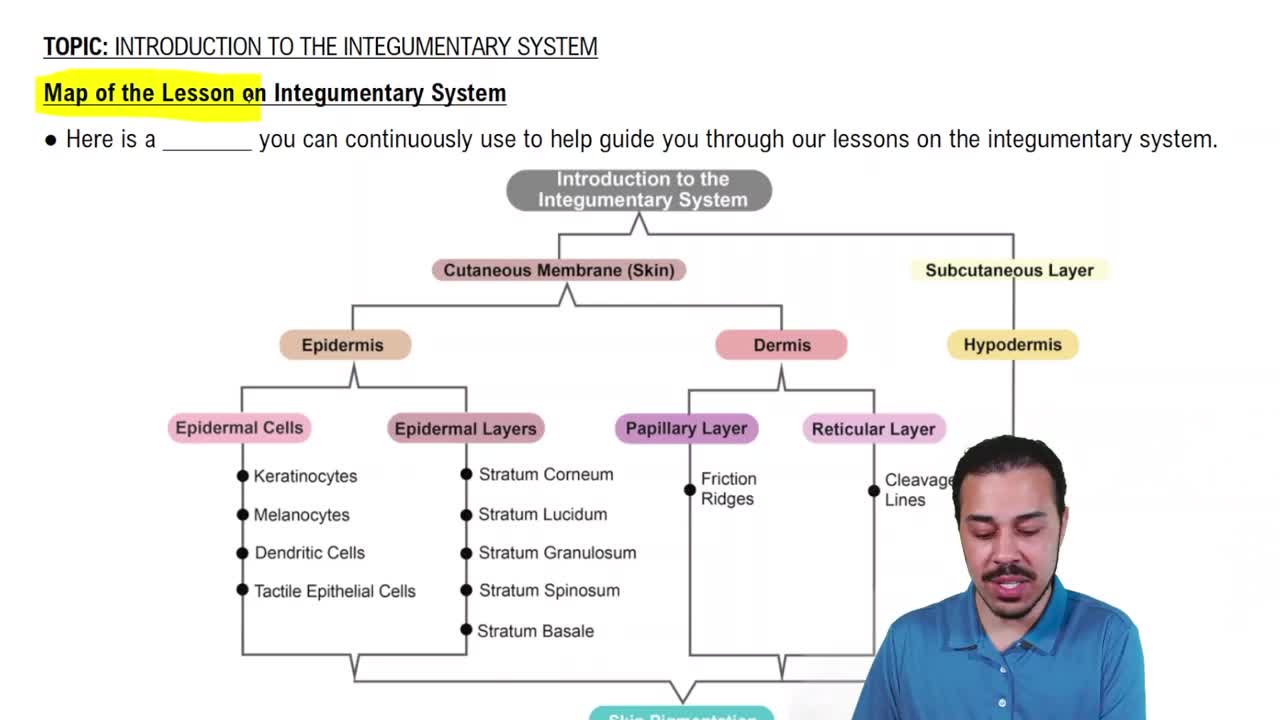
The skin consists of the epidermis and dermis. The hypodermis lies beneath but is not technically part of the integumentary system.
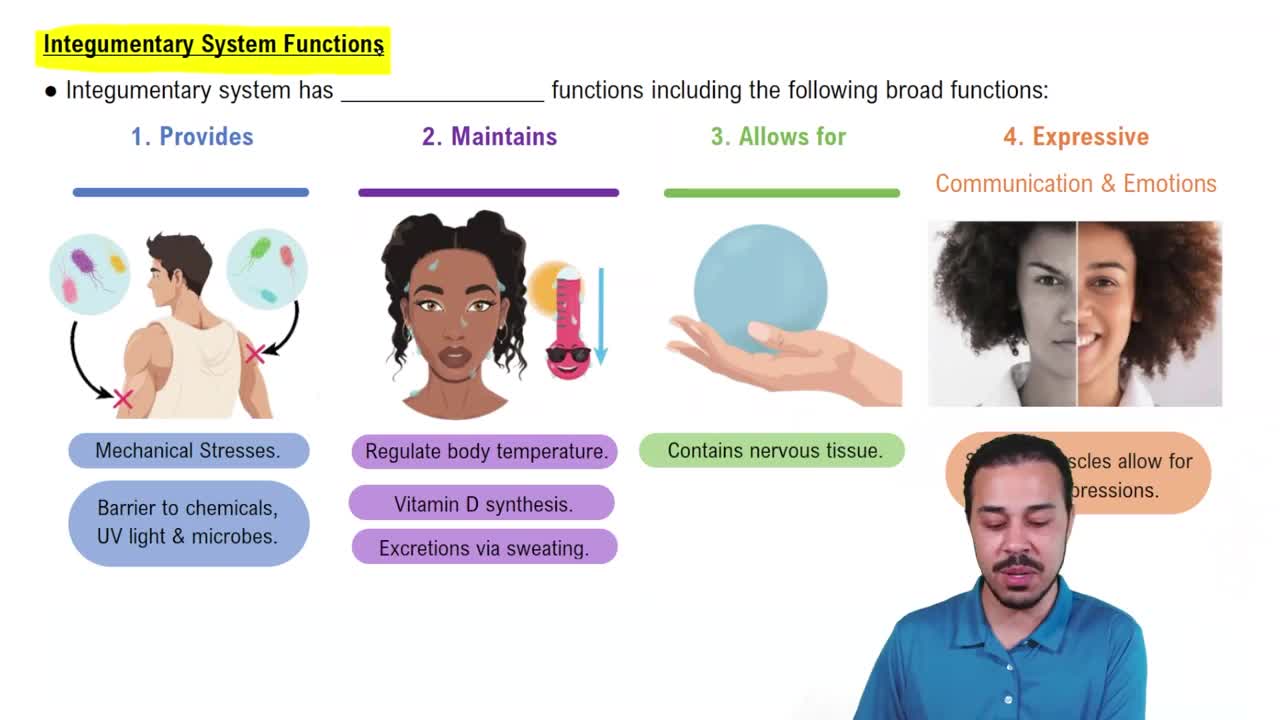
What are the five major functions of the skin?
Protection, temperature regulation, excretion, vitamin D production, and sensory reception.
What type of tissue composes the epidermis?
The epidermis is made of keratinized stratified squamous epithelium and is avascular.
Name the four main epidermal cell types and their primary roles.
Keratinocytes: produce keratin and form a barrier; Melanocytes: produce melanin; Tactile epithelial cells: sensory association; Dendritic cells: immune surveillance.
List the epidermal layers from deep to superficial.
Thick skin has a stratum lucidum and is found on palms and soles; thin skin lacks stratum lucidum and covers most of the body.
What are the two layers of the dermis and their features?
Papillary dermis: superficial, with dermal papillae and friction ridges; Reticular dermis: deeper, dense irregular connective tissue providing strength.
What is the function of dermal papillae and friction ridges?
They increase surface area for exchange, strengthen epidermal-dermal attachment, form fingerprints, and improve grip.
What tissues compose the hypodermis and its functions?
Areolar and adipose connective tissue; it anchors skin, cushions, stores fat, and insulates.
Which pigments contribute to skin color and their sources?
Melanin from melanocytes; Carotene from diet; Hemoglobin in red blood cells.
Describe the structure of a nail.
Nails have a free edge, nail plate (hard keratin), root (embedded), nail folds (skin borders), and eponychium (cuticle).
What are the layers of hair and the hair follicle components?
Hair layers: medulla (core), cortex (middle), cuticle (outer). Follicle includes bulb, root plexus, follicle wall, and arrector pili muscle.
What is the role of the arrector pili muscle?
It is smooth muscle that contracts to raise hair, causing 'goosebumps.'
How do sebaceous glands secrete sebum?
By holocrine secretion, where the entire secretory cell breaks apart to release oily sebum.
Compare eccrine and apocrine sweat glands.
Eccrine glands are widespread and produce watery sweat for cooling; apocrine glands are in axillary/genital areas and produce a specialized secretion contributing to body odor.
What layers are damaged in first-, second-, and third-degree burns?
First degree: upper epidermis; second degree: epidermis plus upper dermis; third degree: entire skin thickness.
Which skin cancer arises from melanocytes and is the most dangerous?
Melanoma arises from melanocytes and is the most dangerous skin cancer.
Why is the epidermis avascular but still viable?
Nutrients diffuse upward from capillaries in the vascular dermis.
What changes occur in skin with aging?
Skin becomes thinner, less elastic, shows cumulative environmental damage, and inflammation becomes more common.
What is the main difference between sebaceous and sweat glands?
Sebaceous glands secrete oily sebum by holocrine secretion; sweat glands secrete watery or specialized sweat.
 Back
Back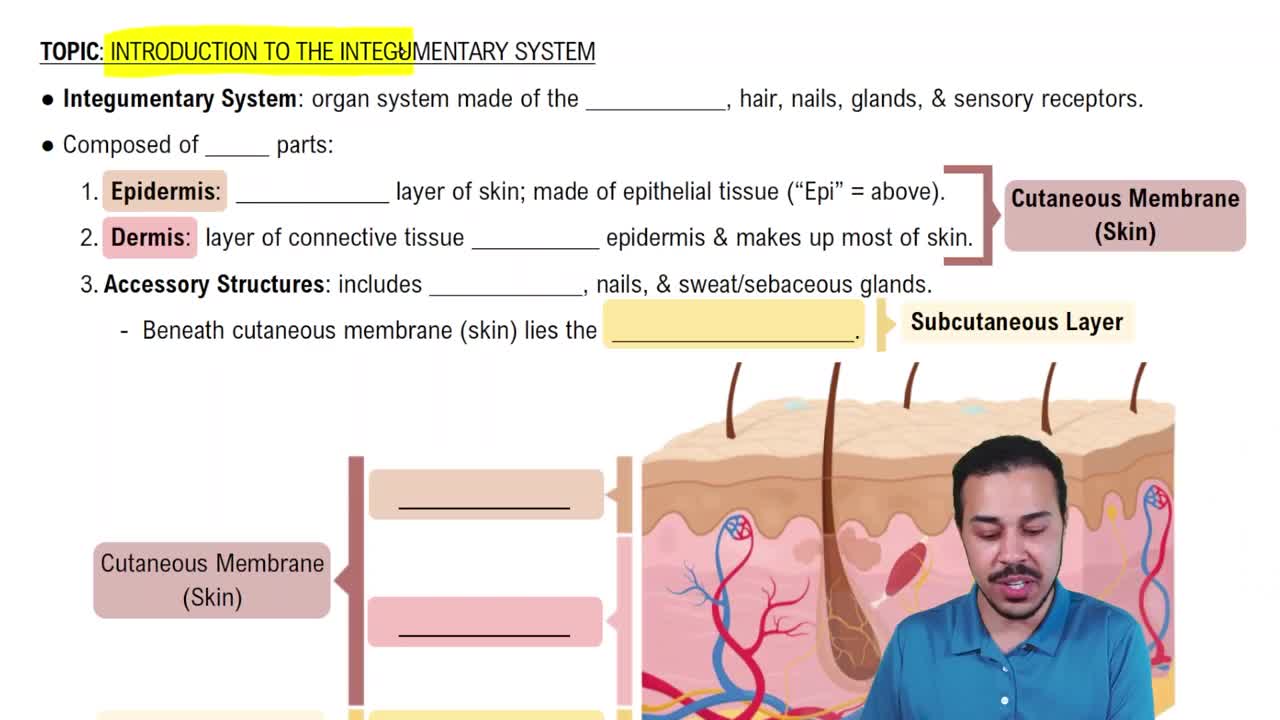
 06:54
06:54