 Back
Integumentary System - Anatomy & Physiology
 06:54

Terms in this set (30)
Integument
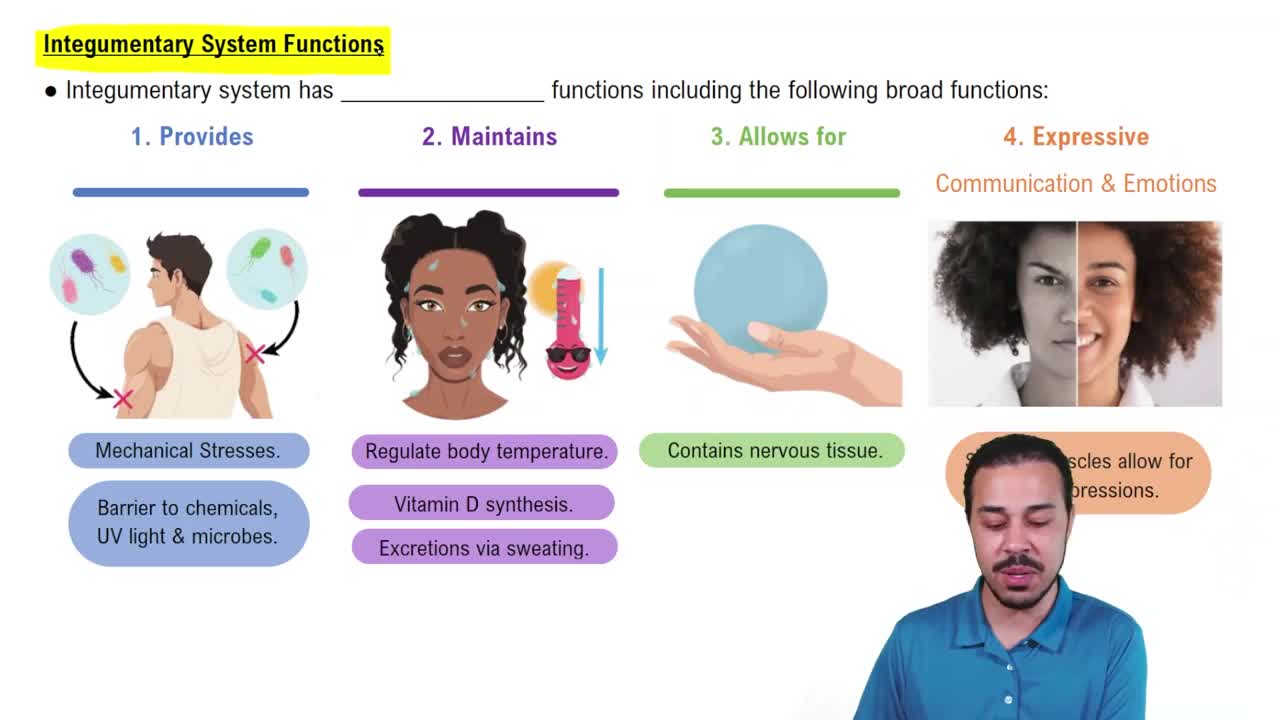
Protection, regulation of body temperature, sensation, excretion, synthesis of vitamin D, and immune defense.
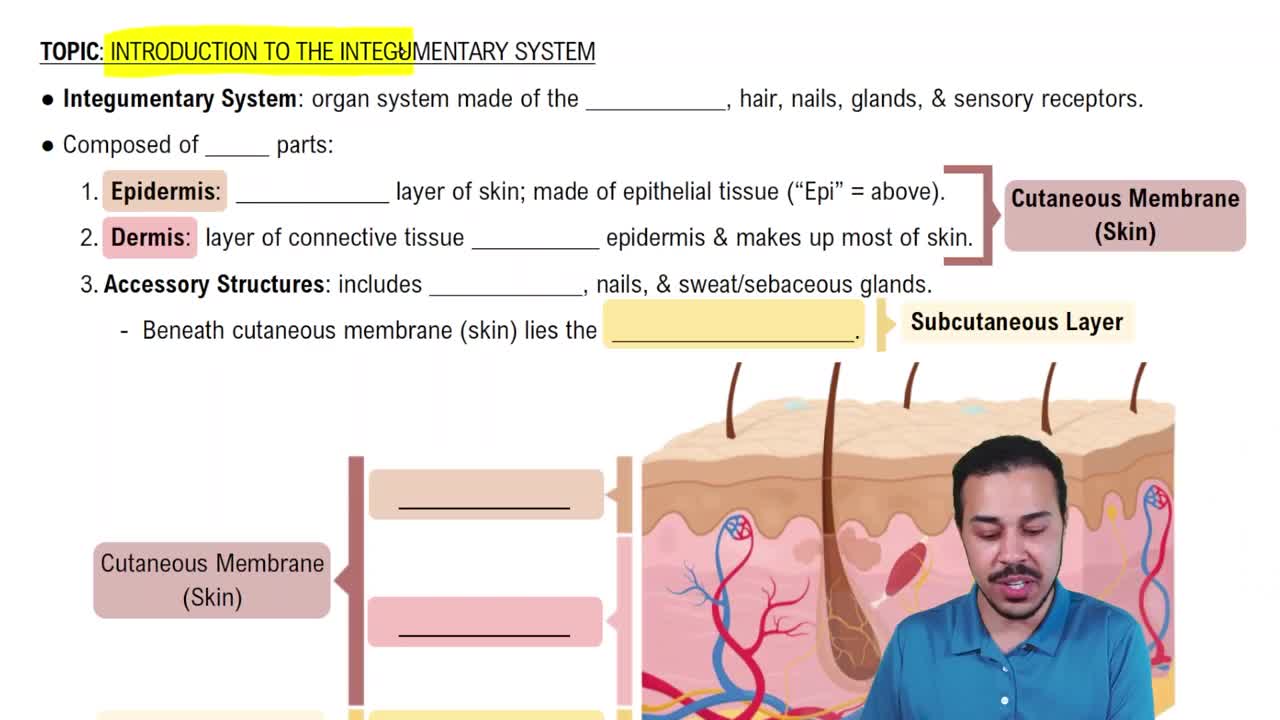
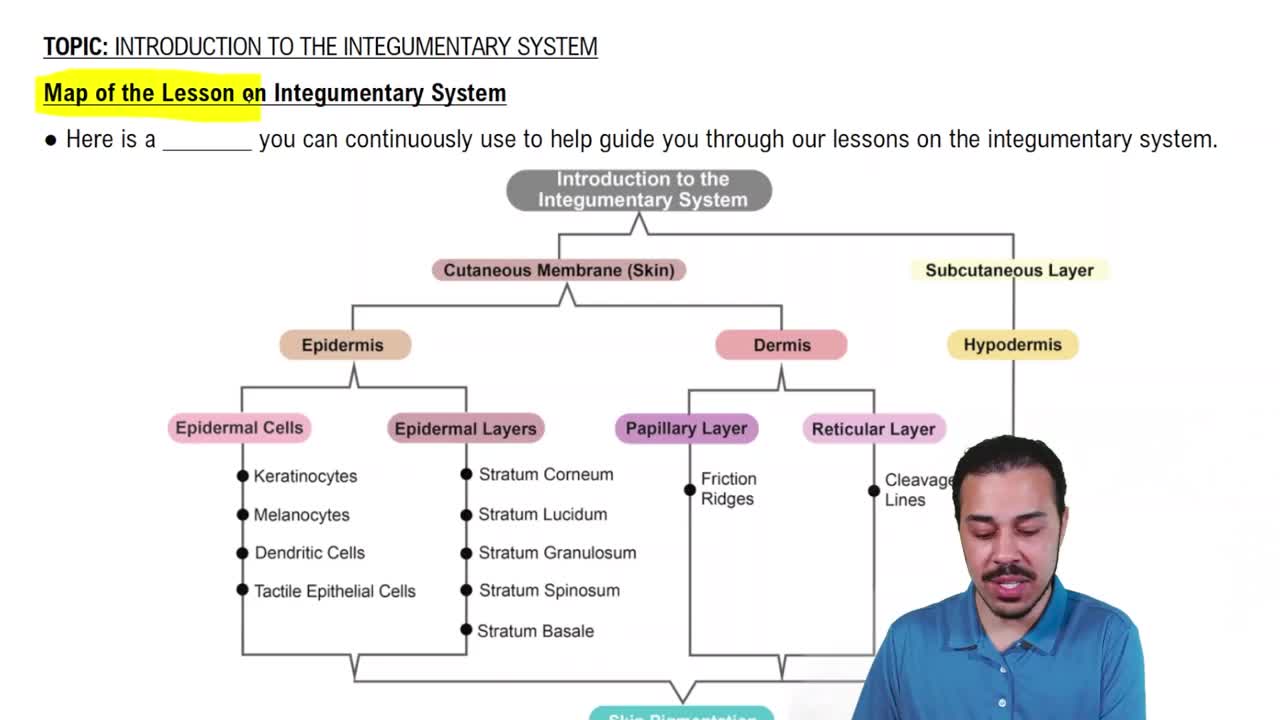
Epidermis, dermis, and hypodermis (subcutaneous layer).
Cells in the epidermis that produce keratin, a protein that strengthens skin.
Cells that produce melanin, the pigment responsible for skin color and protection against UV radiation.
Macrophage-like cells in the epidermis involved in immune response.
Sensory cells in the epidermis that detect touch stimuli.
From deep to superficial: stratum basale, stratum spinosum, stratum granulosum, stratum lucidum (only in thick skin), and stratum corneum.
Two layers: papillary layer (loose connective tissue) and reticular layer (dense irregular connective tissue).
Derived from the patterns of the dermal papillae in the papillary layer of the dermis.
Stretch marks caused by tearing of the dermis due to rapid stretching of skin.
Fluid-filled pockets between layers of skin caused by friction or burns.
Include melanin, carotene, and hemoglobin, which contribute to skin color.
Increased melanin production, potential DNA damage, premature aging, and risk of skin cancer.
Blue discoloration of skin due to low oxygen levels in blood.
Redness of the skin caused by increased blood flow, often from inflammation or infection.
Paleness of the skin due to reduced blood flow or decreased red blood cells.
Yellowing of the skin and eyes caused by elevated bilirubin levels.
Sweat glands that regulate body temperature by producing watery sweat; found all over the body.
Sweat glands found in axillary and genital areas; produce thicker sweat that bacteria can metabolize, causing odor.
Oil glands that secrete sebum to lubricate skin and hair.
Shaft (visible part), root (below skin), bulb (base with growth cells), medulla, cortex, and cuticle.
Hair loss or baldness.
Topical medication used to treat hair loss and promote regrowth.
Nail matrix (growth area), cuticle (skin at nail base), and lunula (white crescent at nail base).
Subcutaneous layer beneath the dermis composed mainly of fat and connective tissue; provides insulation and cushioning.
1st degree: affects epidermis; 2nd degree: affects epidermis and part of dermis; 3rd degree: full thickness burn affecting all skin layers.
Common skin cancer originating from basal cells in the stratum basale; usually slow growing and rarely metastasizes.
Skin cancer arising from keratinocytes in the stratum spinosum; can metastasize if untreated.
Aggressive skin cancer originating from melanocytes; high risk of metastasis and low survival rate if untreated.