 Back
Integumentary System - Anatomy & Physiology
 06:54

Terms in this set (20)
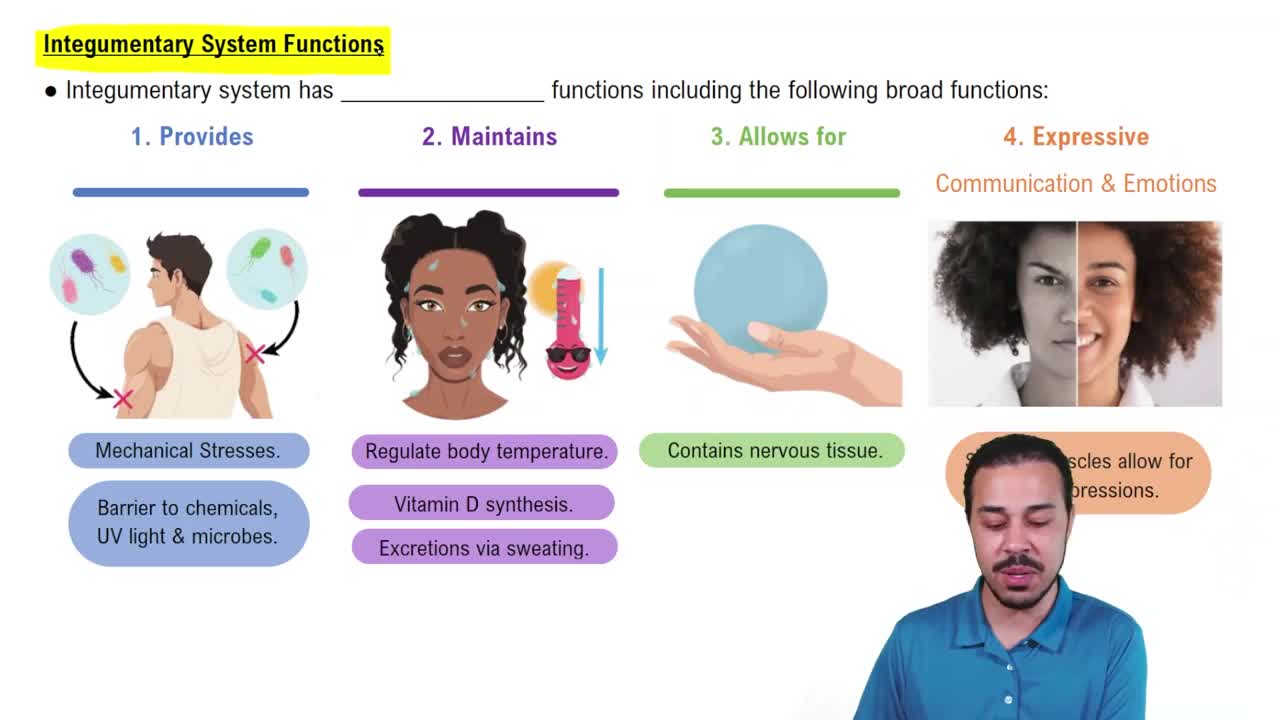
The integumentary system protects the body, regulates temperature, prevents water loss, synthesizes vitamin D, and provides sensory information.
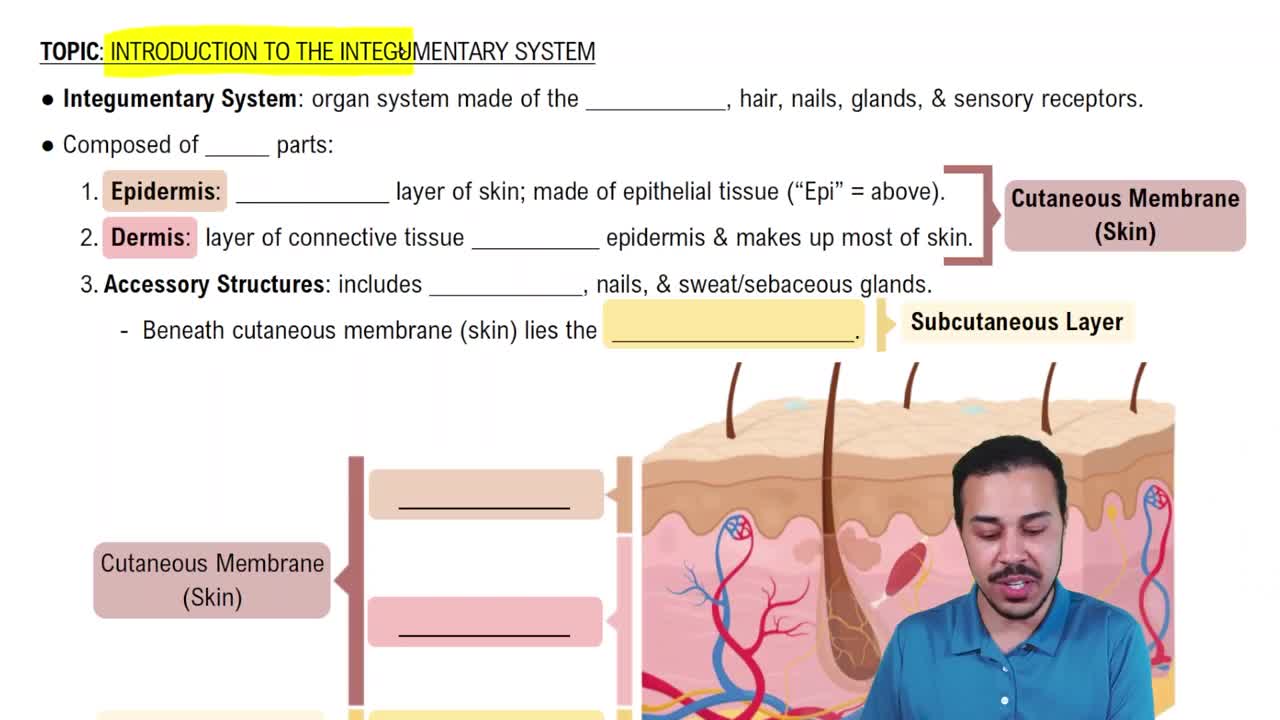
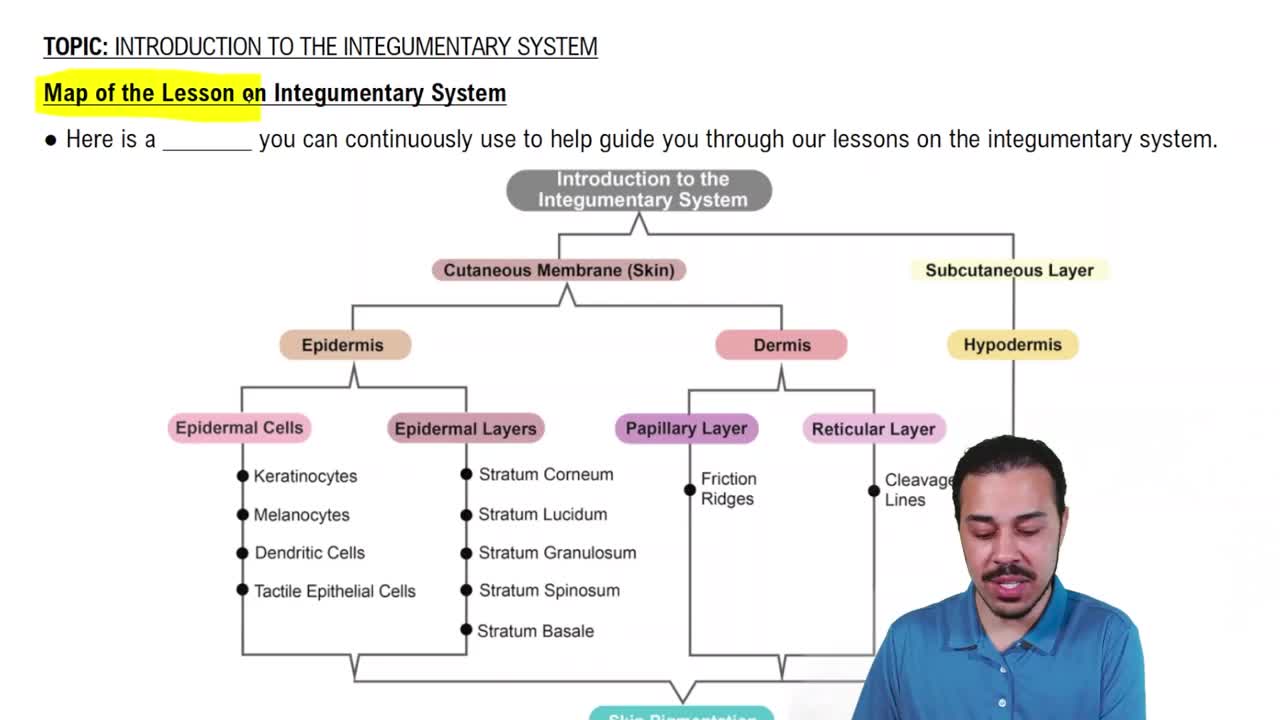
The epidermis, dermis, and hypodermis (subcutaneous layer).
Keratinized stratified squamous epithelium.
They produce keratin, a protein that strengthens and waterproofs the skin.
Langerhans cells act as antigen-presenting cells to help immune response.
Melanin is produced by melanocytes in the basal layer of the epidermis.
The dermis provides structural strength, elasticity, and houses blood vessels, nerves, hair follicles, and glands.
The papillary layer (superficial) and the reticular layer (deep).
Primarily dense irregular connective tissue.
Composed mainly of adipose tissue, it insulates, cushions, and anchors the skin to underlying structures.
Eccrine glands (thermoregulation) and apocrine glands (associated with hair follicles and scent).
They secrete sebum, an oily substance that lubricates and waterproofs the skin and hair.
Hair provides protection, sensory input, and helps regulate body temperature.
Nails protect the distal phalanges and enhance fine touch and manipulation.
UV light converts 7-dehydrocholesterol in the skin to vitamin D3, essential for calcium absorption.
It is the deepest layer where stem cells divide to produce new keratinocytes.
The stratum corneum consists of dead keratinized cells that form a waterproof barrier.
Mechanoreceptors (touch), thermoreceptors (temperature), nociceptors (pain), and proprioceptors.
Through sweat secretion and blood vessel dilation or constriction in the dermis.
It contracts to cause hair to stand (goosebumps), aiding in heat retention.